


 Shkruar nga Pamfleti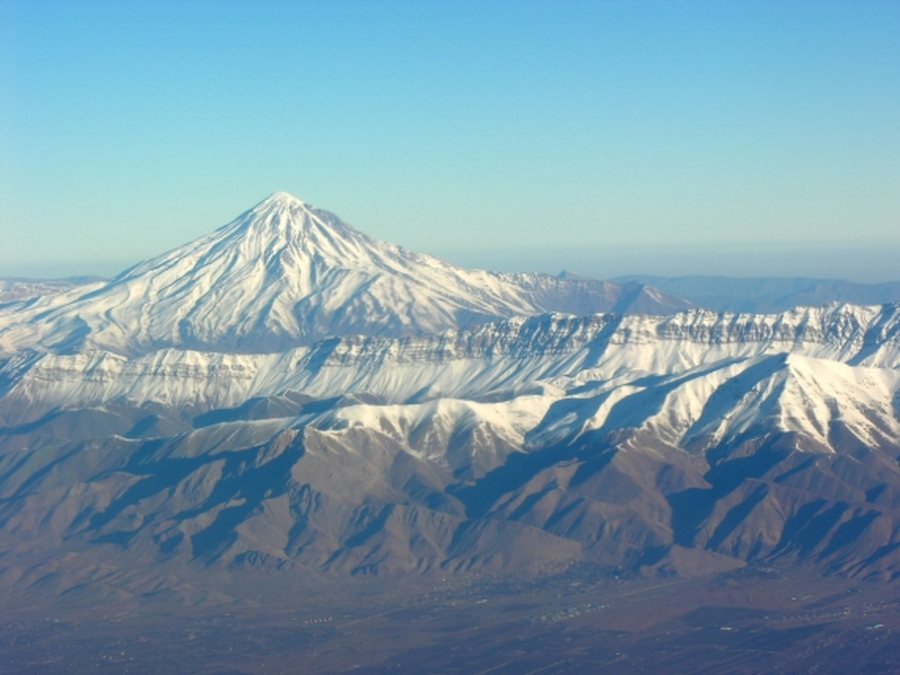
From the precedent of 1980 to the failed American operation, the terrain and the "mosaic" strategy of the Pasdaran favor defense
Mountains, deserts and coastlines make any ground intervention in Iran extremely complex. A potential operation would have to take into account both Saddam Hussein's experience in the 1980s and the failed operation ordered by US President Jimmy Carter.
When Saddam Hussein decided to attack the ayatollahs' regime in 1980, he had few options for directing his offensive: the southern area was the only one flat enough to allow ground maneuvers by tanks and infantry. However, after some initial successes, the offensive stalled and the war turned into a devastating conflict that lasted eight years.
During the same period, US President Jimmy Carter ordered an operation to free the hostages in Tehran, but the air force sent failed in the Tabas desert due to incidents and adverse weather conditions.
These two episodes, although different, demonstrate an important advantage of Iran: geography. The country can be described as a natural fortress, built of maritime space and rugged terrain. The first bastion is located to the west with the Zagros Mountains, the second to the north with the Alborz mountain range. To the east lie the deserts, while to the south a rugged coastline with heights that can be used as defensive positions, to hide traps and organize resistance. At the center of this quadrant is a large plateau that gives strategists additional defensive depth.
Nuclear facilities
Some of the nuclear centers, considered potential targets for an American special forces operation, are doubly protected by the terrain. They are built inside the mountains and include bunkers, networks of galleries and tunnels. Fordow is the most obvious example, while other laboratories are developed underground.
The vastness of the Islamic Republic favors the “mosaic” defense strategy adopted by the Pasdaran. This strategy allows them to exploit areas in the east, further from the range of American and Israeli aviation. The bombings of recent weeks have damaged several missile production facilities and about thirty launch bases. The Pentagon, together with the Israeli army (IDF), estimates that it has weakened the opposing apparatus, but not eliminated it. Also due to geographical characteristics, this remains impossible. Iran has been preparing for such a conflict for decades and has improved the system taking into account previous experiences.
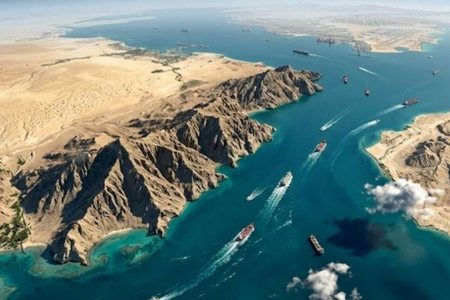
Even potential US actions at sea must take into account the terrain. The Strait of Hormuz is narrow in name and in reality, with passage limited to two lanes. It is surrounded by mountainous terrain and shallow waters. The Iranian navy has anticipated the loss of large units, relying on “swarm attack” tactics: small explosive devices, suicide drones, and small boats that can launch mines and missiles. Short-range missiles and Shahed drones are also used to strike areas controlled by US forces, such as islands or strategic facilities defended by marines and air units.

A three-way defense
The scenario envisioned by the Pasdaran is based on three objectives:
Make every American attack very costly.
To maintain resistance in all circumstances, whether real or symbolic.
To cause widespread consequences for the opponent, using the means at their disposal.
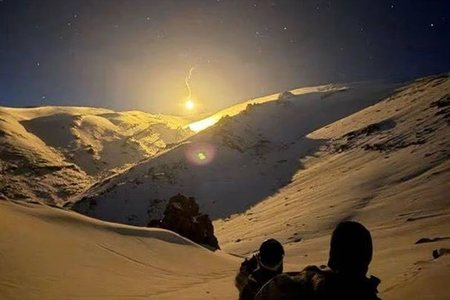
On the other hand, the United States Central Command has been studying Iran for decades and has developed tailored plans. According to RID director Pietro Batacchi, current American forces are better suited to limited incursions and scattered operations than a large-scale ground offensive. Such operations require significant logistical support, including air supplies for helicopters, protection for troops, ammunition and the ability to confront the adversary.
An intervention in the nuclear program facilities would be even more complex, as they are located inside Iranian territory and require the participation of specialized units for handling sensitive materials, such as uranium. /Adapted from Corriere /


Keni1 muaj që tregoni se Irani qenka kaq i fortë.Të gjitha shkrimet tuaja janë fake dhe të orentuara qëlimisht mjafton të jenë kunëdr ShBA.A është kbo media