


 Shkruar nga Diplomatico | Pamfleti.net
According to GB News, local elections are turning into a silent referendum on Keir Starmer's leadership, as Reform UK exploits electorate fatigue to challenge the British establishment...
In the narrative constructed by GB News, British politics is entering a phase of accumulated tension, where the formal stability of the government no longer translates into political security. Keir Starmer is depicted as a prime minister who has survived another blow, but who has not yet won the battle for authority and credibility, neither within the Labour Party nor in public opinion. GB News refers to the local elections as an “urgent deadline”, underlining that any poor result will be interpreted not simply as an electoral failure, but as a direct signal of the weakening of Starmer’s leadership. In this framework, the crisis is not seen as episodic, but as a symptom of a deeper problem: the lack of a convincing narrative that connects technocratic governance with the expectations of an electorate tired of economic crises, migration and social insecurity.
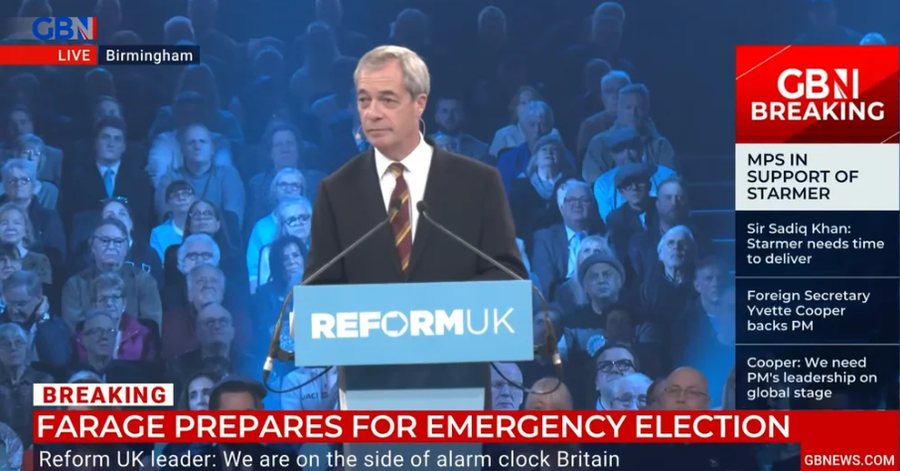
In parallel, Nigel Farage and Reform UK appear in the GBN analysis as a destabilizing factor, but also as direct beneficiaries of this political vacuum. Farage is portrayed as a figure who feeds and channels popular anger, turning every government decision into evidence of the “detachedness” of London’s elites. His anti-establishment rhetoric, focused on sovereignty, migration and opposition to traditional institutions, is penetrating areas that have historically been Labour strongholds, giving Reform UK a more dangerous profile than a temporary protest party. GB News pushes this interpretation further, suggesting that the Starmer–Farage clash is not just a personal duel, but a sign of a structural transformation in British politics, where the center is shrinking and the extremes are gaining ground.
Essentially, the picture that emerges from GBN is that of a Britain facing a turning point: either Starmer manages to regain political control and impose a more authoritative and communicative leadership, or the local elections will open a new cycle of uncertainty, where internal pressure and populist challenges will make governance increasingly fragile. Beyond the often alarmist tones of GB News, the message is clear: British politics is no longer in a phase of routine management, but in a battle for direction, legitimacy and a model of governance, a battle that will have echoes not only in Westminster, but also in the political architecture of Europe./ Pamphlet





Lini një Përgjigje