


 Shkruar nga Pamfleti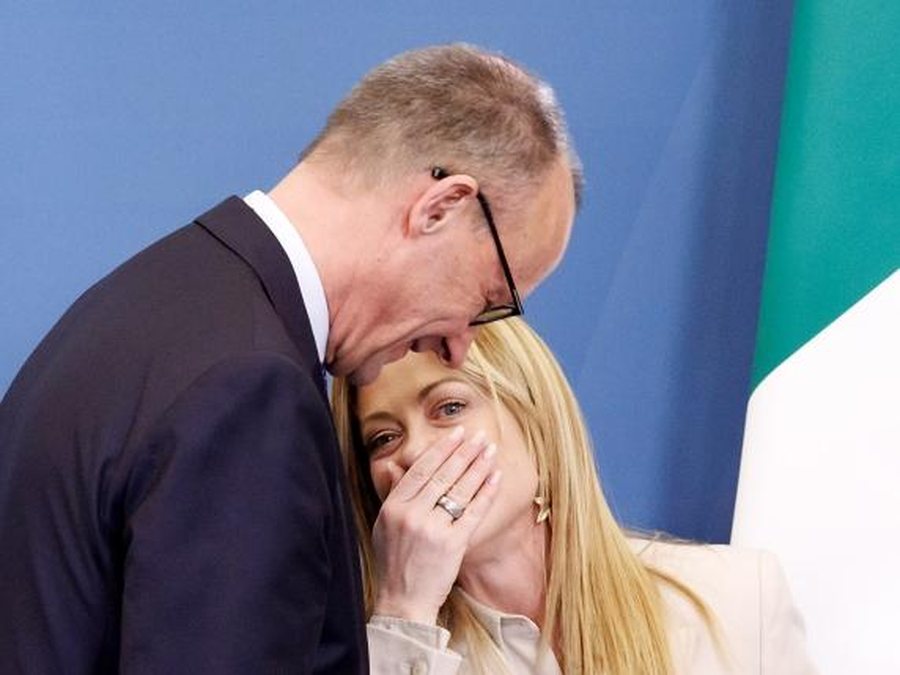
In a tense context of transatlantic relations, with Donald Trump in the White House, and with important elections approaching in Hungary, as well as next year in France, Italy and Poland, governments seem increasingly less willing to mediate.
The European Union is following a narrow path to increase the continent's competitiveness, considered an essential element for guaranteeing the Union's independence. In some files, the European Commission's orientation seems to be towards "enhanced cooperation" between member states, or à la carte solutions between participating capitals, without necessarily involving all 27 countries.
In a letter sent to European leaders ahead of Thursday's competitiveness summit, convened by European Council President António Costa at Alden Biesen Castle, some 80 kilometres east of Brussels, Commission President Ursula von der Leyen said the "ambition" remained to move forward with all 27 member states. However, she said there was no reason for "shame" in using, when necessary, the treaty instrument for "enhanced cooperation", which allows for advanced integration with at least nine member states.
This thesis is also supported by Mario Draghi in his Competitiveness Report and has recently been relaunched by him through the concept of “pragmatic federalism”. The former Italian Prime Minister is expected to participate in the morning session of the meeting at Alden Biesen Castle, while former Prime Minister Enrico Letta, author of the Single Market Report, will speak in the afternoon session.
The aim of this meeting is to draft a clear agenda with concrete commitments, after years of reflection and debate on the completion of the Single Market, the Capital Markets Union and the Energy Union. On the one hand, the need for simplification, improvement and acceleration of processes is highlighted. On the other hand, the current decision-making process, which gives the Commission, the Council and the European Parliament defined roles, often encounters deadlocks.
Recently, several countries, led by Germany, have expressed dissatisfaction with the European Parliament regarding the decision-making on the agreement with Mercosur and, earlier, on the simplification of green rules for companies. In a tense context of transatlantic relations, with Donald Trump in the White House, and with important elections approaching in Hungary, as well as next year in France, Italy and Poland, governments seem increasingly less willing to mediate.
Germany and Italy formalized this position in a document on competitiveness, agreed during a bilateral meeting between Friedrich Merz and Prime Minister Giorgia Meloni in Rome on January 23. In the same spirit, they organized a preliminary summit on Thursday, also supported by Belgian Prime Minister Bart De Wever. Participation is expected to be broad, including France, the Netherlands, the Nordic and Baltic countries, as well as Poland.
The detailed Italian-German document places emphasis on simplification, essentially proposing to place the Commission and Parliament under a form of "supervision" by member states, in the name of legislative efficiency.
Rome and Berlin are calling for an urgent “cessation”, which translates into the withdrawal of many Commission initiatives blocked in legislative procedures and defined as “zombie initiatives”. They are also calling for systematic monitoring and evaluation of amendments proposed by the co-legislators, Parliament and Council, to determine whether the changes impose additional burdens and/or violate the principles of subsidiarity, proportionality and conferral of powers.
The document also foresees an “emergency brake”, which would allow for intervention when legislative activity raises concerns about additional administrative burdens for businesses and national authorities. According to the text, simplification is considered a matter for the heads of state or government and President von der Leyen is required to report regularly to the European Council.
The meeting's agenda includes numerous topics, from the 28th European regime for registering startups and scale-ups within two days, with the aim of facilitating cross-border activity, to the integration of financial markets, regulatory simplification, market diversification and investments in artificial intelligence./ Corriere della Sera




Lini një Përgjigje