


 Shkruar nga Diplomatico | Pamfleti.net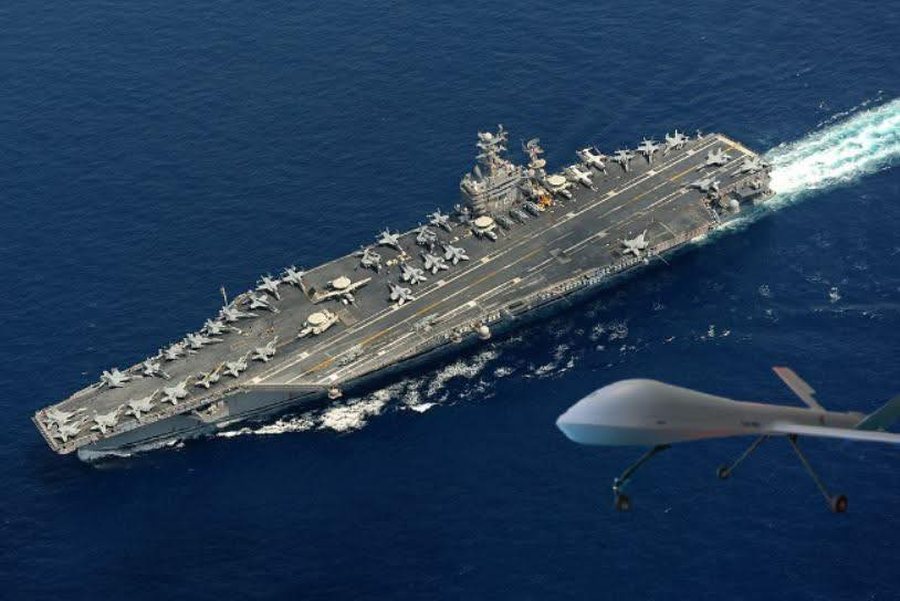
Washington's 10-day ultimatum and massive military buildup in the Arabian Sea signal a crisis that could erupt into open conflict with global consequences...
The move is clear, swift and frightening in the message it sends. The United States has deployed two aircraft carriers, the USS Gerald R. Ford and the USS Abraham Lincoln, to the Arabian Sea and the airspace around Iran, accompanied by dozens of F-35 and F-22 fighter jets and reconnaissance aircraft.
According to Al Jazeera reporting, this is one of the largest US military buildups near Iran in recent years, a show of force that cannot be interpreted as a routine rotation.
In Washington, President Donald Trump has set a 10-15-day deadline for a new nuclear deal with Iran. The message is stripped of classic diplomacy: either deal or “serious consequences.” The backdrop is the failure of previous attempts to revive the nuclear control architecture and growing fears that Tehran is moving ever closer to a nuclear weapons capability.
This is not just diplomatic pressure. It is diplomacy with full military support. Two aircraft carrier strike groups mean deep air strike capabilities, naval control, and operational dominance in a very short time. Beyond the message to Tehran, the signal also goes to the US’s regional allies: Washington is ready to defend the security architecture in the Persian Gulf. But any show of force carries the risk of miscalculation. A single incident at sea or in airspace could push the region into a spiral that no one can control.
Tehran has reacted with warnings of an "immediate response" to any aggression, while Russia has called for restraint, viewing with concern an escalation that would directly affect its interests in the Middle East.
If this crisis gets out of hand, the impact will not only be military. Energy markets will be shaken, maritime corridors will be further militarized, and the global security architecture will enter a new phase of polarization.
An open US-Iran conflict would reshape NATO priorities, shift strategic focus, and increase pressure on smaller countries to hold a clear political line. Any major global tension has repercussions in the region, especially in a Balkans still fragile from the influences of great powers.
The message of this move is brutal in its simplicity: diplomacy has entered the final phase of maximum pressure. If a compromise is not produced within a few days, the Middle East could face the most serious military clash of the decade. And when aircraft carriers approach, history has taught us that they rarely move without a ready plan on the table./ Pamphlet





Lini një Përgjigje