


 Shkruar nga Pamfleti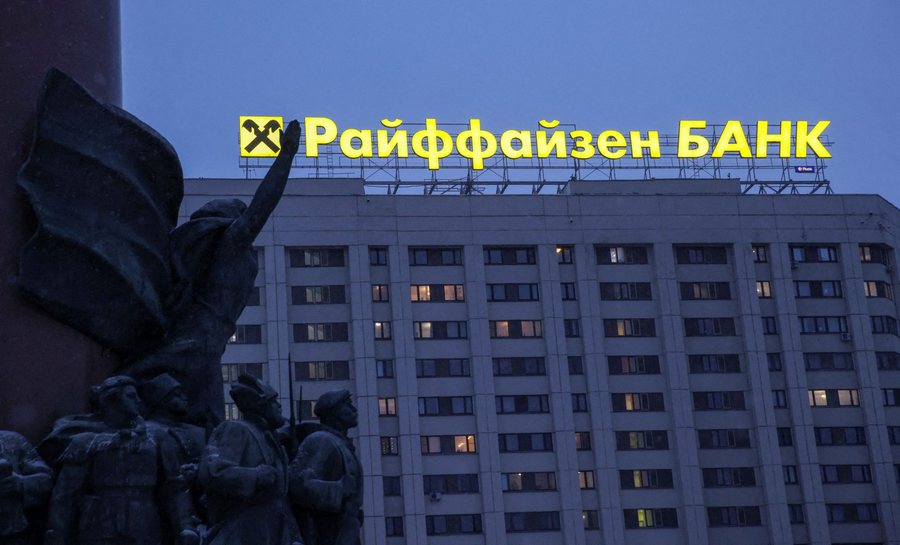
Raiffeisen is trying to sell its Russian unit, but it is dragging its feet.
When the US and Europe tried to cut Russia off from the Western financial system, Moscow found a solution: banks in the Persian Gulf and Europe with ties to Russia.
Now, Washington's efforts to close these loopholes seem to be paying off. Dubai's main state-owned bank has closed several accounts held by Russian oligarchs and Russian oil traders. Turkish lenders are showing caution in dealing with businesses linked to Russia. The US has also warned Raiffeisen Bank, another important financial center.
The moves follow visits by US officials and recent rounds of sanctions against trading firms. In late December, the White House gave the Treasury Department greater sanctions power, enabling it to penalize foreign banks for deals involving Russia's military-industrial base.
Emirates NBD, the banking giant based in Dubai, is one that is embracing the change.
Russian businesses and oligarchs flocked to the United Arab Emirates, including the commercial hub of Dubai, after Moscow invaded Ukraine in 2022. Emirates NBD was one of the biggest beneficiaries, according to people familiar with the matter, including professionals financiers in the Persian Gulf country, US officials and an energy executive.
The bank handled significant oil trades in Russia and created a department serving Russians looking for a safe haven for their wealth, for which it poached bankers from the former Soviet Union, one of the U.S. officials and several other people said. familiar with this matter.
In recent months, however, the U.S. has put a lot of pressure on the United Arab Emirates, sending Treasury and State Department officials to the country and imposing new sanctions on entities based in the United Arab Emirates, such as the merchant of oil with a focus on Russia, Voliton.
Emirates NBD has changed course. It has closed its Russia-focused department, banned ruble transfers from Russia and closed a large number of Russian accounts, typically containing more than $5 million.
In Turkey, the climate has also changed, as the US government has pushed Ankara to adjust its growing economic relationship with Russia.
The US has penalized Turkish companies for aiding Russian businesses and asked the government to enforce sanctions. Turkish exporters have complained of difficulties in receiving payment.
"We have difficulty getting our funds," said Omer Gencal, a financial adviser to Turkish companies doing business with Russia.
Turkish exports to Russia in February fell 33% from a year earlier to $670 million, trade ministry data show.
The US has also targeted Austria, a banking hub for Central and Eastern Europe, recently sending Treasury official Anna Morris to meet with the government and banks, including Raiffeisen Bank International, which maintains a unit in Russia.
The Treasury said the visit was part of a wider international outreach to ensure financial firms understand its new sanctioning powers.
Raiffeisen is trying to sell its Russian unit, but it is dragging its feet. The bank said it has guidelines and procedures to ensure compliance with sanctions. "Since the beginning of the war, the RBI has steadily reduced its Russian business," its officials said.
The redoubled US efforts have led to several disruptions to Russian energy exports, a financial mainstay of the war in Ukraine.
Voliton and Bellatrix were among the biggest resellers of oil pumped by Russia's Rosneft Oil, shipping and customs records show. But neither Voliton nor Bellatrix has handled any Russian oil trades since the sanctions, according to commodities data provider Kpler.
US pressure on banks to tighten energy payments has caused complications in recent weeks, US officials, financial professionals in the Emirates and others said. However, Russian oil still flows freely. / Adapted "Pamphlet" from "To Vima"








Lini një Përgjigje