


 Shkruar nga Pamfleti
The Kremlin is counting on prolonging the war, while neither Russia nor Ukraine seem capable of achieving complete victory on the battlefield.
Russian President Vladimir Putin is waging war in Ukraine on the basis of what Charles Dickens called the “Micawber Principle,” the belief that, despite the difficulties, “something will happen” and the situation will change in his favor. So argues an analysis published by Politico, which assesses that the Russian leader is playing a long-term game in a conflict that, from a military point of view, is not producing decisive victories.
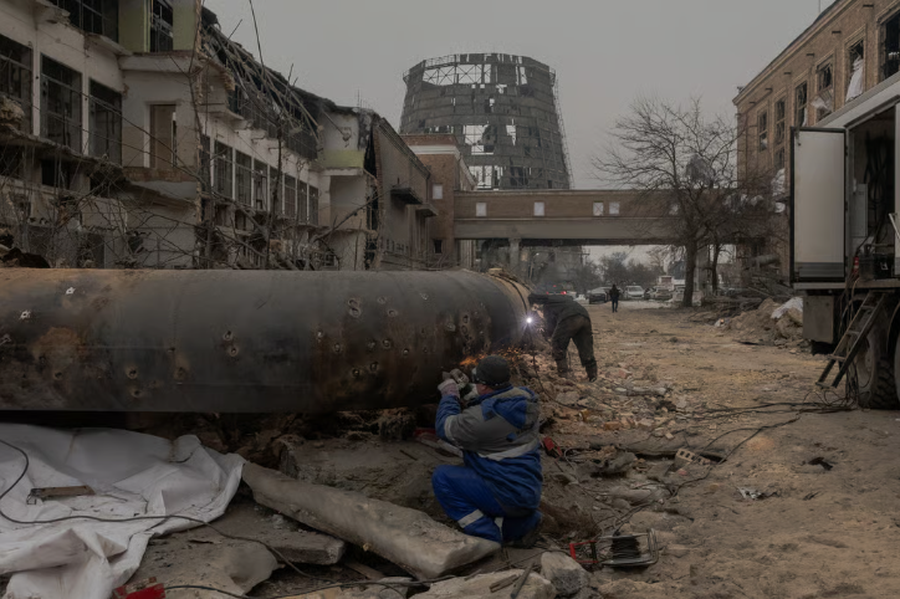
Four years after the start of the full-scale invasion of Ukraine, the war seems impossible for Russia to win on the battlefield. At a very high cost in lives lost and wounded, Russian forces have not even managed to fully control the Donbas region. Before the invasion, Russia controlled about 7% of Ukrainian territory. A month after the war began, this percentage reached about 27%. However, according to data from the Belfer Center at Harvard University, after that peak, the territory controlled by Russia has declined and stabilized at about 18–19%.
Over the past year, Russian forces have slowly advanced and captured about 4,700 square kilometers of territory, roughly twice the size of Moscow. But, according to analysts at the US-based Institute for the Study of War (ISW), they have failed to break through the fortified defensive line that Ukraine has built in a strip of about 50 kilometers in the western part of the Donetsk region. In the neighboring Zaporizhia region, Russian troops have been forced to withdraw.
Even when Russia has made limited progress, such as during the summer offensive near the eastern city of Pokrovsk and in the Kostyantynivka area, when Ukrainian forces faced a tactical disadvantage, a lack of personnel and equipment has hindered further advances. Moreover, assembling sufficient forces for large-scale attacks has been made difficult by the risk of devastating Ukrainian drone attacks. In the north, Russian forces have struggled to advance towards Kupyansk and push Ukrainian troops further away from the Russian region of Belgorod.
According to the analysis, Putin continues the war because he needs a significant victory to justify the huge costs to Russian domestic opinion. Russian analyst Ella Paneyakh warns that dismantling the war economy would pose serious political risks for the Kremlin, as it would create new winners and losers and open the issue of reintegration of thousands of veterans.
Gazetari rus në mërgim Dmitri Kuznets, në një analizë për Qendrën Carnegie Russia Eurasia, vlerëson se makineria ushtarake ruse, e rindërtuar pas disfatave të vitit 2022, aktualisht funksionon në mënyrë të qëndrueshme dhe arrin të zëvendësojë humbjet në njerëz dhe pajisje. Megjithatë, sipas tij, Rusia nuk ka kapacitete për të rritur ndjeshëm nivelin e burimeve që angazhon në luftë.
Ndërkohë, Ukraina përballet me sfida edhe më të mëdha në aspektin e personelit ushtarak. Ministri i ri i Mbrojtjes, Mykhailo Fedorov, deklaroi muajin e kaluar se rreth dy milionë ukrainas kërkohen për shkelje të rregullave të regjistrimit ushtarak. Në nëntor, Zyra e Prokurorit të Përgjithshëm njoftoi se ekzistojnë 310.000 raste penale për mungesë të paautorizuar dhe dezertim, shumica e tyre gjatë vitit 2025. Forcat e Armatosura të Ukrainës nuk po arrijnë të rekrutojnë mjaftueshëm për të kompensuar humbjet dhe dezertimet.
Një studim i Qendrës së Stokholmit për Studime të Evropës Lindore identifikon si faktorë kryesorë dobësitë institucionale, korrupsionin, lodhjen shoqërore dhe rraskapitjen psikologjike, mangësitë në trajnim dhe drejtim ushtarak, si dhe kufizimet demografike dhe ekonomike. Studimi përmend gjithashtu ndikimin e propagandës ruse.
Analiza thekson se, përtej debatit mbi mungesën e raketave dhe sistemeve të mbrojtjes ajrore, ekziston edhe një disavantazh në “aritmetikën e personelit”, që nuk favorizon Ukrainën nëse Rusia arrin ta zgjasë luftën e konsumimit pa u kufizuar nga konsiderata për humbjet njerëzore. Beteja për Pokrovskun tregoi se mungesa e trupave i lejoi Rusisë të përdorte taktika të infiltrimit me njësi të vogla këmbësorie pas vijave ukrainase, siç ka deklaruar komandanti i përgjithshëm ukrainas, Oleksandr Syrskiy.
Politikanë të opozitës në Ukrainë konstatojnë se hezitimi për të shërbyer në ushtri lidhet edhe me perceptimin në rritje se Perëndimi është i gatshëm ta mbështesë luftën “deri në ukrainasin e fundit”, pavarësisht se mbijetesa e Ukrainës si shtet i pavarur dhe pro-perëndimor konsiderohet thelbësore për sigurinë e Evropës. Kjo ndjesi është shoqëruar me pakënaqësi ndaj Shteteve të Bashkuara nën drejtimin e Donald Trump, për shkak të afrimit të perceptuar me narrativat e Moskës dhe ndërprerjes së donacioneve të drejtpërdrejta të pajisjeve ushtarake. Po ashtu, Hungaria kërkoi të bllokojë një kredi prej 90 miliardë eurosh të Bashkimit Evropian për stabilizimin financiar të Ukrainës.
Ish-presidenti Petro Poroshenko, në një intervistë për Politico gjatë Konferencës së Sigurisë në Mynih, e përshkroi situatën si të brishtë. Ai shprehu shqetësimin se presidenti Volodymyr Zelensky mund të ketë bërë një gabim taktik duke u larguar nga kërkesa për armëpushim të menjëhershëm dhe duke hyrë në negociata që mund të shtojnë tensionet e brendshme politike, në një kohë kur vendi përballet me skandale korrupsioni.
According to Poroshenko, Putin's territorial demands are aimed at destabilizing the internal political situation in Ukraine. Any agreement involving territorial concessions would require a referendum and would face strong opposition. Opposition MP Oleksandra Ustinova told Politico that the parliament would be unlikely to approve such an agreement, as it would be perceived as capitulation.
The analysis concludes that Putin faces a dilemma: he does not have the strength to completely conquer Ukraine, but is relying on prolonging the conflict in the hope that circumstances will change in his favor. Meanwhile, Ukraine does not have the capacity to regain all the lost territories, but aims to survive and maintain international support, hoping that over time Russia will be forced to seriously engage in negotiations. /Adapted from Pamphlet /


Lini një Përgjigje