


 Shkruar nga Pamfleti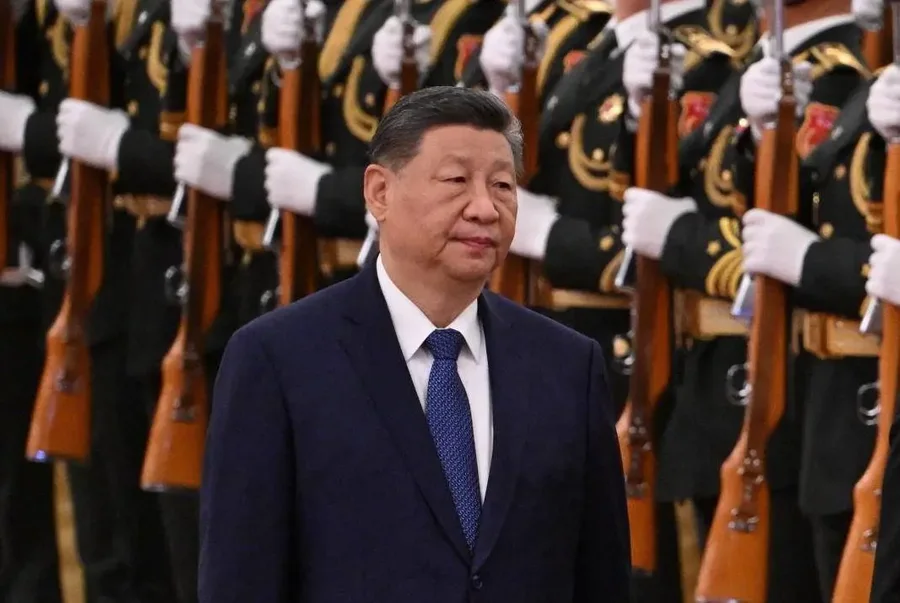
Attack on Caracas slows Xi's economic and political expansion project
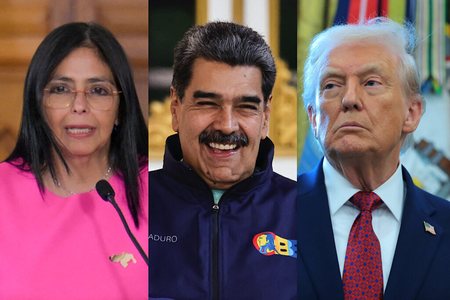
In South America, China must admit that it is a paper tiger. The expulsion of its "ally", Nicolás Maduro, to the United States, in addition to depriving him of 80 percent of Venezuela's crude oil production that Beijing, thanks to its credit, had secured at favorable prices, also represents a significant obstacle to its expansion plans.
These plans are by no means secret. President Xi Jinping himself presented them last May, proclaiming five key words (Solidarity, Development, Civilization, Peace, Connectivity) that he said were essential to winning the hearts and minds of the leaders and peoples of 33 Latin American countries.
These plans were proudly reiterated by the Global Times (Beijing's English-language online newspaper) following the publication, in early December, of the US National Security Strategy, which aims to stop Chinese expansion in Latin America and calls for an update of the Monroe Doctrine to protect its so-called "backyard."
However, Xi Jinping's plans suggest that the Chinese government should take advantage of the drastic cuts in aid to Latin American countries imposed by the Trump administration. By diving into the structural gap created by these cuts and waving the flag of "solidarity", China aims to increase trade with Latin America, which has reached $518 billion and will exceed $700 billion by 2035. The "development" component, on the other hand, foresees technological penetration in the telecommunications, green energy, critical materials and electric vehicles sectors. These are all extremely sensitive sectors for a US administration that is already concerned about the movements of Huawei, the Chinese company that, thanks to the sale of its 5G system, gained complete control of telecommunications and data centers in Chile.
Also, under the umbrella of "development" are plans to lease vast areas of South America for intensive cultivation of soybeans and other agricultural products.
A real sword of Damocles hangs over the heads of those growers in the US Midwest, who have already seen their soybean exports to China fall due to trade tensions. Even more incompatible with Trump's implementation of the Monroe Doctrine is the strategy of so-called "friendly ports," namely plans to create a network of maritime infrastructure, such as the port of Chancay in Peru or the terminals around the Panama Canal, which would guarantee China commercial hegemony coupled with military and intelligence penetration.
These plans are made even more dangerous by collaborative projects with South American countries to intensify their presence in Antarctica and the Strait of Magellan, a crossroads of international maritime traffic.
Adding to the Trump administration's impatience are the funds, designated under the heading of "peace," which provide annual trips to China for 300 South American politicians favored by Pachino. These bonus trips, in Washington's eyes, represent a clear attempt to influence the 2026 elections in Brazil, Peru, Colombia, and Costa Rica, as well as those in Argentina and Guatemala in 2027.
However, all these plans risk being seriously undermined by a swift American attack, to which Dragoi has so far responded only with weak verbal reprimands.
More or less to secure the trust of a South America that, after Friday night, is more aware than ever that it can no longer ignore the political and military power of Donald Trump's America. /Adapted from Il Giornale /




Lini një Përgjigje