


 Shkruar nga Pamfleti
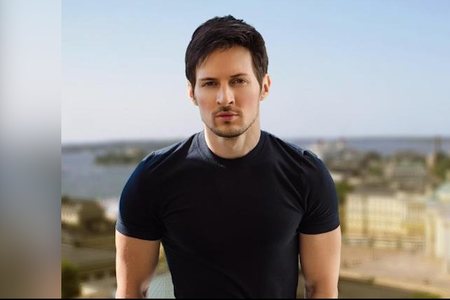
Durov's arrest translates into the need for creators of technological platforms and devices to reflect on their responsibilities.
There is light and shadow in the creature that Pavel Durov created in 2013. Telegram is used by activists, persecuted and citizens who decide not to follow the propaganda of the countries in which they live, and through this application they are able to continue to be informed and communicate freely. An example is Russia, where the app is perhaps the only alternative to Putin's 'truth'.
But it is also the preferred platform for hackers, criminals and terrorists who - in the same way - can communicate, exchange business and blackmail "freely". And it is these shadows that are at the basis of the investigation by the French National Anti-Fraud Office that led to the arrest of Durov on August 24, 2024, as soon as his private jet touched the runway of Bourget airport, near Paris. He was filed as a 'wanted' person because - according to the investigators - his application, Telegram, and the purpose for which it is used, makes him an accomplice in the most serious crimes: drug trafficking, terrorism, child pornography, money laundering, blackmail .
"I'd rather be free than take orders from someone"
Pavel Valeryevich Durov was born in 1984 in Leningrad, when it was still the Soviet Union. However, he spent his childhood in Turin, before returning to Russia to attend high school and university (for philology). Russian father, French mother, brother Nikolai, a computer genius. He is his trusted business partner.
A perfect combination that we have already seen work in the biggest giants of Silicon Valley. It was inspired by Mark Zuckerberg. And in fact, the Durov brothers' first project is called VK (or Vkontakte, in full), a social network very similar to Facebook. Still active and widely used in Russia. It is currently the 30th most visited site in the world. A success, which, however, Durov soon abandons: his platform must be free from any political restrictions. And already in this first phase of his career, we can see his vision of how an Internet-based communication system should be without regulation, moderation from above or restrictions.
Never at the expense of privacy, but with the inevitable trade-off to expect the good and the bad.
“I'd rather be free than take orders from someone,” he declared in 2014, when he refused to hand over to the federal government the personal data of an active group in the VC that openly protested against Putin. He resigns and leaves Russia: "The country is incompatible with the Internet business at the moment," he declared then.
Meanwhile, a year ago he founded Telegram.
The birth of Telegram
Therefore, Telegram was created in Russia, in 2013, with the aim of giving its citizens - but also the rest of the world - a platform where communications can be secure and above all private. Free from any political prying eyes. Telegram was the first app to use end-to-end encryption. Its data centers are spread around the world, while it chose Dubai for its headquarters.
Born as an alternative to WhatsApp, it is actually very different. More than a messaging app, Telegram is a social network, with many different features that suit different types of communication. There are private chats, but also groups (which welcome up to 200 thousand participants), there are voice and video calls, you can share documents, photos and high definition files. Many of these functions have, over time, also been brought to WhatsApp, including channels, where a user or an organization can talk directly to all his/her fans, followers. Telegram is considered the best alternative to WhatsApp, even if there are no comparisons yet. Meta's application is approaching three billion users, while Durov's has about 900 million subscribers. But it remains a favorite for people concerned about privacy and security.
Controversy
There are some internal contradictions in Telegram: Durov stated in 2013 that he did not want to profit from the messaging app, but then chose a tax haven as a place to settle. His personal wealth, among other things, has grown over the years to a figure that Forbes estimates to be around $15.5 billion. Freedom of expression, which he promises in his platform, is especially exploited in those countries where communications are controlled by authoritarian governments. For example, in his Russia, where since the outbreak of the conflict in Ukraine, it has become the only way to convey news other than those approved by official channels. In Russia, among others, Telegram was blocked in 2018 after Durov refused to give the government encryption keys to access user chats. There were so many protests that after a year the app was used again.
Accusations and possible consequences for Telegram
If it is true that in many parts of the world, from Hong Kong to Iran, the creation of Durov has been a valuable aid in the fight for one's rights, it is equally true that you can find everything on Telegram. And indeed it is used for drug trafficking, child pornography, piracy, blackmail and rape, terrorism.
Precisely for this reason, for his clear refusal to apply any kind of moderation and for wanting to remain a "neutral platform" without any "geopolitical role", he is considered an accomplice in all the crimes committed on Telegram by French investigators . At the moment, there are no comments from the platform.
We do not know, at the moment, whether there may be possible consequences to its operation: whether we will eventually have to give in and put greater controls on the content it conveys, or whether it may face possible blocking.
What is certain is that the arrest of Durov translates into the need for the creators of technological platforms and devices to reflect on their responsibilities.
And on the possible effects that that application, that phone or that portal can bring to society as a whole. Even if, at the moment, group security and individual privacy are still two concepts that often go into antithesis. Perhaps the most sensational case, in this sense, occurred in 2016, when Apple refused to cooperate with the FBI in giving access to the data contained in the iPhone of an attacker who had killed 12 people in San Bernardino. Protecting the information users store on their devices was sacrosanct for Cupertino. Nor was an investigation into the multiple murders important enough to set a precedent that was defined as "dangerous."
It is no coincidence that another entrepreneur who manifests himself as a defender of freedom of expression comes to Durov's defense.
Elon Musk on X has opened the hashtag, Free Pavel. He says that at this rate, it won't be far off when people in Europe are jailed for liking a meme.
He himself and his social networks are under strict surveillance by European authorities. /Taken from Corriere della Sera



Lini një Përgjigje