


 Shkruar nga Jonathan Sacerdoti
US has focused half of its deployable air power near Iran as negotiations continue; Hamas refuses to disarm despite plans to rebuild Gaza
Half of America's deployable air power is within striking distance of Iran, and yet Washington is negotiating. Gaza is promised a bright future, but Hamas continues to refuse to disarm.
Is this strategic patience, or evidence that the US president is dangerously misinformed, giving space to opponents who are buying time?
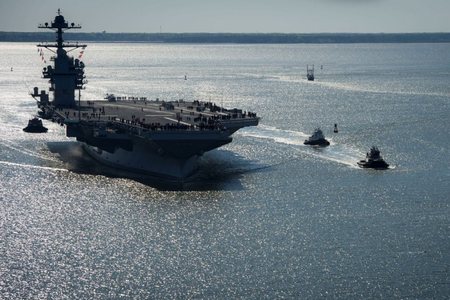
Two US aircraft carrier strike groups are in the eastern Mediterranean and the Persian Gulf. Ground-based fighter jets are being rotated to Jordan and the Gulf states. Long-range bombers have been repositioned. Analysts estimate that about 40–50 percent of America’s deployable air power is now concentrated in the Middle East, a level comparable to the buildup before the 1991 Gulf War and the 2003 invasion of Iraq. The scale appears similar, even though ground forces are lacking.
At sea, the USS Gerald R. Ford and the USS Abraham Lincoln lead two full strike groups. This is a deployment designed to quickly shift from deterrence to attack. Yet Washington is negotiating with the Islamic Republic regime while it has killed tens of thousands of its own citizens and is accelerating the production of more ballistic missiles and the resumption of nuclear activity.
In Oman, sources indicate that Ali Larijani, secretary of Iran's Supreme National Security Council, is expected in Muscat to deliver Tehran's response to a US proposal. Behind-the-scenes diplomacy continues. Yesterday, India advised its citizens to leave Iran immediately. Videos from Tehran circulated on the networks showing explosions near energy infrastructure.
Iranian opposition media reports that a mobile network was hacked and mass messages were sent with the content: "To the Iranian people subjected to oppression, the American president is a man of action."
The world is waiting to see if this is the choreography before compromise or a prelude to war.
Meanwhile, another drama is unfolding in Gaza. The president staged another Peace Board spectacle last week, again presenting a vision of Gaza rebuilt as a modern coastal hub, with towers rising where today’s rubble is, with investment and infrastructure replacing tunnels and Islamist rule. The premise is simple: Hamas must be demilitarized. The weapons must be surrendered, the command structures dismantled, Gaza transformed from a hotbed of terror into a city. But Hamas continues to refuse.
Këto janë dy dilemat. Programi bërthamor dhe raketor i Iranit në njërën anë; refuzimi i Hamasit për t’u çarmatosur në anën tjetër. Në të dyja rastet, kritikët pyesin nëse administrata po mbahet pezull, e tërhequr në procese të ndërlikuara diplomatike ndërsa kundërshtarët e Amerikës fitojnë kohë. Në të dyja rastet, disa sugjerojnë se Shtëpia e Bardhë po ushqen iluzione: që Teherani do të heqë dorë vullnetarisht nga dekada investimesh bërthamore, apo që Hamasi do të shpërbëhet në këmbim të rindërtimit urban. Por ky interpretim mund të mos kapë atë që po ndodh realisht.
Donald Trump së fundmi publikoi një video të Mark Levin, i cili mbajti një monolog të ashpër në Fox News. Levin ironizoi idenë e një transformimi iranian: dorëzim bërthamor, çmontim raketash, moderim ideologjik. Ai renditi historikun e Iranit për rritje graduale të pasurimit të uraniumit, tejkalim të kufijve të rezervave, vendosje centrifugash të avancuara, kufizime të monitorimit dhe njoftime zyrtare për ndërprerje angazhimesh. Përfundimi i tij ishte i qartë: një regjim që e përkufizon veten përmes rezistencës dhe një misioni teologjik apokaliptik nuk zbutet përmes negociatave. Duke e shpërndarë këtë argument në rrjetet sociale, udhëheqësi i njohur për përdorimin e mediave sociale sinjalizoi se e kupton rrezikun e iluzioneve, të paktën kështu shpreson autori.
Çdo optimizëm rreth iniciativave të fundit diplomatike amerikane mbështetet në një tension strukturor. Ai përfaqëson përplasjen mes dy koncepteve për kohën dhe pushtetin. Nga këndvështrimi i Uashingtonit, armët bërthamore sjellin sanksione, izolim dhe rrezik të hakmarrjes dërrmuese. Heqja dorë prej tyre ofron stabilizim ekonomik dhe riintegrim. Kjo është logjikë racionale dhe transaksionale, ku stimujt dhe ndëshkimet formësojnë sjelljen.
Llogaritja e Teheranit është ndryshe. Ali Khamenei, në pushtet që nga viti 1989 dhe tashmë në të tetëdhjetat, drejton një sistem që vlerëson qëndrueshmërinë. Regjimi ka mbijetuar luftë, sanksione, protesta dhe kundërshtime të brendshme.
Ai shtypi demonstrata masive dhe përballoi koston reputacionale. Një ekonomi e dobët nuk cenon thelbin e tij ideologjik. Kapaciteti bërthamor është simboli dhe mburoja e tij. Ai mishëron qëndrueshmëri, sfidë dhe pretendim për epërsi rajonale. Sakrifica paraqitet si virtyt. Vonesa si strategji.
E njëjta asimetri formëson Hamasin. Demokracitë perëndimore funksionojnë sipas cikleve zgjedhore dhe tolerancës publike. Fushatat ushtarake analizohen, viktimat debatohen, kostot fiskale llogariten. Hamasi flet në terma brezash. Lufta nuk është episod, por mision. Shkatërrimi taktik përfshihet në narrativë. Çmilitarizimi do të shpërbënte identitetin e tij.
Authoritarian systems, whether dynastic dictatorships or theocratic regimes, calculate differently from elected governments. Leaders like North Korea’s Kim Jong-un do not face voters or electoral defeats. They think in ideological terms and in decades and centuries. Their primary imperative is regime survival, and the survival of the ruling structure often justifies extraordinary deprivations at home. Risk is absorbed differently. Economic punishment that would paralyze a democratic government can be tolerated, reinterpreted, even weaponized. Releases are tactical; timing is elastic; agreements are instruments, not outcomes. Trump’s high-profile summits with Pyongyang show that personal diplomacy and spectacle do not necessarily produce structural change.
Massive military deployments cannot remain indefinitely without consequences. Assets are pulled from other theaters and affect readiness elsewhere. At some point, forces are either significantly withdrawn or deployed. Tehran understands this. Protracting negotiations and offering partial concessions that keep the talks alive can buy time and potentially force a gradual American de-escalation. A protracted diplomatic process dilutes the immediate pressure. Washington understands this dynamic, too.
By putting comprehensive and public proposals on the table, the administration creates a test. If Iran offers a serious path to enrichment and missiles, diplomacy gains substance. If it refuses, as it most likely will, the refusal is documented. If Hamas refuses to demilitarize even in exchange for rebuilding Gaza, accountability becomes clear.
This can be summed up as the Trump doctrine. Force without prior offer can be presented as aggression. Force after a rejected offer carries a different weight in the narrative. None of this guarantees content. Khamenei may judge that limited American or Israeli strikes are affordable and that the survival of the regime translates into declared victory. He may believe that a partial compromise serves as a distraction, or that remaining in power even after American bombing constitutes triumph. Hamas may count on survival amidst the rubble to bolster its legitimacy. Both sides may be right. /Adapted from The Spectator /



Lini një Përgjigje