


 Shkruar nga Pamfleti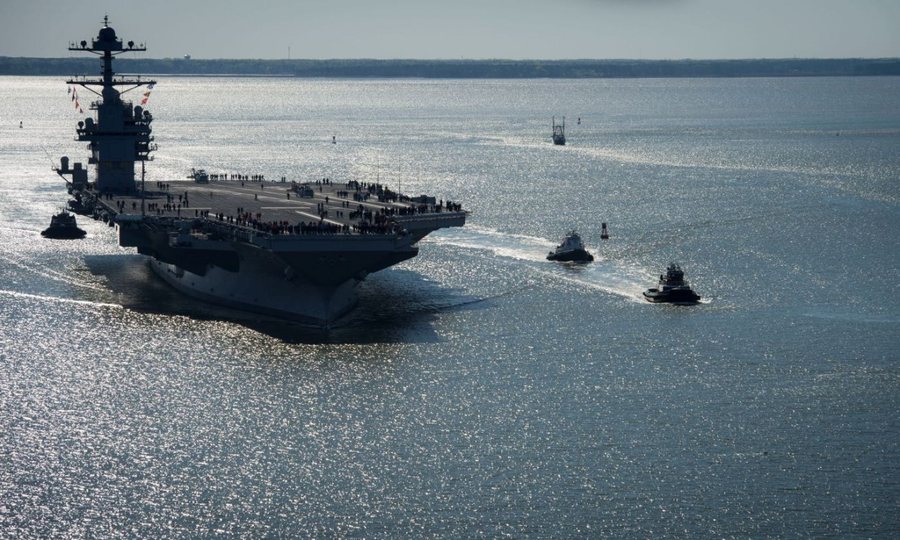
Eight months after Operation Midnight Hammer, the US is considering a new attack on Iran
Eight months after Operation Midnight Hammer, the United States is considering the possibility of a new attack against Iran.
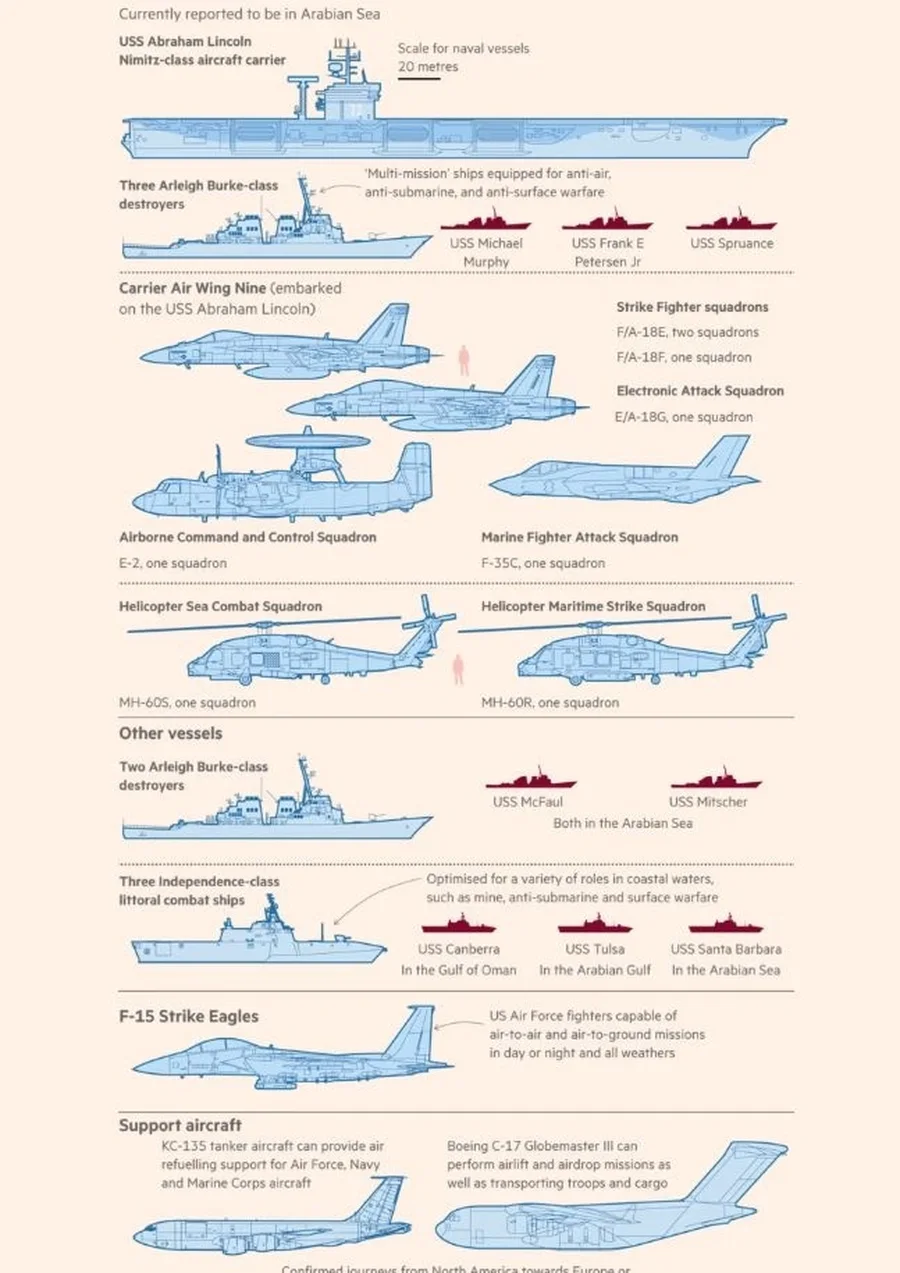
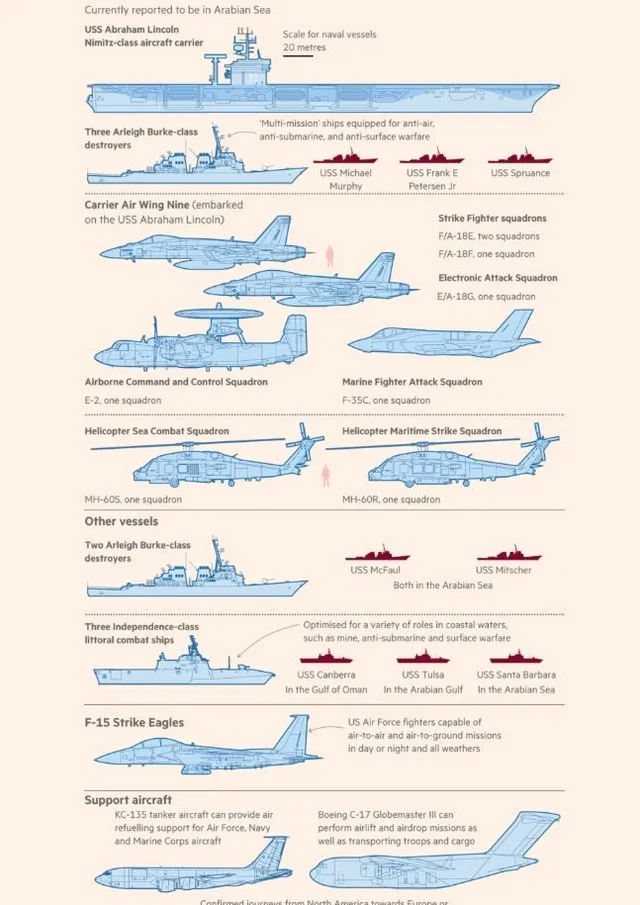
The US naval force in the Middle East and eastern Mediterranean, with two aircraft carriers and 14 warships, is the largest deployed to the region since 2013 and the start of Operation Iraqi Freedom, when five carrier strike groups were concentrated. The USS Gerald R. Ford carrier strike group is expected to operate within range of Iranian territory, joining forces with the USS Abraham Lincoln carrier strike group and additional aircraft squadrons based in the Persian Gulf.
The Patriot and Terminal High Altitude Area Defense (THAAD) systems, the main US air and missile defense systems designed to defend against short- and medium-range ballistic missiles, have also been reinforced to protect US forces and allies. Pentagon officials have described the deployments as defensive and say they are intended to prevent escalation. However, the scale of the deployment raises concerns that any attack on Iran could provoke missile attacks, naval harassment in the Strait of Hormuz, or actions by proxy forces in Iraq, Syria and elsewhere.
In Washington, the internal discussions reflect a broader tension between political objectives and military reality. While President Donald Trump is said to be aiming for a powerful show of force, senior commanders have stressed that wars rarely go according to plan and that even limited attacks can have unpredictable consequences.
In private meetings, Gen. Dan Caine, chairman of the Joint Chiefs of Staff, has informed President Trump that a prolonged military campaign against Iran could have significant consequences, including retaliation by Tehran and its allies against U.S. forces and regional partners. Such an escalation, officials warned, could require additional U.S. troops and resources.
The current force is capable of carrying out strikes on Iran and defending U.S. allies and partners in the region. However, it does not include marines, special operations forces for ground operations, or the logistics chain for a sustained air campaign. It is also much smaller than the force the U.S. used in 1991 and 2003 against Iraq for extensive combat operations and regime change, as the Center for Strategic and International Studies (CSIS) points out.
The American threat
Fillimisht, kërcënimet e SHBA-së u përqendruan në mbrojtjen e protestuesve iranianë. Më 2 janar, presidenti Trump publikoi në Truth Social se “nëse Irani qëllon dhe vret me dhunë protestues paqësorë”, SHBA “do të nxitojnë për t’i shpëtuar”. Pas kësaj erdhi kërcënimi për vendosjen e tarifave ndaj partnerëve tregtarë të Iranit.
Në atë kohë, SHBA mund të ndërmerrnin një sulm ndëshkues, por nuk kishin kapacitetin të mbronin plotësisht aleatët dhe partnerët e tyre në rajon, të cilët kishin frikë nga kundërpërgjigjja iraniane. Nuk kishte aeroplanmbajtëse në rajon, pasi USS Gerald R. Ford dhe shoqërueset e saj ishin dërguar në Karaibe. Për të mbuluar boshllëkun, grupi goditës i USS Abraham Lincoln u urdhërua të drejtohej drejt Lindjes së Mesme rreth 15 janarit, por iu desh më shumë se një javë për të mbërritur. Qeveria iraniane pati kohë të shtypte protestat.
Më pas, presidenti Trump kërkoi që Irani të braktiste ambiciet bërthamore – një objektiv i kahershëm politik i SHBA-së. Më 28 janar, Trump shkroi se “një armadë e madhe po drejtohet drejt Iranit”. Ai kërcënoi me një tjetër sulm si Operacioni “Sledgehammer i Mesnatës”, nëse Irani nuk “vjen shpejt në tryezë dhe negocion një marrëveshje të drejtë dhe të barabartë – pa armë bërthamore”. Ford u dërgua nga Karaibet përsëri në Mesdhe më 12 shkurt. Pasuan forcat ajrore.
Forcat në perspektivë historike
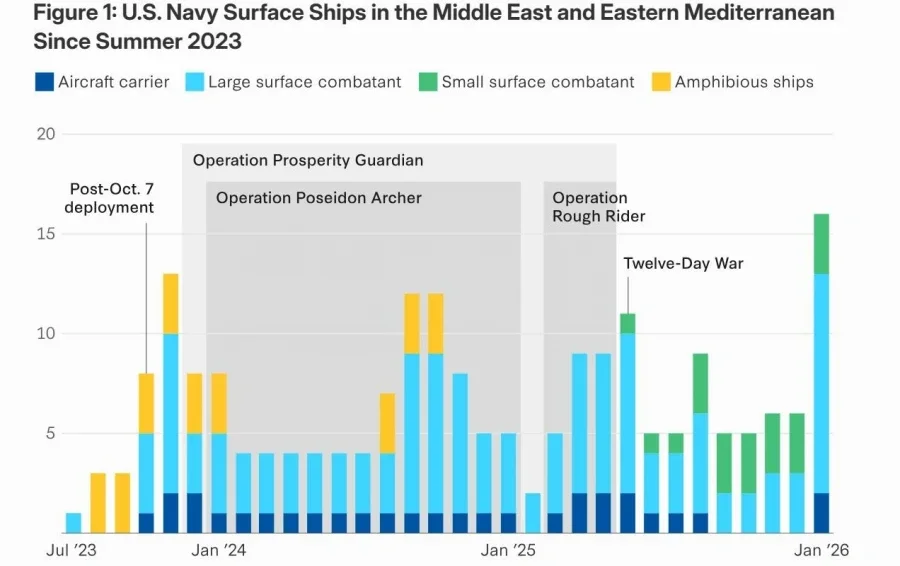
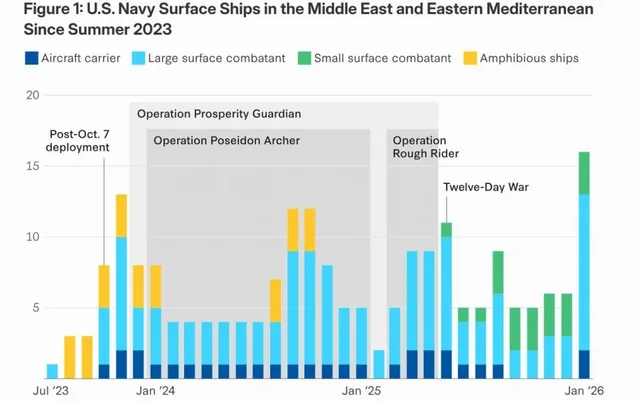
Lindja e Mesme ka pasur prej kohësh prani detare amerikane, megjithëse në nivele të ulëta vitet e fundit. Niveli i forcave u rrit pas sulmeve të Hamasit ndaj Izraelit më 7 tetor. Shtetet e Bashkuara mbajtën të paktën një aeroplanmbajtëse në rajonin Evropë–Lindje e Mesme pas tetorit 2023. Në fillim të mandatit të dytë të Trump, dy aeroplanmbajtëse ndodheshin në Lindjen e Mesme, ndërsa SHBA kryen sulme ajrore dhe detare kundër Houthive në kuadër të Operacionit “Rough Rider”. Tensionet mes Izraelit dhe Iranit u përshkallëzuan gjithashtu, pasi shkëmbimet me raketa në prill 2024 çuan në Luftën Dymbëdhjetëditore në qershor 2025.
Në tetor 2025, aeroplanmbajtësja Ford u dërgua në Karaibe dhe nuk kishte mbulim me aeroplanmbajtëse në Evropë apo Lindjen e Mesme. Kjo ishte në përputhje me Strategjinë Kombëtare të Sigurisë të administratës Trump, të publikuar në dhjetor 2025, e cila parashikonte tërheqje forcash nga rajoni me argumentin se Irani dhe aleatët e tij ishin mposhtur.
“Armata” e Lindjes së Mesme
Dislokimi aktual detar shënon një kulm të ri të pranisë së anijeve në Lindjen e Mesme që nga fillimi i luftës rajonale në vitin 2023. Pasi Ford (që mbërriti dje në Gjirin e Sudës në Kretë) të bashkohet me forcat, SHBA do të ketë dy aeroplanmbajtëse, 11 kryqëzorë dhe shkatërrues, si dhe tre anije të vogla luftarake në rajon.
This level is comparable to Operation Desert Fox, a four-day bombing campaign against Saddam Hussein’s Iraq in 1998. At the time, President Bill Clinton ordered the strikes after Iraq refused to cooperate with UN nuclear inspectors. The bombing ended after 70 hours, and Clinton declared that the objective of “degrading the WMD program and its delivery systems” had been achieved.
However, the current level of forces is much lower than that used in 1990 to expel Iraqi forces from Kuwait and in 2003 to overthrow the regime of Saddam Hussein.
US Naval and General Forces
Today, the US Navy consists of 292 ships, of which 223 are combat ships (USS) and 59 are support ships (USNS). Most are in port or in maintenance and training, while less than a fifth are at sea on operations. A total of 51 ships are at sea, 18 of them in the Middle East (16 USS and 2 USNS). This means that 35% of the operationally ready ships are in this region.
In parallel with the naval assets, the Trump administration has concentrated a large number of aircraft in the Middle East. Aircraft based in Europe may also be moved to the region. The influx of additional aircraft continues - several F-22s arrived this week at RAF Lakenheath in the United Kingdom.
The analysis estimates that with current capabilities, the US could launch 50–100 Tomahawk and other long-range missiles against the Islamic Revolutionary Guard Corps and targets supporting Iran’s nuclear program. Such an operation would be consistent with the president’s stated rationale for using military force: supporting protesters and preventing Iran from acquiring nuclear weapons.
The large number of transport aircraft (C-17 and C-5M) and tanker aircraft (KC-135 and KC-46A) moving to the region does not indicate the deployment of ground forces. These aircraft transport vehicles, support equipment, and ammunition for air squadrons.
US forces do not include special operations units and ground forces needed for raids or field operations. Consequently, capturing the Iranian leadership does not appear to be a realistic option, especially given the distance from Tehran.
Also, the available forces are not sufficient for regime change beyond limited targeted attacks. A multi-week air campaign would require significant logistical reinforcements and additional time for preparation. / Adapt Pamphlet /




Lini një Përgjigje