


 Shkruar nga Pamfleti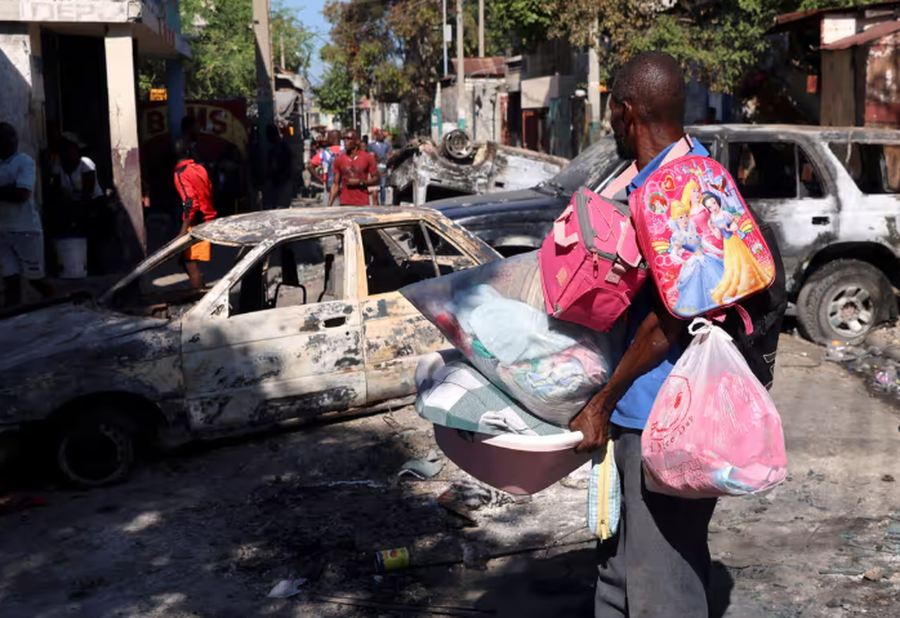
The United States has designated a powerful alliance of Haitian gangs, whose members have taken control of almost the entire capital, as a "transnational terrorist group."
The criminal coalition known as Viv Ansanm (We Live Together) and another faction, the Gran Grif gang, which in October claimed responsibility for a shocking massacre of at least 115 people in the town of Pont-Sondé, will be treated as a terrorist group.
"They are a direct threat to U.S. national security interests in our region," U.S. Secretary of State Marco Rubio said in a statement, adding that providing material support or resources to gangs could lead to "criminal charges and inadmissibility or deportation from the United States."
The conflict in Haiti has been met with little international reaction, while neighboring countries, including the US, have continued to deport migrants back to the Caribbean nation, despite pleas from the United Nations not to do so due to humanitarian concerns.
More than 1 million people have been displaced by the conflict and tens of thousands more in recent weeks as violence has spread to central Haiti, forcing more health facilities to close their doors and pushing more people into severe food insecurity.
The freezing of US funding for security efforts and the disbanding of the US Agency for International Development, as well as other cuts, also complicate the situation.
The latest designations come after the US in February designated Venezuela's Tren de Aragua gang, along with a number of other organized crime groups across Latin America, including Mexico's Sinaloa cartel, as global terrorist organizations.
It was not clear what impact, if any, the designation as a terrorist would have with regard to Haiti.
Those doing business in Haiti could also be affected by the new designation. Gangs control areas around a key fuel depot and the country's largest and most important port, as well as the main roads leading in and out of the capital, where they levy taxes.
"It could function as a de facto embargo," said Jake Johnston, director of international research at the Washington-based Center for Economic and Policy Research.
Armed groups in Haiti have made significant advances in the first half of 2025, as an under-resourced UN-backed security mission has stalled and, along with the police, has been unable to stop the advance of heavily armed and well-funded gangs.
The UN has called for tougher measures to prevent arms trafficking to Haitian gangs, particularly from the US, which it said was the main source of illegal firearms into Haiti through ports in Florida.
Haiti has not held elections since 2016 and the then-president-elect, Jovenel Moïse, was assassinated in 2021.






Lini një Përgjigje