


 Shkruar nga Pamfleti
US President Donald Trump is privately considering withdrawing the United States from the United States-Mexico-Canada Agreement (USMCA), according to people familiar with the discussions, Bloomberg News reported . The move would add uncertainty to negotiations to revise the agreement between the three countries.
According to the same sources, Trump has asked his aides for explanations on why the US should not withdraw from the agreement he himself signed during his first term. However, he has not officially signaled that he has made a decision to leave.
A White House official described the president as the ultimate decision-maker, stressing that any discussion of withdrawal remains speculative until an official announcement. A representative of the Office of the U.S. Trade Representative, Jamieson Greer, also stated that the administration intends to keep all options open and does not consider an automatic extension of the 2019 terms to be in the national interest.
Greer confirmed that Washington will hold separate talks with Mexico and Canada. He assessed that negotiations with Mexico are proceeding pragmatically, while trade relations with Canada are more tense. He did not clarify whether Trump would approve an extension of the agreement.
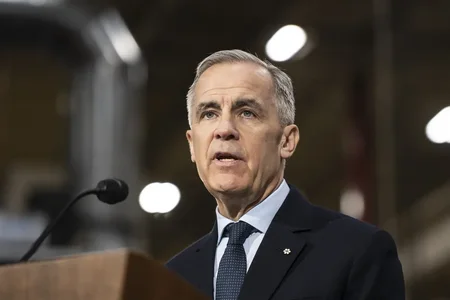
Mexican President Claudia Sheinbaum downplayed the possibility of a US withdrawal, stating that the issue had not been raised in talks between the parties and that the agreement was of great importance to the US. Canadian Prime Minister Mark Carney said he had a “positive” conversation with Trump, which included reviewing the USMCA, without providing further details.
The USMCA is set to undergo a mandatory review on July 1, a process that was initially seen as a formality but has now turned into a complicated negotiation. Trump has sought additional trade concessions from Ottawa and Mexico City, and has linked the discussions to other issues, including immigration, drug trafficking and defense.
According to US officials, the administration will recommend renewing the agreement if an agreement is reached that includes stronger rules of origin for industrial products, greater cooperation on critical minerals, worker protections and anti-dumping measures.
If the parties agree to the extension, the agreement will remain in force for another 16 years. Otherwise, an annual review process will be activated until its expiration in 2036. Any country can give six months' notice of withdrawal.




Lini një Përgjigje