


 Shkruar nga Pamfleti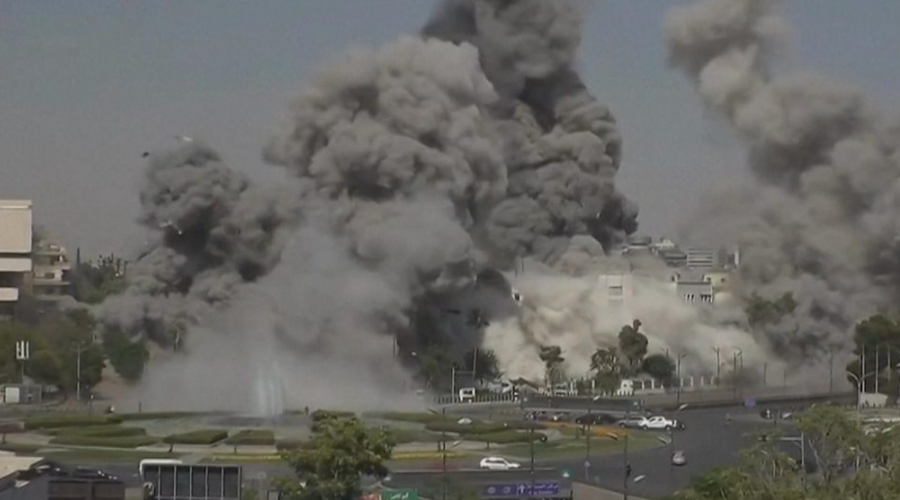
"We have agreed on specific steps that will put an end to this disturbing and terrible situation tonight."
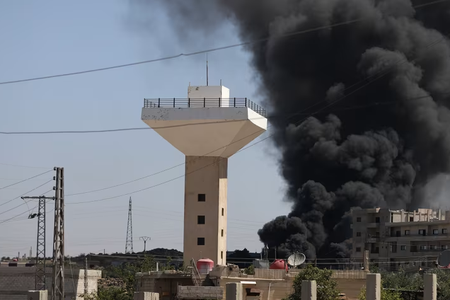
On Wednesday, the Israeli military carried out airstrikes for the third consecutive day against the Syrian defense ministry in Damascus and government forces in southern Syria, as fierce sectarian fighting in the mainly Druze province of Suweida continues to escalate.
According to the Syrian Observatory for Human Rights (SOHR), more than 350 people have been killed since Sunday, when clashes erupted between Druze militias and Bedouin tribes in Suweida, sparked by the kidnapping of a Druze merchant on the highway to Damascus, reports 'CNN'.
Israeli Prime Minister Benjamin Netanyahu said the attacks were aimed at “saving our Druze brothers,” highlighting the strong ties between the Druze community in Israel, the occupied Golan Heights, and the Druze in Syria. Meanwhile, Syrian interim President Ahmed al-Sharaa accused Israel of “large-scale escalation.” The Syrian Foreign Ministry condemned the attacks as “a flagrant violation of the UN Charter and international humanitarian law,” claiming they were aimed at destabilizing Syria.
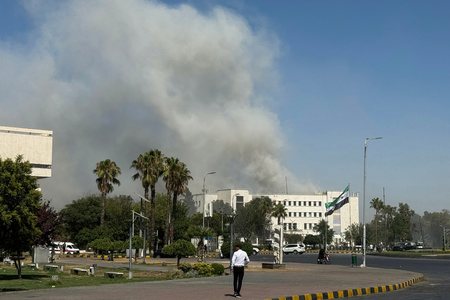
The Israeli strikes, including strikes on the entrance to the defense ministry in Umayyad Square and a military target near the presidential palace in Damascus, were accompanied by strong warnings. Israeli Defense Minister Israel Katz declared on X that “the warnings for Damascus are over” and that Israeli forces would continue to strike until Syrian forces fully withdrew from Suweida. Israel reportedly destroyed armored vehicles and weapons depots suspected of being sent to government forces in the south.
Meanwhile, the Syrian army announced the withdrawal of forces from Suweida late on Wednesday, following an agreement with local religious leaders, the state news agency Sana reported. US Secretary of State Marco Rubio confirmed on X that “specific steps” had been agreed to end the violence, reflecting diplomatic efforts by the US and Arab parties to calm the situation.
"We agreed on specific steps that will end this disturbing and horrific situation tonight ," US Secretary of State Marco Rubio wrote on X.
However, Israel has yet to comment on these ceasefire attempts. The humanitarian situation in Suweida has deteriorated significantly, with reports of tank attacks on the national hospital and acute shortages of water and medical supplies. Local witnesses describe chaotic scenes of looting, extrajudicial killings and civilians being killed by snipers.
SOHR reports that the casualties include 79 Druze fighters, 55 civilians (27 killed by government forces), 189 government soldiers and 18 Bedouin fighters. The fighting in Suweida began after the kidnapping of a Druze merchant, leading to mutual attacks between the Druze and Bedouin communities. Syrian government forces, sent to restore order, were accused by the Druze of abuses, further escalating the conflict.
Hundreds of Israeli Druze crossed the fortified border with Syria to support their compatriots, prompting a response from the Israeli army, which used tear gas to disperse the crowds. Israel has intensified its operations in Syria since the ouster of Bashar al-Assad in December, carrying out hundreds of airstrikes and occupying a UN-monitored buffer zone near the Golan Heights.
Netanyahu has called for the complete demilitarization of Suweida and has expressed concerns about the presence of the Islamist group Hayat Tahrir al-Sham (HTS), affiliated with the Sharaa government, which Israel sees as a threat. Internationally, the Israeli attacks have been condemned by the UN and Turkey, while the US and Arab parties are working towards a peaceful solution. However, sectarian tensions and Israeli intervention risk further destabilizing Syria, while efforts at a ceasefire remain fragile./ Pamphlet





Lini një Përgjigje