


 Shkruar nga Pamfleti
Syria under siege: From Turkey in the North to Israel in the South, the race to divide the country...
Despite the severity of the crisis, Syria continues to remain out of the international spotlight. The reasons are many. First, there is a whole mass of “experts”, pseudo-analysts and opportunists who for years preached that, with the overthrow of Bashar al-Assad, Syria would turn into a kind of Switzerland of the Middle East, where different communities would exchange flowers and hugs. But today, exactly what many “bad guys”, including local Christians accustomed to permanent tensions, had predicted is happening: despite his authoritarian character, Assad maintained a kind of balance over a society deeply divided along ethnic and religious lines and always at risk of explosion.
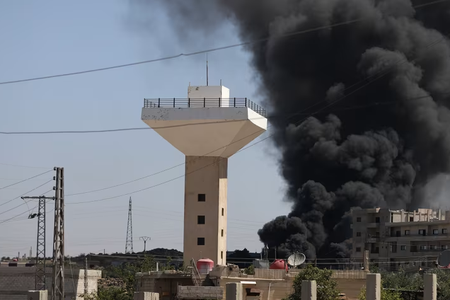
Now, the same international actors who for years imposed devastating sanctions on the Syrian people, but not on the regime elite, are the ones lifting those sanctions and embracing the new Al-Jolani/Al-Sharaa regime. Meanwhile, Syria has seen massacres of Alawites, bombings of Christian churches, clashes between Sunni militias and Kurdish forces, and now, open warfare between Sunni government forces and the Druze community in the south.
Media silence and the great international game
Another reason for the silence on Syria is the geopolitical context. The Russian intervention in 2015 saved the Assad regime from collapse in the face of the jihadist offensive, which was supported in various ways by the Gulf monarchies, Turkey and the West. After regaining control of Aleppo (2016), Russia's role turned into that of a "guarantor of stability" and arbiter between the interested powers: Turkey in the north had the green light to intervene and support the Islamists in Idlib; Israel freely struck Iranian targets, despite Russia having deployed advanced defense systems in Syria; while Assad was politically protected as long as he did not upset Turkey, Israel or the Americans in the east.
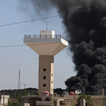
This was a delicate balance built on strategic bargaining, not principles. But everything changed when the once-restrained Erdoğan decided to extend his control over Syria. He activated Hayat Tahrir al-Sham and Jolani donned the moderate Al-Sharaa costume. This move, motivated by speculative interests, ruined everything. Russia retreated to Libya. Israel began an unrestricted bombing campaign against Syria and targeted the south of the country, including the Golan Heights, occupied since 1967.
The Druze issue and the "perfect excuse"
This is where the Druze come into play, a monotheistic community historically linked to Islamic, Judeo-Christian and Greco-Hellenic elements, spread across Syria, Lebanon, Israel and Jordan. In Syria they are concentrated in the south, especially in Suwayda, and during the civil war they have tried to remain neutral, between fear of Assad and the Islamist threat. They have created self-defense militias, which later were involved in the overthrow of the Assad regime and the retaking of Suwayda and Daraa.
Unlike Israel, where the Druze are integrated and serve in the army, in Syria they were never "bought" by Assad. Relations with the regime were through Russian mediation. When Al-Sharaa tried to convince them to merge their militias into the new Syrian army, he met with a firm refusal - now supported by Israel's growing position, strengthened after Hamas attacks in 2023.
After a wave of bombings (justified as “preventive”), Israel intervened directly in southern Syria, advancing as far as Damascus. The official pretext, the protection of the Druze, worked wonderfully: it secured the loyalty of the Israeli Druze, attempted to bring the Syrians closer, and served as an excuse to further expand the project of “Greater Israel.”
In practice, many Druze in Syria now cooperate with Israel and seek integration into the Jewish state, a process that is taking place step by step.
And the world… is silent
This whole situation, besides serving Tel Aviv's agenda, has been tacitly accepted by the international community. The strategy is now clear: to turn Syria into a crippled, powerless and fragmented state. The south under Israeli influence, the north under the control of Turkey (disappointed that it did not get more), and the oil-rich east in the hands of the Americans, ready to "open or close the tap" according to their interests.
This is why sanctions are being lifted and Al-Sharaa is being “rewarded”: because tomorrow, despite being formally in power, he will no longer have any real weight. He will be simply a symbolic figure in a state that will be administered from abroad, in the interests of Western, Arab and regional powers. /Adapted from “Pamphlet” by “Inside Over”


Lini një Përgjigje