


 Shkruar nga Nathalie Tocci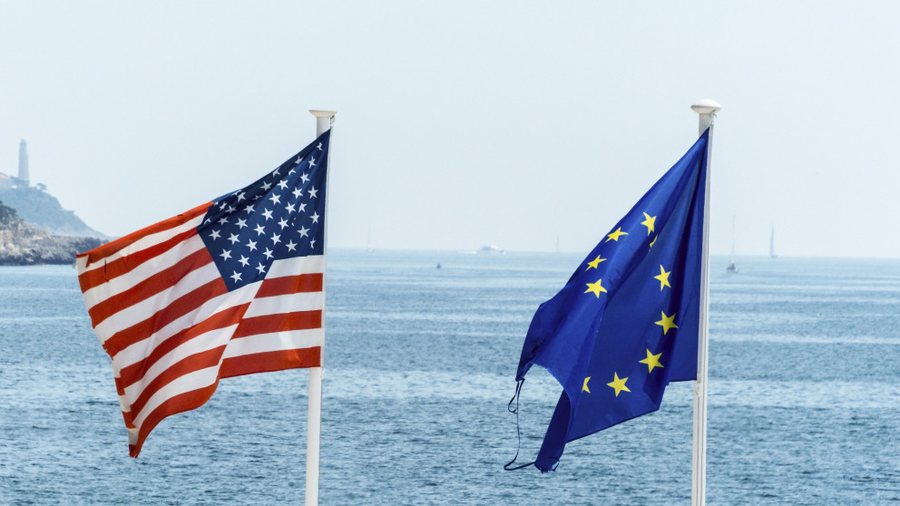
If Europe were not so dependent on Washington, it would impose sanctions on Israel over Gaza and condemn its unilateral attack on Iran.
The breakdown in the transatlantic relationship has left European leaders without a mind of their own to act in full autonomy. Europe urgently needs a mind of its own on the Middle East. Tragically, EU governments were just beginning to turn the page after a year and a half of complicity with the Israeli government’s war crimes in Gaza. Donald Trump’s shameful plans for a Gaza “riviera” and “humanitarian” initiatives that violate humanitarian principles were creating distance with the US, and European governments were beginning to chart their own course.
France and Saudi Arabia had planned a conference on the two-state solution, which could have led to Paris recognizing Palestinian statehood. More importantly, the EU had agreed to a revision of the EU-Israel association agreement, which, in light of Israel’s war crimes, should have led to the suspension of EU preferential trade with Tel Aviv, but now may not.
However, Israel’s military attack on Iran and the US’s ambiguous but visible support for this hostility have reversed Europe’s shift towards greater autonomy and moral clarity. There is certainly no love for the Iranian regime in EU capitals because of its human rights abuses and military cooperation with Russia, particularly in the war in Ukraine. Moreover, Europe rightly remains adamant that Iran should not have nuclear weapons. There is particular alarm about the latest report by the International Atomic Energy Agency on Iran’s violations of the non-proliferation treaty.
But traditionally we have stood firm on the need to resolve the Iranian nuclear issue through diplomacy. That is why in the early 2000s, European negotiators invented the "E3/EU format", which included diplomats from France, Germany and the United Kingdom together with the EU high representative to mediate on the Iranian nuclear file.
Today that world is gone. When Trump began direct negotiations with Iran, Europe was sidelined, excluded from any mediation process. Now, with Israel's military attack on Iran, we have failed to position ourselves with the necessary clarity: where was the denunciation of the bombing as a violation of the UN Charter (Article 2) and the Additional Protocol to the Geneva Conventions (Article 56), which specifically prohibits attacks against a state's nuclear facilities? It is one thing to support Israel's (or any other state's) right to self-defense. It is quite another to legitimize preemptive strikes.
This chronic powerlessness arises because Europe has traditionally seen the world through a transatlantic lens. On most international issues, it has, for decades, worked closely with Washington, using aid, trade, diplomacy, sanctions, defense, and EU integration to support U.S. foreign policy goals, convinced that the overriding values and interests were shared.
Only on rare occasions have European countries openly opposed the US – as France and Germany did with the Bush administration during the US-led war in Iraq in 2003. Even where there has been a change in approach, Europe has tried to influence US foreign policy by softening its hard-line stances rather than obstructing them. European mediation on the Iran nuclear issue, for example, led to the Joint Comprehensive Plan of Action in 2015. And as the global rivalry between the US and China deepened, EU governments distanced themselves from US calls for the decoupling of Western and Chinese economies, promoting instead the softer alternative of “de-risking”.
Yet Trump’s foreign policy destruction has created a world in which Europeans must stand on their own two feet. And they are facing difficulties. On Ukraine, Europe has learned the hard way and is standing firm, maintaining financial and military aid to Kiev while exploring ways to fill the gaps in the event of a US withdrawal.
But Ukraine aside, we are in a difficult situation. It is true that Europe has hardened its stance towards Beijing; it is no longer optimistic about China’s Belt and Road Initiative and the strategic risk that Beijing’s policies pose to Europe. The EU has begun to scrutinize Chinese investment in Europe and has raised tariffs on Chinese electric vehicles.
But Trump’s mixed signals mean that Europe needs to figure out for itself what it thinks and wants from Beijing. The EU cannot afford a trade war on multiple fronts, especially if its trade talks with Washington fail.
European governments also know that there is no way they can achieve climate neutrality by 2050, which is now legally binding, without working with China, a leader in the green economy. Even in the unlikely event of a comprehensive “deal” between Trump and Xi Jinping, it is hard to imagine Europeans returning to the old days in which China was seen only as an economic partner and ally in defense of multilateralism. Europeans need to develop their own ideas and policies independently of a dysfunctional White House, but they do not know how to achieve this.
In its political wobble over the latest war, Europe has neither won favor with Washington nor improved its standing with Israel. Meanwhile, it has lost all credibility as an honest broker with Iran. The icing on the cake is that Russia has presented itself as a potential broker, with Trump making this absurd proposition clear.
The danger is that Europe will now block its own path to a more morally principled approach to the horrors in Gaza: the coming days will show whether the EU will suspend its trade agreement with Israel, or whether this too will be put on the back burner.
Ukraine is Europe's core security interest. However, war, chaos and nuclear proliferation in the Middle East - which could be the unintended consequences of an Israel-Iran war - are more important to Europe than to the US. So far, the European response has fallen far short of thinking or acting independently of the US. / Adapted from "Pamphlet" by "TheGuardian"


Lini një Përgjigje