


 Shkruar nga Pamfleti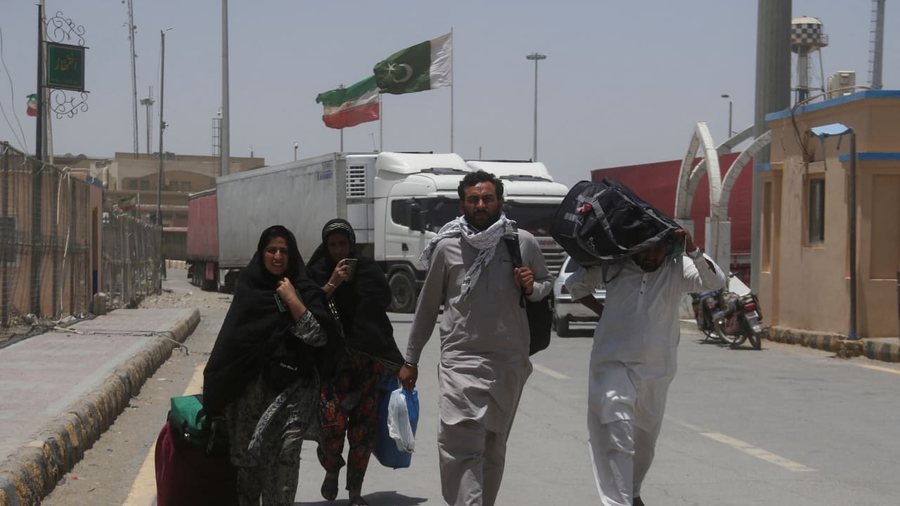
The Iran-Pakistan border region is populated by ethnic Baloch, a minority in both countries who have long complained of discrimination and launched separatist movements. On the Pakistani side, the region is a province called Balochistan and in Iran it is Sistan-Baluchistan...
Separatist and jihadist militants on the Pakistan-Iran border could benefit from any destabilization in the latter, a fear that Pakistan's army chief expressed in a meeting this week with US President Donald Trump.
Anti-Iranian and anti-Pakistani groups operate on both sides of the 900km-long border. While Israel bombs Iran's nuclear program, its officials have repeatedly shown that they are seeking to destabilize the Iranian government or see it toppled.
In addition to concerns about the chaos that could spread from Iran, Pakistan is also concerned about the precedent set by Israel by attacking another country's nuclear facilities. Nuclear-armed rivals Pakistan and India fought a four-day conflict in May.
After a lunch Wednesday at the White House with Pakistan's army chief, Field Marshal Asim Munir, Trump said: "They're not happy about anything," referring to Pakistan's views on the Israel-Iran conflict.
Pakistan's military said on Thursday that the two had discussed Iran, "with both leaders stressing the importance of resolving the conflict."
Pakistan has condemned Israel's attack on Iran as a violation of international law.
“This is a very serious issue for us, what is happening in our brotherly country of Iran,” Shafqat Ali Khan, a spokesman for Pakistan’s Foreign Ministry, said on Thursday. “This endangers all regional security structures, it affects us deeply.”
Since the start of Operation Rising Lion, the US Department of Defense has increased the number of missile defense systems stationed in the region.
Jaish al-Adl (JaA), an Iranian jihadist group formed by Baloch and Sunni Muslim ethnic minorities and operating from Pakistan, said Israel's conflict with Iran was a great opportunity.
"Jaish al-Adl extends the hand of brotherhood and friendship to all the people of Iran and calls on all people, especially the people of Baluchistan, as well as the armed forces, to join the ranks of the Resistance," the group said in a statement on June 13.
Conversely, Pakistan fears that separatist militants from its own Baloch minority, who are based in Iran, will also seek to increase attacks.
"There is a fear of ungoverned spaces, which would be fertile ground for terrorist groups," said Maleeha Lodhi, a former Pakistani ambassador to Washington.
Pakistan, which shares volatile borders with Taliban-ruled Afghanistan and arch-rival India, does not want to add another volatile border to its long border with Iran.
The Iran-Pakistan border region is populated by ethnic Baloch, a minority in both countries who have long complained of discrimination and launched separatist movements.
On the Pakistani side, the region is a province called Balochistan and in Iran it is Sistan-Baluchistan.
Until Israel's bombing of Iran, Tehran was closer to Pakistan's arch-rival, India. Pakistan and Iran even exchanged airstrikes last year, accusing each other of harboring Baloch militants. But the attack on Iran has upended the alliances, as India has not condemned Israel's bombing campaign.
China has also said it is deeply concerned about the security situation in Balochistan, with the area at the center of Beijing's multi-billion dollar infrastructure investment program in Pakistan, centered on the new Chinese-run Gadag port. Baloch militant groups in Pakistan have previously targeted Chinese personnel and projects.
On the Iranian side of the border, Tehran has at various times accused Pakistan, Gulf countries, Israel and the United States of supporting anti-Iranian Baluchi groups.
Simbal Khan, an Islamabad-based analyst, said the various Baloch groups could morph into a "Greater Balochistan" movement, which seeks to create a new nation from the Baloch areas of Pakistan and Iran.
"They will all fight together if this breaks out," Khan said. / Adapted from the Jerusalem Post Pamphlet/



Lini një Përgjigje