


 Shkruar nga Pamfleti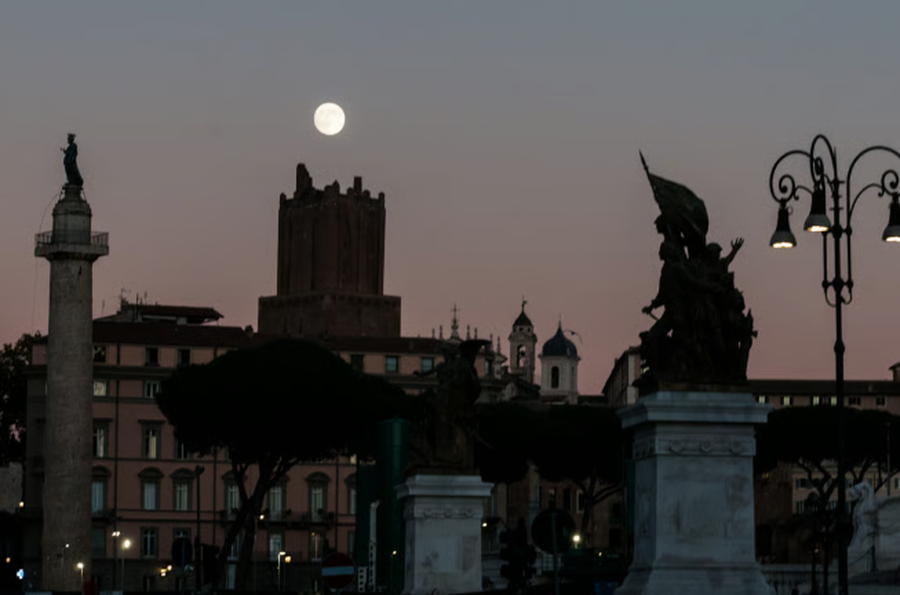
Once the envy of the world, the bloc's supremacy has faded. The EU is not only politically divided, it is also lagging behind in the industries that will define the rest of this century...
In the late 1400s, Italy was the jewel of Europe. Venice ruled the seas; Florence dominated art and finance; and Milan led in trade and technology. No corner of the Western world was more advanced. Yet within decades, both its political independence and economic supremacy disappeared. Europe today risks a similar fate.
Once the envy of the world, the bloc's supremacy has faded. The EU is not only politically divided, it is also falling behind in the industries that will define the rest of this century. Young talent is fleeing to the US and Asia, while its economy increasingly resembles an open-air museum of past achievements.
Whether in growth, technology, industry or living standards, Europe is in danger of becoming a province in a world defined by others. And it has something to learn from Italy's decline.
The warning signs are unmistakable: Since 2008, EU GDP has expanded by just 18 percent, while the US grew twice as fast and China grew almost three times as fast. Tourism across the continent is still booming, of course, but the millions of people following their escapades on Instagram are not enough to offset the slowdown, and it also comes at a cost.
The decline in living standards across the bloc echoes that of Renaissance Italy. Around 1450, per capita income in Italy was 50 percent higher than in the Netherlands. A century later, the Dutch were 15 percent richer, and by 1650, they were almost twice as rich.
Modern Europe is slipping even faster than that. In 1995, Germany’s GDP per capita was 10 percent higher than America’s, while today the US is 60 percent higher. At this rate, Germany’s prosperity levels could shrink to a third of its transatlantic partner’s within a generation.
Like Renaissance Italy, this economic plight reflected a deep technological gap. Once queen of the seas, Venice had embraced old technology and paid the price. Its galleys, brilliant in the calm waters of the Mediterranean, were no match for the ocean-going caravans that carried Spain and Portugal around the world.
Modern Europe is now doing the same: In artificial intelligence, the EU invests barely 4 percent of what the US does. Today, OpenAI is valued at $500 billion, while Europe’s largest AI startup, Mistral, is worth just $15 billion. Despite being a pioneer in quantum science, Europe lags behind in commercialization — a single American startup, IonQ, has raised more capital than all the blockchain quantum firms combined.
Even when it comes to batteries, Sweden's much-touted Northvolt company went bankrupt in March, only to be acquired by a Silicon Valley startup.
Traditional industries are also reeling. Taken together, Germany’s three major carmakers are worth just an eighth of Tesla. Ericsson and Nokia, once world leaders in mobile network technology, are lagging behind Asian rivals in 5G. And France’s Arianespace, once dominant in satellite launches, now relies on the rockets of tech billionaire Elon Musk.
The problem is not invention, but scale. Despite its best engineers and universities, nearly 30 percent of the bloc’s largest countries have moved to the US since 2008, taking with them its greatest entrepreneurial spirits. It seems that the continent fosters ideas, while America fosters them and wins, another model that mirrors Italy, which supplied talent while others built empires. Its greatest explorers like Columbus, Cabot, Vespucci and Verrazzano were also trained in the country, only to sail under foreign flags.
The underlying issue in both cases is political. Like the warring city-states of Italy in the 1500s, today’s Europe is divided and weak. Capitals bicker over energy, debt, migration and industrial policy; a common defence strategy remains only an aspiration; and ambitious plans for joint technology spending or deeper capital markets are drowned in debate.
This division is what doomed Italy, as it fell prey to foreign powers that ultimately tore the peninsula apart. And the bloc’s current divisions leave it equally vulnerable to global competitors, as Washington dictates defense; Russia threatens the continent’s east; China dominates supply chains; and Silicon Valley rules the digital economy.
But is all of this destined? Not necessarily.
The EU has built institutions that Renaissance Italy could never have dreamed of: a single market, a currency, a parliament. It still houses world-class research institutions and excels in advanced manufacturing, pharmaceuticals, aerospace, green energy and design. The continent can still lead, but only if it acts.
Sixteenth-century Italy had no such chance. Geography locked it to the Mediterranean, as trade routes shifted to the Atlantic and commerce stagnated. New naval technologies left its fleets behind, and its brightest minds sought their fortunes abroad. But Europe faces no such constraint.
Nothing is stopping her except her shyness and political strife.
The bloc must accept the costs now in order to avoid the biggest costs later: irrelevance. It must invest heavily in advanced technologies like artificial intelligence, quantum technology, space, and biotechnology, while also building real defenses and creating deep capital markets so startups can scale up domestically.
The recipes are known. Former Italian Prime Minister Mario Draghi detailed them in his report on the future of the EU. What is missing is the political will. Once the beating heart of Europe, Italy eventually became a country of visitors rather than innovators. And the lesson of history is clear: Its culture survived, but its power withered.
The EU still has time to avoid that fate. Europeans can either wake up, or accept becoming a continent of echoing monuments and memories. / Adapted from "Pamphlet" by "Politico"








Lini një Përgjigje