


 Shkruar nga Pamfleti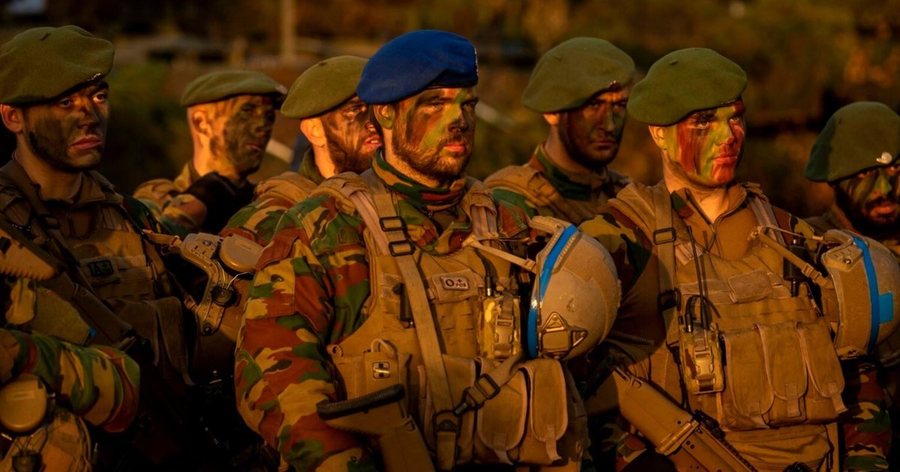
This month, NATO will begin its largest military exercise since the end of the Cold War, Steadfast Defender 24, involving 90,000 troops from all 31 members of the military alliance, as well as Sweden, which was invited by NATO. -ja, in different types of maneuvers on land, sea and air in a time frame of four months.
While official NATO documents do not directly say that they are exercising for a possible Russian offensive on allied territory, it is very clear that they want to test how they would fare "during a simulated developing conflict scenario with a close opponent". Privately, NATO sources admit without hesitation that "of course this is about Russia".
And, simply, take a look at the alliance's geography and training schedule and it becomes even more evident. Roughly, the Steadfast Defender 24 training involves two phases. The first, which will slowly begin in late January, involves the transatlantic buildup of forces. This is actually the key to seeing if the United States can deploy large numbers of troops and equipment to continental Europe to prepare a defense.
Do not underestimate the symbolism of this phase as the United States is now entering the heated phase of the presidential election campaign, which will culminate in November. And with that, of course, there is a significant likelihood that American voters will return to the White House a president who has questioned the purpose of NATO and specifically its Article 5, which states that an attack on one member is an attack on All of you.
Without American commitment at this point, the question is, indeed, whether the military alliance is dead. And that's a question that won't go away anytime soon.
So while images of US troops training alongside other nations and various types of attacks in the Atlantic and off the coast of Great Britain, Norway and Spain in the next couple of months may not completely assuage European fears that the U.S. The United States will be less committed in the near future, but they will still be an impressive sight with more than 50 naval vessels such as aircraft carriers, frigates and destroyers.
The second phase of the exercise is just as crucial, and it is likely to be this phase that will really show whether NATO can defend its most vulnerable eastern flank.
The purpose of this phase, according to the alliance, is to see if the alliance can "conduct and develop complex multi-domain operations for several months, over thousands of kilometers, from northern to central and eastern Europe, and in all kinds of conditions." . Again, this is the kind of war that could be expected if Russia attacked.
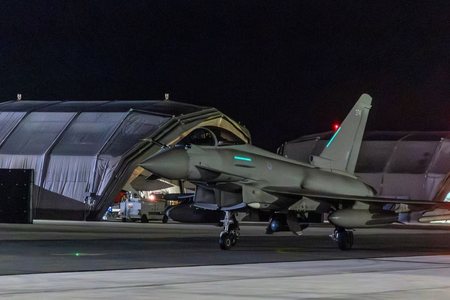
Starting in mid-February and ending in late May, you will have a series of exercises, mostly on the ground and in the air, involving up to 80 air platforms, such as F35 fighter jets, helicopters and drones, as well as over 1,000 combat vehicles , including 166 tanks. The epicenter will be in Poland and the Baltic states, as well as in Germany, which will serve as a major center for reinforcement and coordination.
But exercises are also expected across the Nordic region, including Sweden, as well as the Czech Republic, Hungary, North Macedonia, Romania and non-NATO countries, as well as constitutionally neutral Moldova. For obvious reasons, nothing will take place in Ukraine and Ukrainian troops will not participate in any of the exercises.
It will also be the first real opportunity for NATO to test some aspects of its new defense plans, agreed at the NATO summit in Vilnius last July, in a 4,000-page document. , according to which each ally knows exactly which part of the land in the alliance it must defend if NATO is attacked.
Another big test will be how well the alliance's Very High Readiness Joint Task Force (VJTF), which was created as a direct response to Russia's annexation of Crimea in 2014, is performing. It contains about 6,000 troops that should be deployed within days to every part of the alliance and will be one of the main components of any possible attack.
While the exercise has been years in the planning, it comes at an important time. Two years after Russia's full-scale invasion of Ukraine, it should act as a guarantee that the alliance is ready in case the war expands and comes closer to and beyond NATO's borders. The last exercise, which was larger than this, took place in 1988 with 125,000 troops. Only "Trident Juncture" in 2018 came somewhat close to 50 thousand troops. So both the scale and the numbers are impressive and symbolic.
The question, however, is whether it will really ease fears in Europe.
Arms shipments to Ukraine have fallen alarmingly in recent months, with NATO military committee chairman Rob Bauer saying in the autumn that Western arms industries must step up as "the bottom of the barrel is now in sight". . And there have been many official warnings recently that European allies must take action and prepare that the ongoing war may not be limited to Ukraine. And these warnings have not only come from countries near the front.
The head of the Belgian army, Michel Hofmann, noted recently that the possibility of Putin opening a second war front in Moldova or the Baltic states was not ruled out. And his Swedish counterpart, Micael Byden, recently warned that everyone in his country "must mentally prepare for war", causing a kind of panic in the Scandinavian nation, where people began rushing to the shops to buy fuel. extra and basic survival items.
What effect the Steadfast Defender will ultimately have remains to be seen, but this spring we will see images that will probably frighten and reassure Europeans in equal measure./REL


Lini një Përgjigje