


 Shkruar nga Boris Vukotiç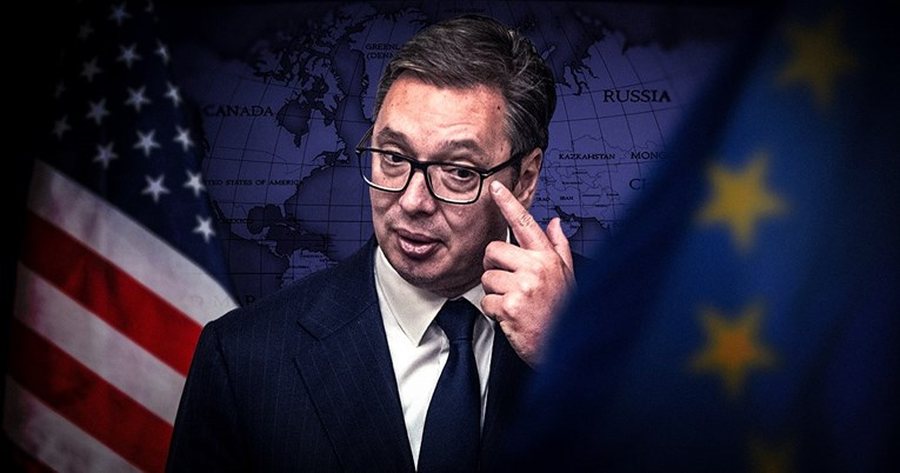
European officials believed, and it seems many of them still believe, that Vucic, regardless of his resume and the policies he leads, could ultimately be a critical and key player that would enable Brussels to approach his geostrategic goals in the Balkans.
In recent years, European Union officials have fundamentally undermined their credibility by always choosing regional stability over upholding democratic principles and values in Serbia. In fact, if there were some meager and miserable progress in terms of good governance, rule of law, strengthening of system institutions and at least formal respect for basic human rights, things would be different.
But all this was erased by the authoritarian, undemocratic, uncontrolled and unlimited rule of Serbian President Aleksandar Vučić. Since his return to power in 2012, the fragile and underdeveloped democratic roots in Serbia have been completely destroyed. Vučić's centre-right Serbian Progressive Party has established absolute control over the main levers of government, mainly the judiciary, security services and the media.
Vučić used the corrupt media to the core to brutally deal with political opponents, be they parties, the NGO sector, a small number of independent journalists or ordinary citizens. Basically, Serbia is stuck in a kind of "soft autocracy" because Vučić's control over the centers of Serbian power is completely rounded and democratic processes are distorted to the point of strangeness. Therefore, there is not the slightest possibility to characterize such a system as objectively democratic.
Media control
Initially, Vucic stifled the independent and objective press by taking control of its main source of income: advertising. Most of the advertising agencies were owned by media moguls who were loyal to him. Instead of basing advertising budgets on market factors, they bought advertising space from television stations and newspapers that reported favorably on the president, and withheld funds from those who criticized him.
After the initial accumulation of capital, over time, loyal and service-oriented media became the mainstream of Serbia's media space, a hotbed of corruption, money laundering, inaccurate, biased and non-objective information. Vučić's media factories of propaganda lies, which in terms of the way they communicate with citizens, have begun to resemble grotesque Spanish soap operas more than objective sources of information. In accordance with the above, the president of the European Federation of Journalists, Mogens Blicher Bjerregard, in an interview for Radio Free Europe in October 2017, emphasized that Serbia is the country with "the most serious violation of media freedom in the Balkans". A little more than six years after this statement, the situation in Serbia is even worse.
The European Union pretended to be naive
However, despite what was mentioned above, the European Union "suffered and continues to suffer" the autocratic regime of Vučić. Unlike what Viktor Orban is doing in Hungary, which is a stain on the face of the entire EU, Serbia is out of the bloc and will stay there for a long, long time. Therefore, the nationalist-populist, retrograde and anti-liberal policy of Vučić remains his personal issue and is not a shame for the advanced people of Europe.
Until the Western Balkans ignites again with a new nationalist-religious conflict, President Vučić, although an autocratic thief in the election, is "an anchor of stability that leads Serbia successfully on the path of reforms".
To summarize, the EU policymakers' idea for the Western Balkans region was to make full use of Vučić's ugly pretense and pretend that he is committed to European values, while ignoring the brutally obvious damage of his policies not only internal but also external and trying to use the carrot and only the carrot, without directing the stick, translates to the other side of the river that separates the "good" guys from the "bad" guys.
European officials believed, and it seems many of them still believe, that Vucic, regardless of his resume and the policies he leads, could ultimately be a critical and key player that would enable Brussels to approach his geostrategic goals in the Balkans.
First of all, it is about a kind of stability of an unstable, poor and ultimately unattractive region, which in history has always produced only trouble. Furthermore, it is also a matter of convincing the Balkans when it comes to the implementation of the EU's defense agenda for the transit of illegal immigrants, whose influx greatly complicates the already complex economic and political situation in Europe after the Russian aggression against Ukraine . And last but not least, the establishment of stable relations between Serbia and Kosovo.
Normalizimi i marrëdhënieve ndërmjet Serbisë dhe Kosovës, i cili do të vendoste themelet për njohjen eventuale të pavarësisë së Kosovës, është padyshim prioriteti kryesor i BE-së në Ballkan.
Reagimi i përmbajtur i amerikanëve
Edhe pse në deklaratat e para të zyrtarëve amerikanë pas zgjedhjeve në Serbi, mund të ndihej vetëpërmbajtja dhe madje një qëndrim neutral në lidhje me parregullsitë e dukshme të procesit zgjedhor, shumë punëtorë të shquar në skenën publike amerikane dhe vëzhgues, paralajmëruan për deficitin e demokracisë në Beograd dhe për autoritarizmin e Vuçiçit.
Presidenti i Serbisë thuhet se ka arritur të vendosë një dominim të plotë mbi procesin zgjedhor në Serbi, i cili u krye me një "tonik të demokracisë". Këto janë zgjedhje që në fakt janë të pakuptimta sepse karakterizohen nga kontrolli absolut i medias nga një parti në garën elektorale (partia në pushtet), frikësimi i aktivistëve, inxhinieri zgjedhore në kuptimin e votimit nga njerëz që nuk banojnë në vendvotimi, sjellja e votuesve nga vende të tjera dhe parregullsi të tjera.
Vëzhguesit amerikanë theksojnë se Presidenti Biden, si njohës i mirë i situatës në rajonin e Ballkanit, u përpoq të shtynte një politikë të ngjashme me axhendat e konceptuara në Berlin dhe Bruksel, me idenë për të vendosur autoritetin e një personi (të zgjedhur) në Serbi apo një lider i padyshimtë, i cili mund të vendosë një ekuilibër mes forcave nacionaliste (konservatore) dhe prodemokratike në vend dhe të jetë kanali kryesor i komunikimit me Perëndimin.
Mosmarrëveshja e Biden me administratën e tij
Megjithatë, keqkuptimi i administratës, veçanërisht i diplomacisë, i asaj që Biden parashikonte në lidhje me Vuçiçin çoi në aplikimin e gabuar të politikës amerikane në rajon.
Pasojat janë një pabarazi në trajtimin e fqinjëve në krahasim me vetë Serbinë (fqinjët trajtohen sipas standardeve shumë më të rrepta), gjë që inkurajoi Vuçiçin. E gjithë kjo për shkak të qëndrimit më të butë të diplomacisë amerikane, e cila, duke keqinterpretuar idenë e Bidenit, krijoi një qasje që presidenti serb duhet të sillet në "anën e duhur" me çdo kusht. Edhe duke zbatuar kritere më të buta kur bëhet fjalë, për shembull, me zbatimin e një procesi zgjedhor demokratik.
Ajo që i zemëroi veçanërisht amerikanët ishte sjellja e Vuçiçit pas natës së zgjedhjeve. Në vend që të ishte mirënjohës për qëndrimin e përmbajtur të administratës dhe mbi të gjitha ambasadës amerikane në Beograd, në lidhje me sasinë e madhe të provave se zgjedhjet, ishin vjedhur, presidenti serb fajësoi hapur SHBA-të dhe Bashkimin Evropian për nxitjen e protestave të opozitës. Dhe jo më pak se në shoqërinë e ambasadorit rus Bocan Harçenko.
Heshtja është edhe pragmatike edhe cinike
The silence of Europe and the United States regarding the evident theft in the parliamentary and partial local elections in Serbia may be politically pragmatic, but it is also deeply cynical. The aforementioned entities thus undermine their moral authority. The question arises whether their silence is dangerous in the short term, if regional security and stability are considered in the context of wider stability in Europe.
Probably not, but provided it is still interrupted from time to time, such as from the buzzing of the engines of the American F-16 planes over Banja Luka a few days ago, because this is the only way local thugs can be made aware that there is power over their power as well.
In the medium and long term, it is not only dangerous, but also fatal, because the inevitable consequence of such behavior is the impossibility of emancipation and further inclusion of the societies of the Western Balkans in the European natural environment. And according to my deep conviction, the ghettoization of the region means a source of constant instability, which at the time of the new rearrangement of the geopolitical architecture of the world can cause great damage to the European Union, but also to its partners in worldwide Atlantic. /Adapted "Pamphlet" from " Index.hr "




Lini një Përgjigje