


 Shkruar nga Pamfleti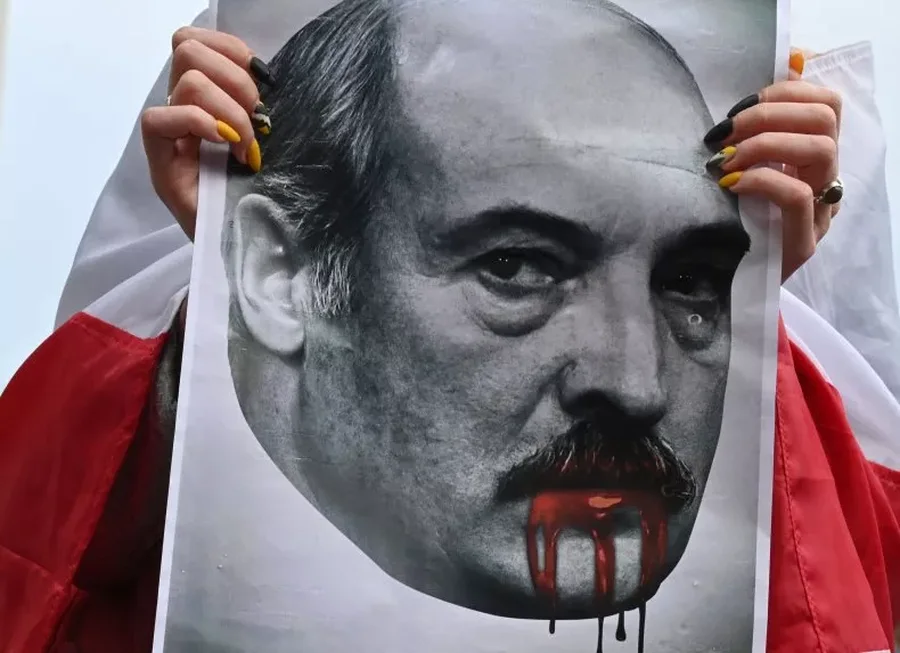
At the heart of this phenomenon lies a paradox of human nature: the simultaneous desire for freedom and comfort from authority.
2024 is called the year of democracy, as half of the world's population voted. But the reality is that many of the elections were fake and that the world today is full of brutal dictators and authoritarian leaders. In the ranks of the latter, this month the new US president, Donald Trump, who likes dictators, and speaks as if he wants to be one himself, is listed.
But what kind of dictatorship are we talking about? They are several types. Thus we have family-run kleptocracies like Azerbaijan, and police states like President Vladimir Putin's Russia. There are communist dictatorships like that of China, theocracy like in Iran and pseudo-democratic regimes headed by autocrats elected by vote like Erdogan in Turkey or Orban in Hungary.
But how is it possible that in this enlightened age, human beings still find themselves and so often at the mercy of authoritarian men? Communist leader Xi Jinping stands at the top of Beijing's byzantine power structure through a web of fear, personal alliances, fervent nationalism and a sense of national grievance.
Kim Jong Un keeps North Korea under an iron grip through the threat and reality of labor camps and murder, along with a cult of personality. Alexander Lukashenko of Belarus prefers torturing his enemies.
Venezuela's Nicolas Maduro, Cuba's Miguel Diaz-Canel and Nicaragua's Daniel Ortega offer milder versions of dictatorship. There are fears that Narendra Modi in India may be heading down this path. Interestingly, not all authoritarian leaders rule by force.
For example, El Salvador's president, Nayib Bukele, secured re-election in a landslide victory, and consolidated power by suppressing dissent, while keeping key campaign promises to reduce crime. But he did so by violating civil liberties and imprisoning people indiscriminately.
And the US is hardly immune to the lure of the strong leader. Trump said he wanted to be a "dictator on his first day in office" and that "Americans will not have to vote in the future." He praised Kim, Putin and Xi. But what is so attractive about giving up rights, an act that is often paid for in blood?
At the heart of this phenomenon lies a paradox of human nature: the simultaneous desire for freedom and comfort from authority. Thomas Hobbes argued in his masterpiece "Leviathan" that in the face of perceived uncertainty, people willingly surrender their liberties to a ruler who promises order.
And Erich Fromm pointed out, in the book Escape from Freedom, that the complexity of democracy can be very tiring, while authoritarian leaders provide a psychological refuge from the burden of decision-making. This probably also explains why authoritarian leaders can rise to power through genuine support (or take power by force with minimal opposition).
But once in power, they usually rob the citizens blind, hide vast wealth abroad, enrich themselves and their friends, and tend to stay in power for a very long time, regardless of the disasters they cause. Thus, the "re-election" of Putin in 2024 is a farce, since the process was manipulated.
No serious opposition candidate ran, and his main opponent was killed in a gulag. A dictator like Putin creates an atmosphere of forced loyalty, where dissent is perceived as dangerous and futile. Public oaths, propaganda, captured media, and mass rallies convey the strength of the dictator and make individuals question whether their discontent should be shared with others.
They create an atmosphere of invincibility, creating the perception that resistance is futile. Putin is also widely believed to kill opponents, from former secret agent Alexander Litvinenko (poisoned with polonium in Britain) to journalist Anna Politkovskaya (murdered in the elevator of the palace where she lived) to opposition leader Alexei Navalny (died last year in prison).
These are features, not flaws: The spread of fear is the essence of the dictatorial system.
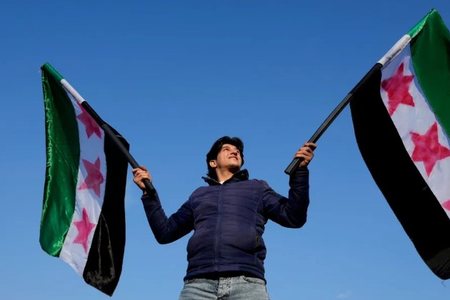
Former Syrian leader Bashar Al-Assad waged a devastating civil war, using chemical weapons and torture for 13 years before he fell last month. And why did it take so long for his few remaining followers to abandon him? The delay came from a mixture of loyalty, fragmentation and fear. Assad's regime cultivated dependence on his leadership within the military, including loyal Alevi (a religious minority) officers in key positions while sidelining dissidents. Meanwhile, the military feared the fallout from the breakup, as Assad portrayed himself as a bulwark against chaos and sectarian violence.
But why did the West stand aside and allow his atrocities? Because the alternative can always be worse. A cautionary example is Libya, which has been suffering for more than a decade of factional violence and instability since Britain, France, the US and others helped overthrow dictator Muammar Gaddafi in 2011.
And now a supposedly reformed jihadist group is trying to form a unified government in Syria. While it is hard to imagine what is worse than Assad, only time will tell if Hay'at Tahrir Al-Sham is better.
By the time people come to recognize the full damage caused by a dictator, it is often too late, as it may be now for Russia. Putin controls the military, police and judiciary through patronage and fear. At this stage, the removal of the dictator requires the dismantling of an entire structure of power, fear and loyalty.
But what is it that ultimately ends the reign of an authoritarian leader? Sometimes death, but often it is those within his circle who seek change. So a palace coup, sometimes led by armed men. This is what happened to Nicolae Ceausescu's Romania.
It almost happened to Adolf Hitler, but Claus von Stauffenberg's plan did not fail. In the end it was war and suicide that brought down the Führer. Finally, dictators touch on something that is fundamental to human nature: respect for a bully.
Putin, who has the largest territory in the world, wants more territory in Ukraine. Xi, vying for the world's largest population, wants more people in Taiwan. Benjamin Netanyahu, the longest-serving Israeli prime minister, wants more time. People see these atrocities, are disgusted, but remain submissive. Humanity will be better one day. But unfortunately not today./ Adapted "Pamphlet" from " Newsweek"
Note: Dan Perry, former Newsweek editor for Middle East affairs, now editor for Europe and Africa at the Associated Press news agency.



Lini një Përgjigje