


 Shkruar nga Pamfleti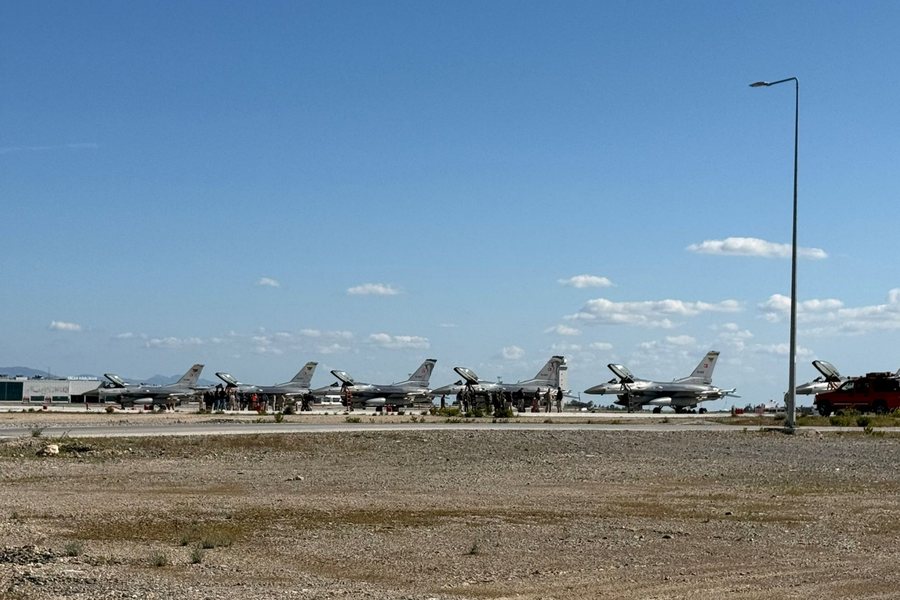
From a symbol of peace to a strategic military platform, Cyprus is attracting increased attention amid regional tensions.
The island of Cyprus, once promoted as a center of peace, has been militarized for decades by foreign forces, who are now trying to draw it into their conflicts.
Cyprus has been militarized for years. Only now, because of Iran, aircraft carriers, and a sudden surge in geopolitical interest, is the world starting to take notice.
For years, the Greek Cypriot administration has cultivated an image that suited tourist brochures and diplomatic speeches: a peaceful Mediterranean island, a bridge between continents, and a symbol of European stability on the border with the Middle East.
This image was comfortable, but increasingly less realistic.
While southern Cyprus was presented as a quiet zone of the European Union, another transformation was taking place on the ground. Military agreements with foreign partners increased, intelligence cooperation expanded, and visits by Western fleets became routine. Israeli aircraft appeared more frequently in the island's airspace, while military exercises gradually integrated Cyprus into the security architecture of the Eastern Mediterranean.
The island was no longer simply divided; it had become a strategic platform. Only recently has this become apparent to the international public, largely due to rising tensions between the US, Israel, and Iran.
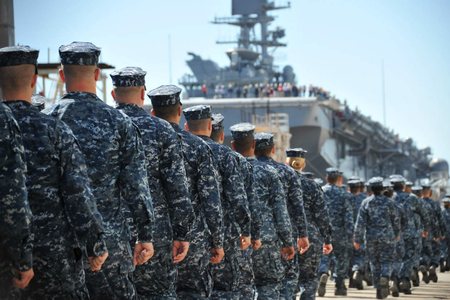
Today, Western warships are present in large numbers around Cyprus. The US, France, Greece, Germany, Italy, the Netherlands and Spain have increased their naval presence in the region.
The Mediterranean, once promoted as a tourist destination, is increasingly becoming a space filled with European military fleets.
France has signaled its intention to strengthen its presence in the region, while this is seen as an attempt to balance Turkey's growing influence in the Mediterranean and beyond.
In this context, Cyprus takes on a role that transcends its geographical borders, becoming a point of confrontation between European and Turkish strategic visions.
However, the Western narrative that presents the island as a territory that must be protected from Turkish influence and Middle Eastern instability contains a paradox.
Cyprus is being drawn into a conflict that, to some extent, it has brought about through its integration into regional military structures.
Iranian officials have warned that the island could become a target if Greek Cypriot territory is used for operations against Iran or its allies.
For the first time in decades, Cyprus is mentioned in the context of military containment in the Middle East.
Meanwhile, cooperation with Israel has deepened significantly. Flights between Israel and Cyprus have increased and many Israeli civilians have temporarily relocated to the island due to insecurity.
This situation has brought mixed reactions among local residents.
On the one hand, close relations with Israel are considered normal; on the other hand, the scale of the movements has raised new concerns.
On the military front, joint exercises and intelligence cooperation have intensified. Some analysts see this as an expansion of Israel's strategic environment in the Eastern Mediterranean.
A key element remains the British bases at Akrotiri and Dhekelia, which serve as military infrastructure for operations in the Middle East. Reports suggest that they could also be used for Iran-related operations.
At the same time, natural gas resources in the Eastern Mediterranean have increased international interest in the region, turning energy into an important geopolitical factor.
From Turkey's perspective, the militarization of the southern part of the island poses a direct security concern, given that Cyprus is located very close to its shores.
The deployment of Turkish fighter jets in Northern Cyprus has been interpreted by Ankara as part of its obligations under 1960 international agreements.
However, these moves have sparked international backlash, highlighting differences in how military actions are handled in different parts of the island.
The European Union faces a familiar dilemma: it supports the Greek Cypriot administration as a member, while the Turkish Cypriot community remains outside the EU's political structures.
Cyprus, once described as a bridge between continents, today appears as a crossroads of interests for many international actors.
One island, two administrations and a growing number of states involved in its strategic dynamics./ Adapted from "Pamphlet" by "Daily Sabah"





Lini një Përgjigje