


 Shkruar nga Pamfleti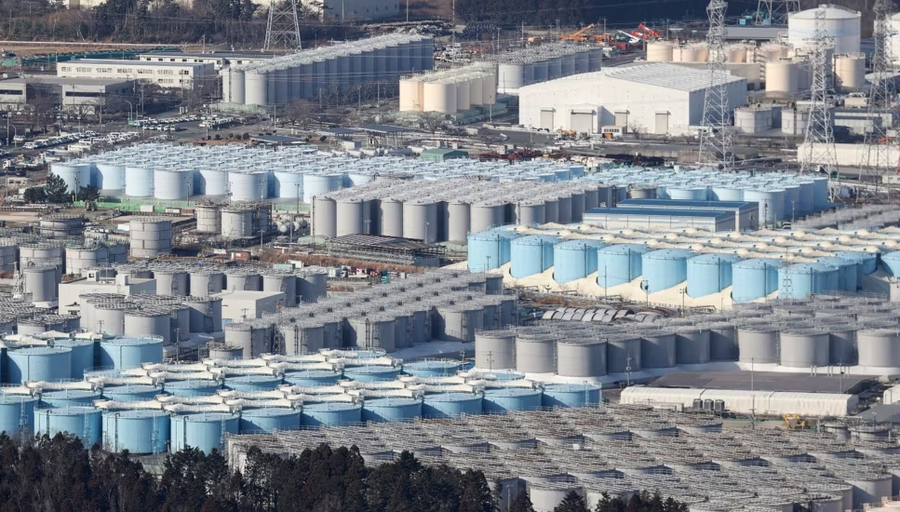
The operator of the tsunami-ravaged Fukushima Daiichi nuclear power plant says it has begun the process of emptying the first batch of treated radioactive water into the Pacific Ocean. The move has drawn much criticism from Japan, which has long grappled with a growing stockpile of radioactive water.
In a video broadcast live from a control room on August 24, operator Tokyo Electric Power Company Holdings showed a staff member turning on a seawater pump, marking the start of the controversial project that is expected to last for decades.
Some groups in China and South Korea have expressed their concerns, turning the process into a political and diplomatic issue.
Tokyo had announced the day before that the operation to drain the waters in the Pacific would begin on August 24. The announcement prompted a backlash from China and partial restrictions on seafood imports from Japan to Hong Kong and Macau.
Meanwhile, China has also suspended imports of all aquatic products originating in Japan, customs authorities said in a statement on August 24.
"We will continue to pay special attention to the situation of the discharge of nuclear-contaminated water into the sea in Japan and will put in place appropriate regulatory measures," the statement said.
The plant's operator, TEPCO, said on August 22 that it had diluted one cubic meter of sewage with about 1,200 cubic meters of seawater and put it through a pipeline from where it could empty into the Pacific.
The Fukushima-Daiichi nuclear power plant was struck by a massive earthquake and tsunami that killed an estimated 18,000 people in March 2011, when a third of the plant's reactors melted down.
TEPCO has collected 1.34 million cubic meters of water since then, which was used to cool the still highly radioactive reactors.
A separate system has filtered out all radioactive nuclides except tritium, whose levels will be within safe limits, according to TEPCO.
The emptying of those waters into the Pacific has been approved by the UN nuclear watchdog, which said it will have personnel on the ground on August 24 to oversee the process, which will take decades to complete.
China has also accused Japan in the past of treating the ocean as a "sewage", banning food imports from ten of Japan's 47 prefectures even before this process.
Analysts said that while China may have genuine security concerns, its tough response is also at least partly motivated by economic rivalry and frosty relations with Japan.








Lini një Përgjigje