


 Shkruar nga Pamfleti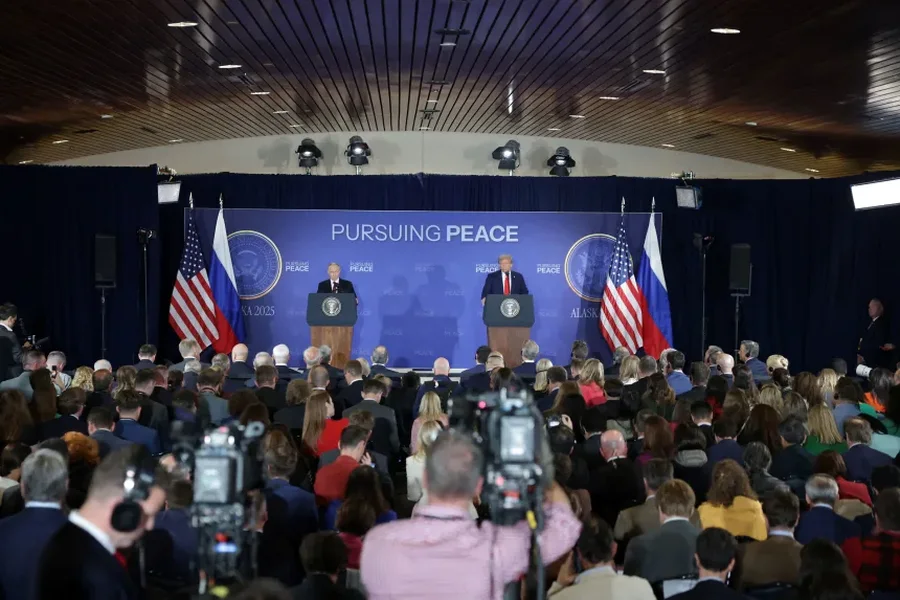
How should we read the Alaska meeting?
Russian President Vladimir Putin has achieved everything he could have hoped for during the summit in Alaska, while President Donald Trump has achieved very little, based on his pre-meeting promises.
Despite Trump's declarations of "great progress" and that the summit was a "10 out of 10," everything indicates that it was a major victory for the Russian autocrat.
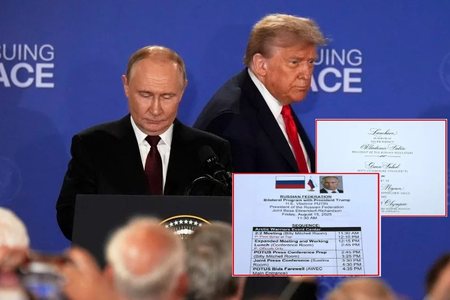
The lavish pomp of Putin's reception, with its huge image exposure, offered rehabilitation for the Russian leader accused of war crimes in Ukraine.
Ultimately, Trump offered a major concession to Putin, acknowledging the Russian position that peace efforts should focus on a final agreement, which would take months or years to negotiate, rather than a ceasefire that would halt the Russian offensive now. This gives Putin more time to defeat Ukraine, as CNN's Nick Paton Walsh has pointed out.
Most importantly, Trump has, for now at least, backed away from threats to impose tough new sanctions on Russia and expand secondary sanctions on countries that buy Russian oil and finance the war. He had threatened such measures up until the last deadline, out of frustration with Putin’s unwillingness and a growing belief that the Russian leader was manipulating him.
Trump, after the summit, briefed European leaders, saying that Putin demanded that Ukraine hand over about a third of Donbas, including the eastern regions of Luhansk and Donetsk, which Russia does not yet control. In return, he offered to lift the front lines in the Kherson and Zaporizhzhia regions. This would force Ukraine to face a painful dilemma, as some analysts believe that the deal would give Russian forces the opportunity to launch a future offensive.
European leaders also said Trump was willing to offer security guarantees to Ukraine after the war ended, but he did not specify what kind of support he would provide.
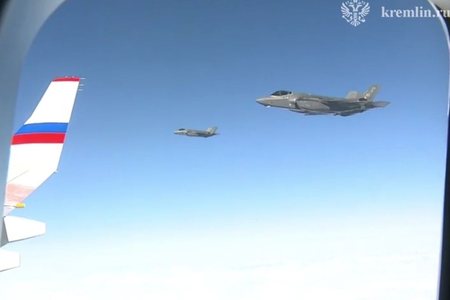
The summit began with a powerful military display, as a B-2 stealth bomber and F-22 fighter jets flew overhead. But Putin went beyond that symbolism by greeting Trump with the words “Good morning, esteemed neighbor,” using the summit’s location to show that the two countries had important and immediate interests that should not be interfered with by a distant war in Europe.
For the Ukrainians and their European allies, who were excluded from the meeting, it was a moment of relief that Trump did not betray Kiev. The failure to come up with a plan for a US-Russia territory swap from Alaska was a diplomatic victory for Europe.
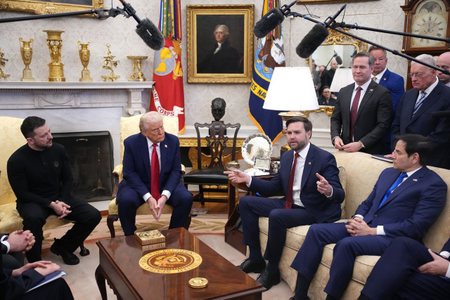
However, Trump signaled that he would increase pressure on Ukrainian President Volodymyr Zelensky at the upcoming White House meeting. “It’s now up to President Zelensky to make a deal,” Trump told Fox News, after refusing to answer questions at what was supposed to be a joint press conference with Putin.
In the end, Trump's failure to broker a ceasefire is a key moment. Russia is willing to engage in a peace process with endless negotiations that will allow it to continue the war, while Ukraine is desperate for immediate relief from drone and missile attacks.
Meanwhile, for Trump, a dilemma remains as to how to manage this difficult process without achieving any quick victories that can be celebrated by his supporters.
Ultimately, the future of peace and security in Ukraine remains in his hands and the future decisions he will make. / Taken with abbreviations from CNN


Lini një Përgjigje