


 Shkruar nga Pamfleti
Trump presents his strongest argument for war, but fails to calm concerns about how it will end
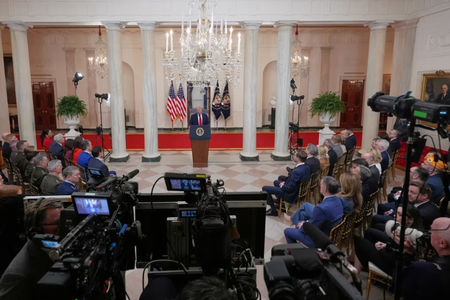
Donald Trump faced a major challenge Wednesday night during his State of the Union address on Iran. He addressed a country that has not only lost confidence in his presidency, according to the latest polls, but has also become skeptical of the new war and deeply concerned about its impact on the economy.
Millions of people in the Middle East and around the world want to know when and how the war will end, and how its turbulent aftermath, including Iran's closure of the Strait of Hormuz, which threatens a global recession, can be managed.
In a 20-minute speech from the White House’s Cross Hall, Trump offered his clearest and most moderate explanation of the reasons for the war, arguing that he could not allow “terrorists” in the Iranian regime to possess nuclear weapons after 47 years of threats against the United States. He explained the failure of diplomacy and the regime’s brutal repression of its own people by relying on one of his main political assets: the project of force.
Some of the president's claims, that Iran was "on the verge" of acquiring a nuclear weapon and that it could soon have a missile that could strike the US mainland, contradicted US and Western intelligence assessments. He did not present detailed evidence that would allow Americans to form an independent judgment.
However, he presented a credible argument that Iran’s military capabilities, its ability to destabilize the region, and the threat to the United States and its allies have been severely damaged by the US-Israeli air campaign. No outside observer can yet determine the extent of this damage and whether it could cause political fissures that weaken or topple the Iranian regime over time.
However, many analysts expected the president to present a clear plan for ending the war. Not only did he fail to do so, he raised the possibility of a major military escalation.
“In the next two to three weeks, we will return them to the Stone Age, where they belong,” he said, adding that he would strike every power plant and oil facility in Iran if Tehran did not yield to his demands for peace.
Under these circumstances, it is difficult to conclude that his speech will calm Americans worried about the direction of the war or global investors shaken by the energy crisis it has caused.
At no point did the president present a clear exit strategy from the conflict, other than the impossible scenario of Iran's complete capitulation.
Në përpjekje për të minimizuar angazhimin aktual amerikan, ai argumentoi se 32 ditët e luftës deri tani janë të papërfillshme krahasuar me vitet e përfshirjes së SHBA-së në Luftën e Parë Botërore, Luftën e Dytë Botërore, Kore, Vietnam dhe Irak. Por këto krahasime mund të kenë shtuar shqetësimin, pasi sugjerojnë se konflikti mund të zgjasë më shumë se sa është pranuar deri tani.
Paralajmërimi i tij se do të jetë në dorën e aleatëve evropianë, të cilët varen më shumë nga nafta e Gjirit Persik, shkakton shqetësim, ashtu si edhe insistimi se ngushtica do të “hapet natyrshëm” sepse Irani do të dëshirojë të shesë naftën e tij. Presidenti pretendoi se do të ishte e lehtë për vendet e huaja të thyenin bllokadën efektive të Iranit, por marina amerikane ende nuk ka kaluar në këtë pikë kritike për shkak të raketave dhe dronëve iranianë.
Pyetjet kryesore pa përgjigje
Trump nuk iu përgjigj disa prej pyetjeve më të rëndësishme që vënë në dyshim deklaratat e tij për suksesin e luftës.
Ai pretendoi se kishte realizuar ndryshim regjimi me eliminimin e liderëve të lartë iranianë, përfshirë Ajatollah Ali Khamenein. Por Irani mbetet nën kontrollin e elementëve të mbetur të regjimit, që mund të jenë edhe më të radikalizuar.
Ai la të kuptohej se nuk do të kërkonte të merrte rezervat e uraniumit të pasuruar, që mund t’i lejonin Teheranit të rifillonte programin bërthamor. Ai argumentoi se mbikëqyrja satelitore amerikane do të mjaftonte për të siguruar që ky material të mbetej i paprekur në objektet e bombarduara. Por kjo lë hapësirë për dyshime mbi pretendimin se kërcënimi bërthamor është eliminuar.
Hezitimi për të rihapur Ngushticën e Hormuzit nënkupton se ekonomia botërore mund të mbetet e varur nga presioni iranian. Edhe pse SHBA ka rezerva të mëdha nafte, ajo mbetet e ndikuar nga tregjet globale të energjisë. Çmimet e karburantit mbi 4 dollarë për gallon janë një kujtesë e qartë për këtë realitet.
Vështirësitë politike të Trump po thellohen
Presidenti hyri në këtë moment në një pozitë të vështirë politike dhe strategjike, të krijuar nga vetë ai.
Mesazhet e paqarta dhe komunikimi i çrregullt përmes rrjeteve sociale kanë ulur besimin publik në nivele historikisht të ulëta gjatë dy mandateve të tij.
Një sondazh i CNN/SSRS tregoi se vetëm 35% e amerikanëve miratojnë performancën e tij, ndërsa vetëm 34% mbështesin vendimin për ndërhyrje ushtarake në Iran. Rreth 68% kundërshtojnë dërgimin e trupave tokësore.
Lufta ka shkaktuar gjithashtu ndikim të menjëhershëm ekonomik. Vetëm 31% e amerikanëve miratojnë menaxhimin e ekonomisë nga ana e Trump, ndërsa rreth dy të tretat besojnë se politikat e tij po përkeqësojnë situatën.
Këto shifra paraqesin një sfidë serioze për presidentin dhe Partinë Republikane përpara zgjedhjeve të ndërmjetme që afrojnë. Historikisht, presidentët në mandatin e dytë rrallë rikuperojnë nga nivele të tilla të ulëta mbështetjeje.
Public skepticism about Trump's economic performance is another weakness. Even before the war, most voters did not buy his narrative of a "gilded age" while facing high housing and food prices.
His promises that fuel prices will fall and markets will recover quickly seem more like optimism than the result of a clear strategy for ending the war.
In the end, it remains unclear whether the president knows when and how the war will end, which has failed to reduce global anxiety about the conflict and its consequences. /Adapted from CNN /


Lini një Përgjigje