


 Shkruar nga Pamfleti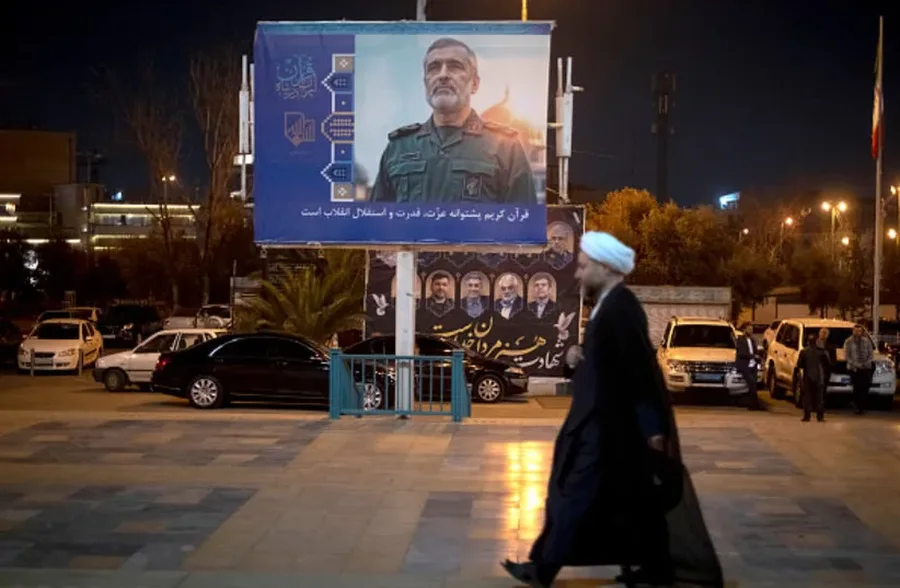
The IRGC has tightened its grip on Tehran following the death of Ali Khamenei, moving to a decentralized command structure that empowers mid-ranking officers to launch independent retaliatory strikes.
Iran's Islamic Revolutionary Guard Corps (IRGC) is consolidating its role at the center of decision-making during the war, despite the losses of senior commanders in recent attacks, according to sources cited by Reuters.
According to the same sources, the Guard's command structure had long been prepared for such a scenario. Before the US-Israeli attacks, responsibilities in the chain of command had been delegated down the hierarchy so that operations could continue even if key leaders were eliminated.
This strategy appears to be giving the Guard flexibility in times of crisis, but analysts say it could also increase the risk of escalation, as mid-ranking officers have more autonomy to launch attacks. One incident that raised concerns was the missile strike on Turkey, a NATO member.
Security sources close to the Guard say that the new IRGC commander, Ahmad Vahidi, attends every high-level meeting and that the structure's main objective is the survival of the Iranian revolutionary system.
Iranian Deputy Defense Minister Reza Talaeinik stated in a television interview that successors up to three levels below in the hierarchy have been designated for each commander, so that any loss in command can be replaced immediately.
“ The role of each unit is organized so that if a commander is killed, a replacement immediately takes over ,” he said.
This doctrine of decentralization has been developed for about two decades, after analyzing the collapse of the Iraqi army during the 2003 American invasion. The goal was that every region of Iran could be defended even if the central structure was attacked.
Experts say the plan aims to ensure that the Revolutionary Guard continues to function on two fronts simultaneously: as the main military force against external threats and as a security control mechanism within the country.
Its role could be further strengthened after the death of Supreme Leader Ali Khamenei. Analysts say the choice of his successor could deepen the Guard's influence in Iranian politics, especially if the candidacy of Mojtaba Khamenei, his son, gains support.
The IRGC, created after the 1979 Iranian revolution, has over the years become a structure with far-reaching influence in the military, intelligence and economy. In addition to its military role, it controls large economic networks and coordinates Iran's ties with allied groups in the Middle East.
According to analysts, even if the war ends quickly, the Revolutionary Guard's influence on the power structure in Iran is expected to remain decisive.


Lini një Përgjigje