


 Shkruar nga Francesca Salvatore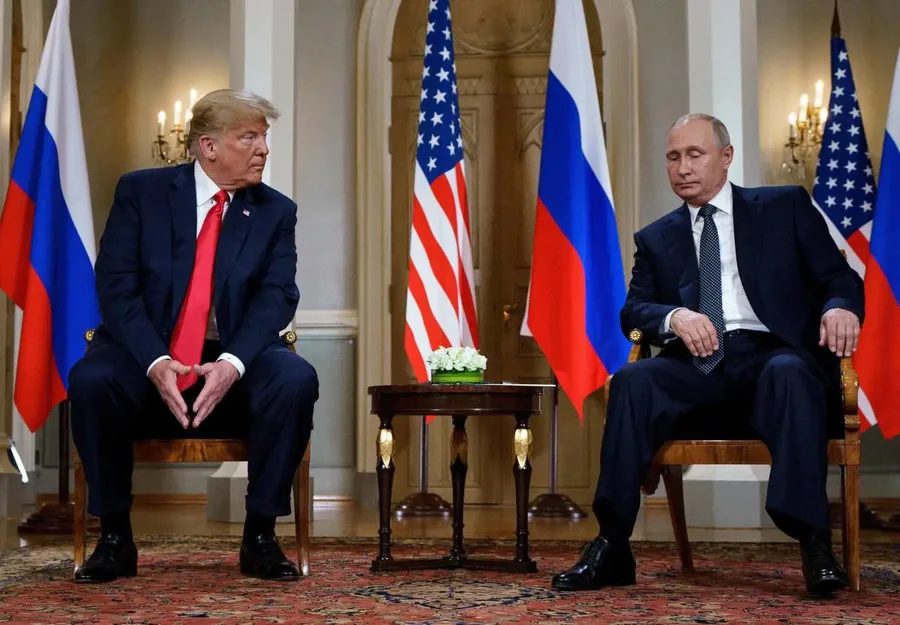
Dmitry Suslov outlines two scenarios for the Alaska summit: a bilateral agreement between Moscow and Washington or, in case of refusal, the cessation of US military aid to Ukraine…
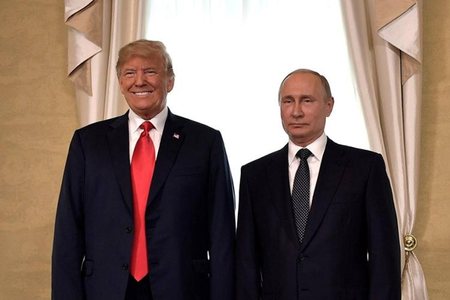
On the eve of the summit in Alaska between Donald Trump and Vladimir Putin, governments are closely monitoring the bilateral meeting that will bring the presidents of Russia and the United States face to face on American soil for the first time in 15 years.
"Putin is offering Trump a convenient exit," said Dmitry Suslov, deputy director of the Center for European and International Studies at the Moscow Higher School of Economics and a trusted Kremlin foreign policy adviser.
According to Suslov, the Alaska summit represents a decisive strategic step. The Kremlin foresees two possible outcomes.
The first, which Moscow considers a priority, would be the adoption of a bilateral agreement between Russia and the United States, without the direct involvement of Kiev or European capitals.
The plan, according to Putin’s vision, would foresee the withdrawal of Ukrainian troops from areas of Donbas still under Kiev’s control and, in parallel, a Russian withdrawal from some areas of Sumy, Dnipropetrovsk and Kharkiv, leaving the front line elsewhere unchanged. This is a significant evolution compared to a year ago, when Russia’s demand was the complete evacuation of the four annexed provinces. Today, attention has focused almost exclusively on Donbas. Essentially, however, one non-negotiable condition would remain: Ukraine’s formal commitment not to join NATO.
Suslov emphasizes that this would not be a simple exchange of territories. Moscow would also like to include the demilitarization of the country and a federal constitutional reform in the final agreement.
The innovation, he explains, is twofold: for the first time, Russia has declared itself ready to discuss not only the final peace agreement, but also an interim ceasefire; and, at the same time, it seems willing to demand less than in the past in exchange for a ceasefire.
The other scenario, which the Kremlin considers less desirable but still plausible, would see Zelensky, backed by European governments, reject the proposal. In this scenario, Trump could react by blocking military aid to Kiev and also cutting off arms shipments to European allies destined for Ukraine, thereby hastening Kiev’s defeat and the collapse of its defense capabilities.
But why, in this case, would Trump act against Kiev without imposing sanctions on Moscow, despite recent threats? Suslov explains this by the difficult position in which the US president has placed himself after asking China, India and Brazil to stop imports of Russian crude oil, threatening secondary sanctions. A refusal from Beijing, predictable, as well as from New Delhi and Brazil, would put Washington at a crossroads: either to withdraw, sending a signal of weakness, or to open a political and trade front with three major BRICS countries, with unpredictable results. A successful Alaska summit, with the adoption of a joint plan for a ceasefire in Ukraine, would allow Trump to put out this fire and present himself as the architect of a historic turning point. For this reason, concludes Suslov, it is likely that the US president will accept the Russian proposal.
The choice of location is also no coincidence. Alaska, the Kremlin adviser emphasizes, has a strong symbolic value: it is the American territory geographically closest to Russia, far from Europe and Kiev, and immediately evokes the idea of a direct relationship between the two powers. It will be the first official summit between Moscow and Washington on American soil in fifteen years, following the 2010 meeting between Dmitry Medvedev and Barack Obama. /Adapted from Il Giornale/




Lini një Përgjigje