


 Shkruar nga Pamfleti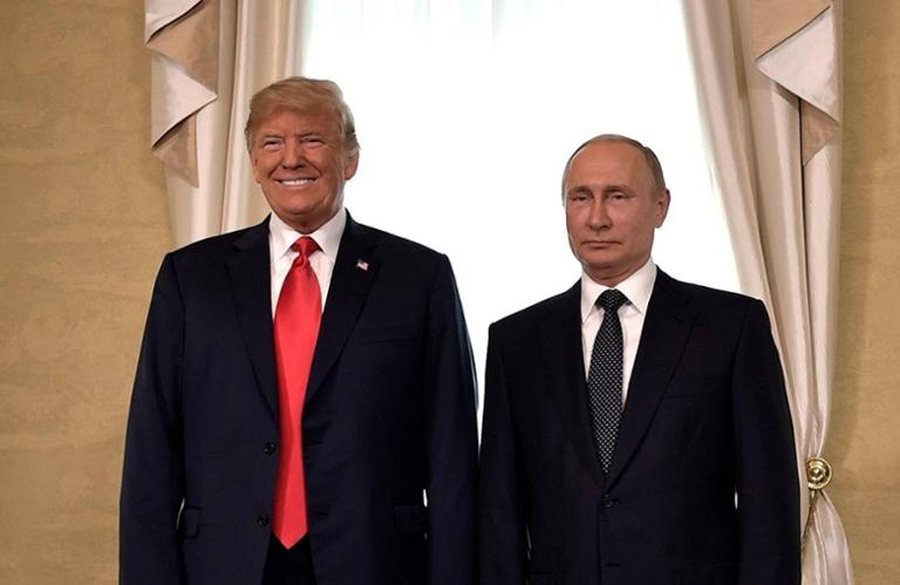
Michael Thumann describes how Putin's policies were born out of fear of protests and why a defeat in Ukraine would be necessary for real change...
US President Donald Trump and Kremlin chief Vladimir Putin plan to meet next Friday (August 15) in the US state of Alaska to negotiate the war in Ukraine, without the presence of Ukrainian President Volodymyr Zelensky.
Many experts criticize this, including Trump's former national security adviser, John Bolton, who calls it a "big win for Putin." Other observers fear that Putin may simply be trying to avoid new U.S. sanctions and tariffs with the talks.
Russia expert Michael Thumann also doesn't believe the summit will make a real difference. According to him, Putin would have to lose the war for any real change to happen.
Russia has changed a lot in recent years, Thumann explains in an interview with the Austrian newspaper Standard.
"While in the 1990s it was a relatively open country, with curious people who "welcomed Western Europeans with open arms," the country now reminds him of "the old Soviet Union, where people were extremely cautious and afraid to meet foreigners."
Putin, who has been at the head of the Russian state for almost 25 years, has "promoted a de-democratization from the beginning," which has become more pronounced over the years, he says.
Why does the West still misunderstand Putin?
According to Thumann, the decisive turning point in Putin's policy was not NATO's eastward expansion or the US war in Iraq, but events within Russia. When Putin returned to the presidency in 2012, months of protests erupted over alleged rigged elections. These reminded the Kremlin chief of the Arab uprisings and deeply troubled him, the Russia expert believes. As a result, the Russian president changed his political course, a development that continues to this day.
Thumann believes that the widely held narrative that Russia only reacts to Western provocations is false.
"There is a very egocentric trait in the West that always connects things that happen in other countries to oneself," the expert said in an interview with Standard.
Putin's actions are largely explained by his quest for power, and Western moves serve him at best as a pretext. The Russian president, he said, is a "career nationalist": he has seen nationalism as a means of securing power. That is why Putin is "extremely popular" among the less educated layers of the population in rural areas today. He has this in common with Donald Trump and Viktor Orbán, for example.
Russia's future depends on the course of the war
When asked whether Russia could escape the current nationalist trend, the expert mentions two key groups: opponents of the war and a large number of opportunists who fit into the prevailing opinion. If the political situation changes, the latter could quickly switch sides. “However, a profound change would probably require a Russian defeat in Ukraine,” says Thumann.
Trump and Putin discuss Ukraine, without Zelensky
But things are not going well for Putin on the diplomatic front either. As Trump almost casually mentioned to reporters at the White House last Friday (August 8), the US president is apparently considering a “territorial swap”. This would be the US’s way of rewarding Russia for its aggressive war in Ukraine. Recently, according to Bloomberg and the Wall Street Journal, reports from inside sources have emerged suggesting that Putin may freeze the front in order to gain control over Zaporizhia and Kherson through negotiations. It has also been claimed that he may want to force Ukraine to withdraw from Donbas.
According to the American war research organization, the Institute for the Study of War (ISW), this would require Kiev's troops to abandon the heavily fortified defensive perimeter in Donetsk, which "would put Russian forces in an extremely favorable position to resume their offensive under much better conditions," according to war experts. The Ukrainian president has already rejected the idea of ceding territory to Russia. However, he has not been invited to the summit between Putin and Trump, because the Kremlin leader has ruled out Zelensky's participation - at this point, according to the Kremlin. /Adapted from Fr.de/



Lini një Përgjigje