


 Shkruar nga Pamfleti
Mojtaba Khamenei, who has stayed away from the public scene for years, is known as a very discreet figure, but with great influence behind the scenes.
Following the death of Iran's Supreme Leader, Ali Khamenei, the Islamic Republic has entered a new phase of power.
The Assembly of Experts on March 9 named his son, Mojtaba Khamenei, as his successor, placing him at the head of the country's political and religious system. His appointment is seen as an attempt to preserve regime continuity at a very tense moment for Iran.
The decision comes at a time when Iran is in a fierce confrontation with the US and Israel, while several airstrikes have hit key structures of the Iranian establishment, eliminating important political and military figures. In this crisis situation, power is concentrated in the hands of a small group of hard-line leaders.
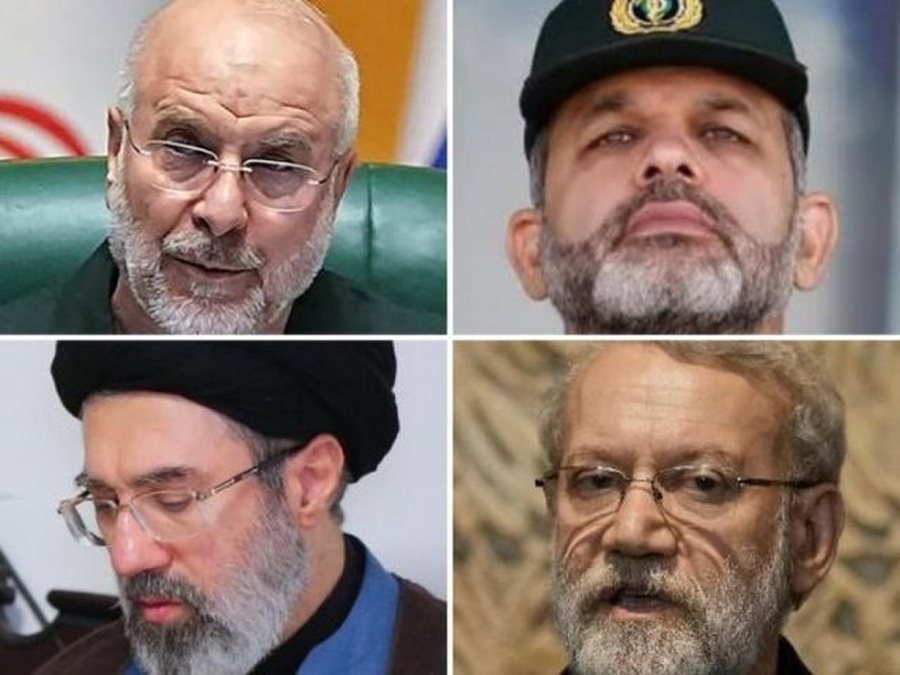
At the center of this new configuration is a quartet of powerful figures: Ali Larijani, Mohammad Bagher Ghalibaf, Mojtaba Khamenei, and Ahmad Vahidi. These leaders are seen as the people who have filled the void created by the death of the supreme leader and the crackdown on the Iranian elite.
Mojtaba Khamenei, who has stayed away from the public scene for years, is known as a very discreet figure but has great influence behind the scenes. Analysts describe him as his father's "shadow man", playing a key role in managing relations with the regime's most powerful structures, especially the Revolutionary Guard.
According to the New York Times, Mojtaba was wounded in the leg during the recent attacks and has yet to appear publicly since his appointment. However, his election as supreme leader sends a clear message to Iran's opponents: the Islamic Republic aims to maintain stability and not back down from its strategic policies.
In this new configuration of power, a very important role is played by Ali Larijani, a figure with long experience in Iranian politics and in negotiations over the nuclear program. He has been appointed head of the Supreme National Security Council and is considered a pragmatic figure who manages the state's strategy in times of war. Larijani has taken on institutional and diplomatic coordination, negotiating with countries such as Oman and Russia and warning international opponents of serious consequences.
Meanwhile, the speaker of the Iranian parliament, Mohammad Bagher Ghalibaf, a former commander of the Revolutionary Guard and former mayor of Tehran, controls the legislative and financial aspects of Iran's response to the crisis. He is considered one of the strongest supporters of Mojtaba Khamenei's rise to power.
The fourth figure in this structure is Ahmad Vahidi, the new commander of the Revolutionary Guard. He took over after his predecessor was killed in airstrikes in the early days of the conflict. Vahidi is a highly controversial figure on the international stage, having been accused of involvement in the 1994 bombing of the AMIA Jewish center in Buenos Aires, which killed 85 people.
As the former commander of the Quds Force, Vahidi is considered the architect of Iran's military operations and network of regional allies. For this reason, he is often described as "the muscle of the regime."
As power in Tehran is consolidated in the hands of this narrow elite, the role of Iran's president, Masoud Pezeshkian, appears to be fading. Although he is considered a more reformist politician, strategic decisions on war, security and foreign policy are being made by the system's most powerful structure, dominated by the clergy and the military apparatus.
Analysts warn that Mojtaba Khamenei's strong ties to the Revolutionary Guard could lead Iran into an even more militarized and repressive phase. The main questions now are whether the new leader will pursue a tougher line on the nuclear program and relations with the West, or whether he will try to consolidate power through a more pragmatic strategy. In any case, after the death of Ali Khamenei, the Islamic Republic seems to be entering a new era, where power remains concentrated in the hands of a small elite closely linked to the military apparatus and the most conservative structures of the regime.


Lini një Përgjigje