


 Shkruar nga Federico Fubini
Fifty-two percent of China's oil imports in 2025 came from the Gulf. Beijing's elites fear that if the conflict ends with an Iranian government friendly to the US, Washington will have indirect control over the Strait of Hormuz.
On Tuesday, Iran chose a specific channel to send a political message: Beijing. Abdolreza Rahmani Fazli, Tehran's ambassador to China, publicly explained his country's position.
"As guarantors of the security of the Strait of Hormuz, we attach great importance to the safe passage of ships of all countries," the diplomat stated.
"But if the overall security of the passage and the surrounding area cannot be guaranteed, then we cannot guarantee the security of transit through Hormuz."
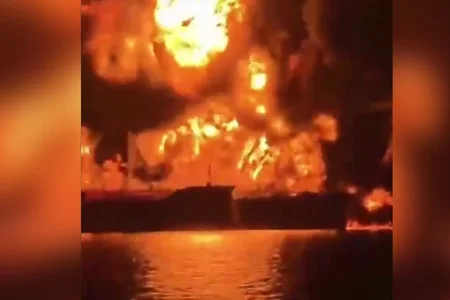
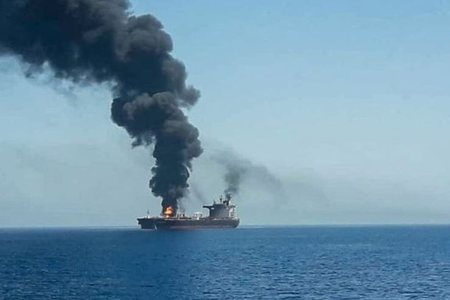
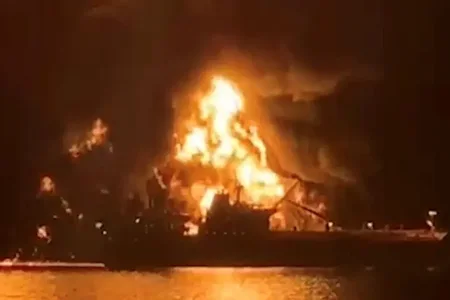
These statements may remain one of the most obvious euphemisms for what many analysts are now calling a third Gulf War. Just hours later, Iranian forces opened fire on three large cargo and container ships flying the flags of Thailand and other countries not involved in the conflict. The US Navy intervened to neutralize the activity of sixteen Iranian vessels suspected of laying naval mines.
However, the statement by the Iranian ambassador in Beijing was carefully weighed.
“Traffic will be regulated,” Fazli said. “But this does not mean closing the strait.”
In practice, this contradicts developments on the ground. Iran has taken de facto control of the flows of oil, fertilizers, aluminum, and helium that emerge from the Persian Gulf and affect the price balances of the global economy.
Not only the message matters, but also the place from which it was given. Speaking from Beijing, the Iranian regime seems to be trying to dictate the terms and suggest that an “orderly” reopening of the strait could happen if the Israeli-American attacks stop. Such a statement from the Chinese capital is also intended to appease the great power partner and include it as a kind of potential arbiter for the post-war balances in Hormuz and the Persian Gulf.
This is the action of a regime that may be under pressure, but that is also calculating the limits of the Trump administration's tolerance. The calculation in Tehran is that there is a point beyond which the White House cannot afford to destabilize markets and increase prices in the United States. Keeping Hormuz closed is intended to bring that point closer.
On the other hand, China also needed guarantees from Iran. Last year, about 52 percent of the oil Beijing imported came from the Persian Gulf. The Chinese government and analysts are trying to minimize the impact of the war, but over the past twelve days the country has lost more than half of its usual supplies.
Today, China's main oil supplier is Russia. Saudi Arabia ranks second, while Iran was the third supplier, although due to international sanctions, Iranian oil is officially registered at customs as being extracted in Malaysia.
The Chinese government appears to have anticipated the possibility of an escalation. In the first two months of 2026, China increased its oil imports by 15.8 percent compared to the same period a year earlier. Today, the People’s Republic’s strategic reserves are larger than the combined reserves of the world’s thirty-two most advanced economies, including the United States and European countries.
However, Chinese elites have serious reasons for concern. If the war ends with the rise to power of an Iranian government close to Washington, the United States would gain indirect control over the Strait of Hormuz. For Beijing, this would create a strategic weakness, because Washington would have direct influence over China's energy supplies. Such a situation would be especially problematic if China were to attempt a military annexation of Taiwan in the future.
That's why President Xi Jinping is trying to support Tehran without directly exposing himself. According to some reports, China has sent a reconnaissance ship to help Iran gather information. It also provides satellite navigation support through the BeiDou 3 system for Iranian drones and radar systems that can track stealth flights by US aircraft.
Xi Jinping has often declared that “the East is rising and the West is falling.” However, some political advisors in Beijing, including analyst Zheng Yongnian, acknowledge that recent developments and the current military capabilities of the United States make these predictions less certain.
The current war could be a test of this strategic thesis. However, there is one thing Xi Jinping has no doubt about: he wants to hold the planned meeting with Donald Trump in Beijing on March 31. The less trust he has in the American president, the more he seems interested in hearing him directly./ Corriere della Sera




Lini një Përgjigje