


 Shkruar nga Pamfleti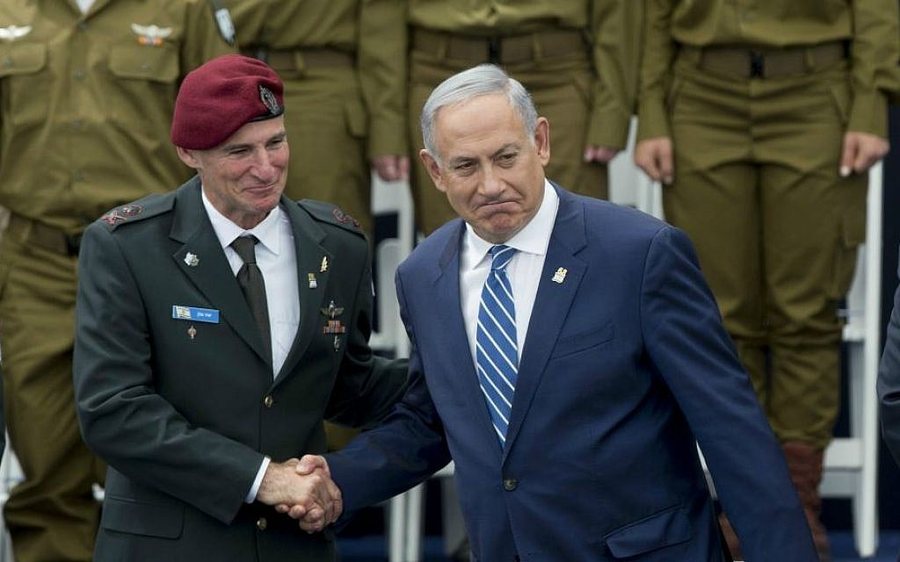
The last Labor prime minister was Ehud Barak, whose term ended in 2001. After him, the left no longer created a clear political pole, did not produce any significant leaders, and often entered as a junior partner in governments led by Netanyahu...
The history of the state of Israel began with a strong leftist leaning, at least within the Zionist wing of the left. The founders of the state based their political program on the secularism of institutions and on the agricultural model of the kibbutzim, which for decades became the symbol of Israeli society.
Not coincidentally, for the first 29 years of the state's existence, the political scene was dominated by the Labour Party (formerly Mapai), which provided all the prime ministers from 1948 to 1977, the year when a right-wing government came to power for the first time.
Although Likud gained ground, Labor retained a significant role in Israeli politics until a decade ago, when it began its long decline and almost disappeared. But with the creation of the Democratic Party in 2024, polls show a possible return of the left to parliament.
The end of classical bipolarism
Labor's decline is linked to changes in Israeli society: today only 1% of the population lives on kibbutzim, the economy was heavily liberalized in the 1990s, and public opinion has gradually shifted to the right. A turning point was the summer of 2005, when former Prime Minister Ariel Sharon broke away from Likud and created the centrist Kadima party, uniting the most moderate figures from both political wings. Thus the classic division between left and right was broken and Labor began a gradual loss of support. In 2009 they secured fewer than 15 seats, in 2019 they fell below 10, and in the last elections they managed only 4 MPs.
A favor for Netanyahu
After the creation of Kadima, it seemed that Likud would remain on the margins, but under Benjamin Netanyahu's leadership, the opposite happened: the right-wing party strengthened, while Labor continued to decline. This, according to analysts, happened because the left did not find the right tools and figures to adapt to the country's political and social changes.
The last Labor prime minister was Ehud Barak, whose term ended in 2001. After him, the left no longer created a clear political pole, did not produce any significant leaders, and often entered as a junior partner in Netanyahu-led governments. This lack of an alternative is now considered one of the main reasons for Netanyahu's stability in power since 2009.
The Return with Yair Golan
In 2024, the process of merging Labor and the other left-wing party, Meretz, to create a social democratic and liberal bloc began. In July, former general Yair Golan won the Labor primaries and took over the leadership of the united formation, now called the Democratic Party.
Golan, who was close to becoming army chief in 2016, is known for his strong stances: during a Holocaust memorial ceremony he warned of “disturbing similarities between the processes that took place in Germany 80 years ago and some phenomena that are emerging in Israel today.” On another occasion, he called the mentality of settlers occupying Palestinian lands in the West Bank “subhuman.”
Today, after the unification of the left under his leadership, polls give the Democratic Party about 11 mandates, far from Labor's golden period, but enough to restore the voice of the left in the Israeli political arena. /Adapted by "Pamphlet" from "Inside Over"







Lini një Përgjigje