


 Shkruar nga Pamfleti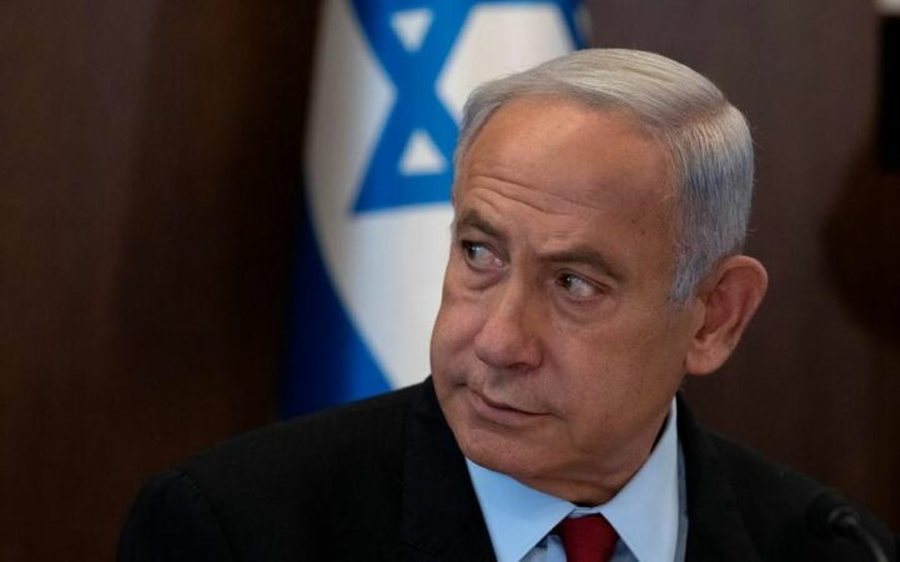
With the departure of these two parties, Netanyahu's coalition, formed in December 2022 as one of the most right-wing governments in Israeli history, now has only 50 seats, well below the necessary threshold of 61 members to have a majority in the Knesset.
Israeli Prime Minister Benjamin Netanyahu's government has lost its majority in the Knesset (Israeli parliament) after the ultra-Orthodox Shas party withdrew, leaving the coalition with just 50 seats in the 120-member parliament. This turns Netanyahu's government into a minority government, which is facing a serious political crisis at a time of high tensions at home and abroad. Opposition leader Yair Lapid has issued a harsh statement, describing the government as "illegitimate" and without the authority to make important decisions for the state, calling for early elections.
The Shas party, a key Netanyahu ally, announced its withdrawal from the coalition on Wednesday, July 16, 2025, over disagreements over a bill to exempt ultra-Orthodox yeshiva students from mandatory military service. According to a Shas statement, the government failed to fulfill promises to guarantee the permanent exemption of the ultra-Orthodox community, which makes up about 14% of Israel's population and is growing rapidly.
The departure of Shas, with 11 seats in the Knesset, follows the withdrawal of another ultra-Orthodox party, United Torah Judaism (UTJ), which resigned on Monday for the same reason, further reducing Netanyahu's majority.
With the departure of these two parties, Netanyahu's coalition, formed in December 2022 as one of the most right-wing governments in Israeli history, now has only 50 seats, well below the 61-member threshold needed to have a majority in the Knesset. This situation makes it almost impossible to pass new legislation and risks the collapse of the government, putting Netanyahu under great political pressure.
Yair Lapid's Strong Statement Opposition leader and head of the Yesh Atid party, Yair Lapid, reacted immediately after Shas' announcement, calling Netanyahu's government "illegitimate" and without legitimacy to lead the country.
"The state of Israel, as of today, is led by a minority government. Such a government has no right to send soldiers to war, it cannot decide who lives and who dies," Lapid said in a statement on Wednesday.
He added that a minority government does not have the authority to make strategic decisions, such as negotiations on Gaza, agreements with Syria or Saudi Arabia, or management of the national budget.
“This is a government without rights, without authority; it is an illegitimate government ,” Lapid declared, calling for early elections to resolve the political crisis.
Lapid also criticized the government for what he described as favoring the corrupt and those who avoid military service at the expense of Israeli taxpayers, referring to the continued exemptions for the ultra-Orthodox and generous subsidies for their community. The issue has been a constant source of tension in Israeli society, especially during the war in Gaza, which has increased the need for military troops and fueled resentment over inequality in military service.
The issue of exempting the ultra-Orthodox from compulsory military service has been a hotbed of Israeli politics for decades. An early agreement by Israel’s first prime minister, David Ben-Gurion, granted exemptions to hundreds of ultra-Orthodox students, but that number has grown to tens of thousands, creating deep divisions in society. The ultra-Orthodox argue that their religious studies contribute to national identity, while most Jewish Israelis see such exemptions as unjust, especially during the current war in Gaza, which has caused heavy casualties and increased the need for conscripts.
In June 2024, Israel’s Supreme Court ordered the Defense Ministry to ban exemptions for yeshiva students, leading to the issuance of thousands of draft notices for ultra-Orthodox members. This prompted fierce protests from the ultra-Orthodox community and threats from Shas and UTJ to abandon the coalition unless a law on permanent exemptions was passed. The disagreements over the issue led to the resignations of UTJ on Monday and Shas on Wednesday, plunging Netanyahu’s government into its most serious crisis since its formation.
Despite the departure, Shas has said it will not cooperate with the opposition to topple the government and may support some legislation from outside the coalition, including a possible deal on Gaza. However, the lack of a parliamentary majority makes it difficult for Netanyahu to pass new legislation or manage ongoing crises, including the war in Gaza and tensions with Syria.
Netanyahu, who returned to power after the November 2022 elections, faces a complicated situation. His coalition, made up of Likud, the Religious Zionist Party, Otzma Yehudit, Noam, and previously Shas and UTJ, has been described as one of the most right-wing in Israeli history. However, internal disagreements, particularly over the issue of conscription, have weakened its unity. Right-wing parties such as those of Finance Minister Bezalel Smotrich and National Security Minister Itamar Ben-Gvir have called for the war in Gaza to continue until Hamas is completely destroyed, while pressure from the US administration for a partial 60-day ceasefire is growing.
Netanyahu could try to keep the government afloat by negotiating with opposition parties for temporary support, especially on issues such as a ceasefire in Gaza that could free remaining hostages and allow humanitarian aid in. Analysts say he could also try to shift the focus away from the conscription issue and the war in Gaza toward diplomatic initiatives, such as normalizing relations with Arab countries, to bolster his electoral position.
The next elections are scheduled for October 2026, but the current crisis could lead to early elections. Under Israeli law, the opposition can file a motion to dissolve the Knesset, but such a vote cannot be held for at least six months after the last failed motion in June 2025, when Netanyahu's coalition survived by 61 votes to 53.
Recent polls show that Netanyahu's coalition could lose power if early elections are held, with Lapid's Yesh Atid party and other opposition parties such as Benny Gantz's National Unity party likely to gain ground. However, the opposition remains fragmented, and forming a new coalition could be difficult due to ideological divisions.
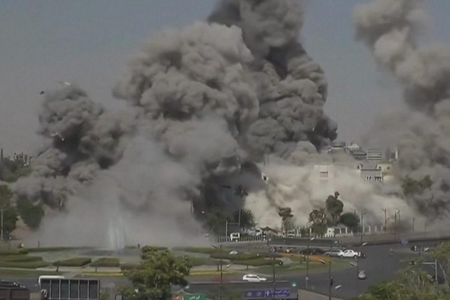
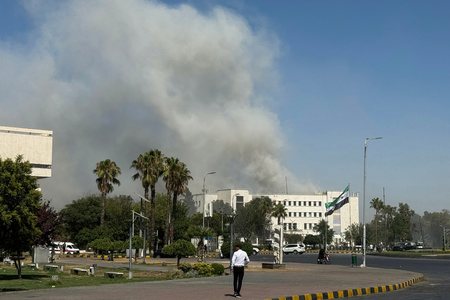
The political crisis comes at a critical time for Israel, which is embroiled in its longest war in decades in Gaza and faces rising tensions on the border with Syria, where the Israeli military has carried out airstrikes against Syrian forces to protect the Druze community in Suweida. Without a parliamentary majority, Netanyahu’s ability to manage these challenges and make strategic decisions is significantly weakened.
Analysts warn that a minority government could lead to legislative paralysis and further destabilize Israel, especially if the war in Gaza and regional conflicts escalate. Lapid’s calls for early elections could gain public support, given widespread dissatisfaction with Netanyahu’s handling of the crisis, but the path to new elections remains uncertain.





Lini një Përgjigje