


 Shkruar nga Pamfleti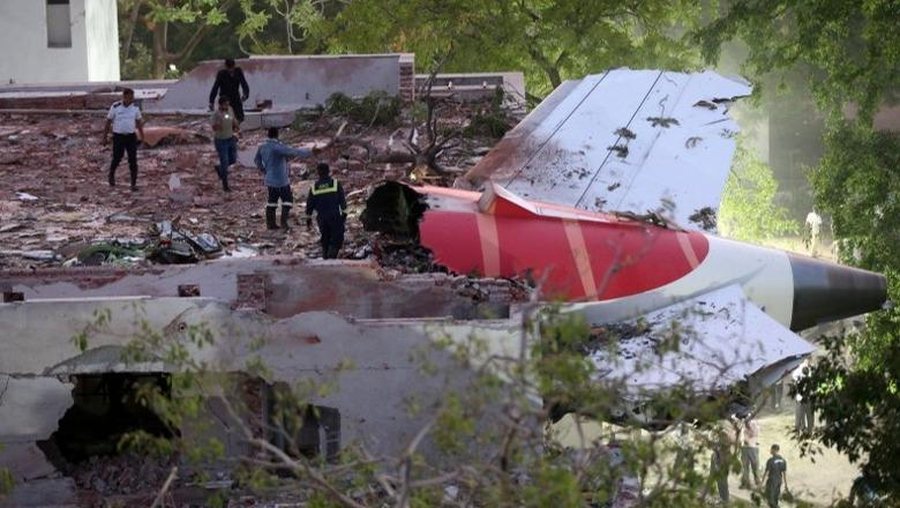
A recorded conversation between the two pilots of Air India Flight 171, a Boeing 787-8 Dreamliner that crashed in Ahmedabad on June 12, 2025, has shed new light on the causes of the tragedy that claimed the lives of 260 people on board and on the ground.
According to a Wall Street Journal report published on Wednesday, US sources familiar with the initial investigation indicate that the highly experienced captain, Sumeet Sabharwal, 56, with 15,638 flying hours, cut off the fuel supply to both engines seconds after takeoff from Ahmedabad airport, en route to London.
Recordings from the black box, cited in the preliminary report by India's Air Accidents Investigation Branch (AAIB), show that the co-pilot, Clive Kunder, 32, with 3,403 flying hours, asked the captain why he had turned the fuel switches from the "on" to "off" position.
Sabharwal replied that he had not done so, causing confusion in the cockpit. The switches, which are located between the pilots' seats and are equipped with safety mechanisms to prevent accidental movement, were returned to the "on" position shortly before the crash, but the engines failed to regain enough power to avoid a collision.
According to the AAIB, the aircraft reached a speed of 333 km/h (180 knots) and a maximum altitude of 625 feet (191 meters) before losing power and crashing within 30 seconds in a populated area, hitting a BJ Medical College dormitory and causing 19 fatalities on the ground. The sole survivor, Vishwash Kumar Ramesh, a British national, escaped through a gap in the fuselage.
Indian aviation safety expert Mohan Ranganathan quoted testimony from other Air India pilots to the Daily Telegraph, who raised concerns about Captain Sabharwal's psychological state, claiming he had suffered from depression in recent years. However, the AAIB's preliminary report does not determine culpability and does not confirm whether the captain's actions were intentional, accidental or related to a technical problem.
Investigators noted that both engines had begun the restart process before the crash, but the short time at low altitude made it impossible to avoid disaster. The report also cited a 2018 notice from the US Federal Aviation Administration (FAA) about fuel switches on Boeing 737s that had disabled locking mechanisms, a design similar to that of Air India's Boeing 787-8 (VT-ANB).
Air India did not carry out the recommended inspections as the notification was not mandatory. However, the FAA and Boeing have confirmed that the fuel switches do not pose a safety risk and there are no new recommendations for Boeing 787 operators. The investigation, led by the AAIB with support from the US National Transportation Safety Board (NTSB), Boeing and GE Aerospace, is expected to produce a final report within a year.
Air India has expressed solidarity with the families of the victims and promised full cooperation with investigators. The tragedy, the first fatality for a Boeing 787 Dreamliner, has raised major questions about aviation safety and the management of pilots' mental health.




Lini një Përgjigje