


 Shkruar nga Paolo Rossetti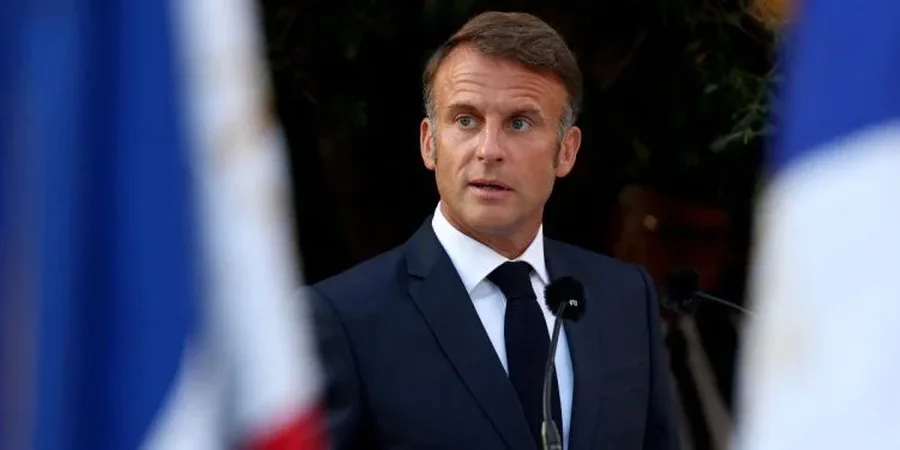
What are the dangers that would emerge from the policies of the left?
French President Emmanuel Macron has rejected the far-left's proposal for a new head of government, Lucie Castets, and is considering forming a center-left government. Although it will not be so easy to unite so many different forces (the center and the left without Melenchon's France Insoumise party) to block the rise to power of Marine Le Pen's National Rally party.
But if Macron fails to give France a government, he will be in danger of leaving office prematurely. And in this confused situation, explains Marianna Rocher, a deputy of the National Assembly, two other options should be considered: the referendum, an instrument that can be activated in the case of a stalemate or a new proportional electoral law.
Why was the proposal of the radical left and the candidacy of Castets rejected?
By teaming up before the elections with the extreme left of Jean-Luc Mélenchon, Emmanuel Macron has put himself into a trap: instead of a healthy and naturally democratic alternation of power, he has chosen to bring the whole country into cripple and paralyze our institutions.
In the long run this situation is very dangerous. Because none of the pressing problems of the French will be properly addressed: declining purchasing power, security and immigration (at a time when France has suffered yet another attack by Islamic radicals). In my opinion, the proposal of Lucie Castets was rejected for several main reasons, and especially because of concerns about the economic and social policies supported by the NFP (New Popular Front).
What are you particularly worried about?
I think two aspects are more alarming. The first is the increase in the minimum wage. Although such a measure is popular among some segments of the population, it is seen as dangerous for the French economy. A significant increase in the minimum wage can lead to increased costs for businesses, especially small and medium-sized businesses (SMEs), which may not be able to afford these additional costs.
And what could be the consequences?
This move may bring some negative consequences, such as the increase in unemployment. To compensate for the increase in wage costs, companies may be forced to lay off employees, or not take on new employees for a while, increasing unemployment. Businesses may increasingly use outsourcing, often in places where labor is less expensive.
And that would weaken the labor market in France. Additionally, some companies may choose to move their operations overseas, where labor costs are lower. This phenomenon, already a problem in France, could escalate further, leading to the closure of many businesses across the country.
What are the dangers that would emerge from the policies of the left?
Another controversial point in the program of the Popular Front is addressing the problem of illegal housing occupation. Castets proposes to recognize the right for the latter, which constitutes a serious violation of property rights.
Regulation in this sector could have several important consequences: encouraging illegal occupation of housing, public health and safety problems, a slowdown in real estate investment, and a decline in property values in the medium term across France. The National Rally has made it clear to the president that it will hinder many initiatives of a government formed by the Popular Front.
It seems that Macron can only accept a government with centrist forces and parts of the left. But are the parties involved open to this scenario?
The center party and the left parties have become allies among themselves, since they have a common enemy (the National Rally) but pursue different objectives. So my answer is no.
What can happen now? How will the negotiations take place and who might be Macron's preferred name?
Faced with this democratic and institutional impasse, there are several solutions. First, the referendum, since the President of the Republic has the power to directly ask for the opinion of the French. And secondly, the adoption of a proportional electoral system, which will resolve the inconsistencies of an electoral system that prevents the party that received the largest number of votes in the elections from forming the government.
So one of the paths to follow is electoral reform?
This reform should be discussed with all parliamentary groups. Despite the anti-democratic maneuvers aimed at preventing the representation in the government of 11 million French people, the National Rally emerges strengthened by these elections. A historic result in the European elections thanks to the mobilization of the French, a record number of votes and the first party in terms of the number of votes in the last parliamentary elections. Our resolve remains intact. The National Rally continues to work exclusively for the benefit of France and the French worldwide.
Is Macron somehow at risk in this situation? Should the president also change after the National Assembly?
Macron risks a lot by excluding the two largest political blocs from the government, as this could antagonize a large part of the electorate and provoke a crisis of legitimacy. If political tensions continue to escalate, and the government fails to govern effectively, there may be calls for resignation or early presidential elections.
In recent days, Macron has been forced to deal with the case of Pavel Durov, the founder of Telegram, who has already been arrested. How does the president explain this operation? Is it also related to the war in Ukraine, given that many of the news about this conflict are spread precisely by Telegram?
I don't have much information on Durov, so I can't give any details. But it shows that the digital world is much more present in everyone's life, and greatly influences opinions, thoughts and daily actions. Therefore, great attention should be paid to it, both at the democratic level to guarantee the plurality of information, and at the sociological level./ Adapted "Pamphlet", from "Il Sussidiario"



Lini një Përgjigje