


 Shkruar nga Pamfleti
Iran warns of strategic shift in one of the most sensitive global energy hubs.
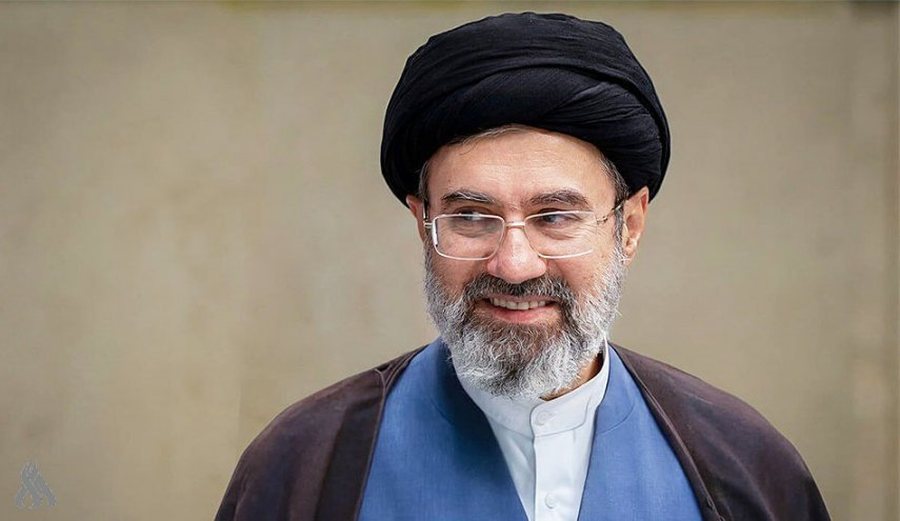
Against the backdrop of an unprecedented escalation in the Persian Gulf and following an open war with the US and Israel, the latest statement is not just an ordinary political articulation, but a strategic manifesto that aims to reformat the balance of power in one of the most sensitive areas of the globe.
In his first consolidated message as supreme leader after the elimination of his father, he announces the entry into a “new phase” in the management of the Strait of Hormuz, presenting this as a development that will bring stability and prosperity to the region, but in essence this is a direct challenge to the Western-dominated security architecture.
In this context, Khamenei's rhetoric about "American failure" should not be read simply as propaganda, but as an attempt to legitimize a new reality on the ground: a more militarized, more centralized Iran, and less dependent on classical diplomacy.
He goes further by declaring that the American presence in the Persian Gulf is illegitimate and that only the countries of the region should guarantee its security, a thesis aimed at excluding the US from a vital corridor for the global economy.
This position is reinforced by previous warnings that Hormuz could be used as a tool of strategic pressure, including its closure in the event of further escalation.
But beyond the statements, the domestic Iranian reality complicates the reading of this strategy. International sources suggest that, although Mojtaba Khamenei is the formal figurehead at the helm, real power has clearly shifted towards the Islamic Revolutionary Guard Corps, which is leading wartime decision-making and pushing for a more aggressive course towards the West. This makes his statement a mix between ideological vision and the dictates of a military-security structure that aims to capitalize on the conflict to strengthen regional influence.
On the geopolitical front, Khamenei's message is a threefold signal: first, to global energy markets, reminding them that Iran holds a critical "key" to an artery through which a significant portion of the world's oil passes; second, to regional rivals, such as Saudi Arabia and the United Arab Emirates, who are being sent the message that the era of US security dominance may be in decline; and third, to domestic Iranian opinion, where the need for unity and resistance is being used to consolidate power after a violent transition at the head of state.
Essentially, this statement marks a shift from an Iran that responds to international pressure to an Iran that seeks to impose its own rules in a strategic global area.
However, the fundamental question remains: is this a sustainable strategy or a risky gamble in a region where any wrong move could ignite a wider conflict?
For now, what is clear is that Hormuz is no longer just a maritime strait, but the epicenter of a new global conflict, where political rhetoric is increasingly coming closer to military reality./ Pamphlet



Lini një Përgjigje