


 Shkruar nga Federico Rampini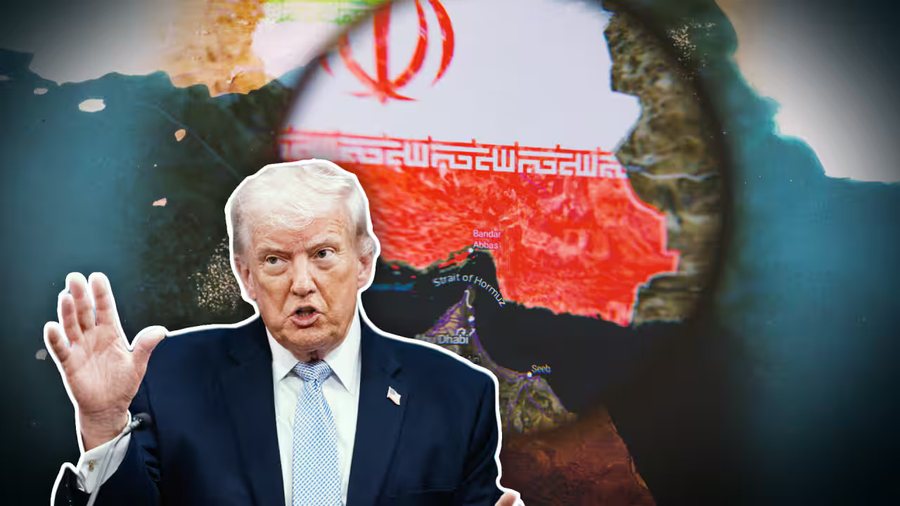
This move is a complete reversal of Trump's initial decision. After Iran took its "revenge" in the geo-economic sphere through the blockade, Trump is now attempting to suffocate the regime economically.
Trump is attempting to economically strangle Tehran after the regime’s response, which, by blocking the Strait, inflicted a costly energy shock on the world. The question that remains is whether this escalation will force Iran to the negotiating table or worsen the global oil crisis.
Why didn't Donald Trump announce his threat to block ships leaving Iranian ports earlier? What's the point of doing it now? And is it a credible threat, or just a bluff?
Since the start of Operation Epic Fury on February 28, one of the recurring criticisms of Trump has been this: why didn't he foresee and prevent the Iranian regime's blackmail over Hormuz?
In the face of the undeniable efficiency that the Pentagon and Israeli forces showed in "decapitating" the leadership and crippling the Iranian military arsenal, the failure to neutralize the blockade of Hormuz has been blamed on Trump even by those who shared the same initial goals of this war.
To find the answers, two things must be taken into account. First, as he himself stated, Trump expected to end the conflict within 4-5 weeks: either with a regime change, or with a regime on its knees that would accept unconditional capitulation (similar to what Maduro's replacement is doing in Venezuela).
It was supposed to be a "blitzkrieg" that, in the most optimistic scenario, would leave the Shiite theocracy little time to organize a counteroffensive.
Second, Trump had made it a point to reduce the impact of the war on fuel prices, at least within his own country. Knowing that energy markets are global and that the decline in supplies to Asia and Europe would also increase prices in the US, Trump was careful to lift sanctions on Iranian and Russian oil.
This move seemed absurd and suicidal to many observers. Because what's the point of lifting sanctions on a country you're at war with? In fact, the move had a logic.
While the Pentagon was dismantling Iran's air force and navy, the US Treasury was trying to stave off a drastic drop in oil supplies. However, this plan was rejected by the Tehran regime.
By blocking shipping in the Strait of Hormuz, the Islamic Revolutionary Guard Corps provoked exactly the kind of energy deficit Trump hoped to avoid. Now, if Trump's words are followed by actions, a new phase of the war will begin.
It will probably be less massive in terms of violence, also because theoretically we are still within the two-week ceasefire brokered by Pakistan. Even Vice President JD Vance himself, although he declared the negotiations a failure, described as positive the high-level conversation between the two governments in Islamabad, for the first time in 47 years.
There is a feeling that the failure of the negotiations is not as final as is being portrayed.
Meanwhile, there is news in the Persian Gulf. The US Navy appears to have begun mine clearance operations, a necessary condition for resuming transit.
Meanwhile, the Iranians are strengthening their coastal defenses near Hormuz, as if expecting a US Navy landing. And on top of that, the announcement came that the US will begin blocking ships leaving Iranian ports.
This means that the Pentagon is lifting a selective embargo. It aims to stop only Iranian ships, thus cutting off exports that finance the regime's war, while oil and gas ships from Arab countries will continue to circulate (possibly under American escort).
This move is a complete reversal of Trump's initial decision. After Iran took its "revenge" in the geo-economic sphere through the blockade, Trump is now attempting to economically suffocate the regime. If this happens, a collateral victim will be China, the main buyer of Iranian oil.
So Trump has changed his mind. He is accepting the hit to global prices only to expand the offensive from the military dimension to the economic one. Perhaps in the hope that
this will bring Tehran back to the negotiating table to accept Washington's conditions. Until now, Trump seemed scared by the energy crisis and its reflection on American voters. It remains to be seen whether the markets and the polls will force him to change course again./ Adapted from "Pamphlet", from "Corriere della Sera"


Lini një Përgjigje