


 Shkruar nga Pamfleti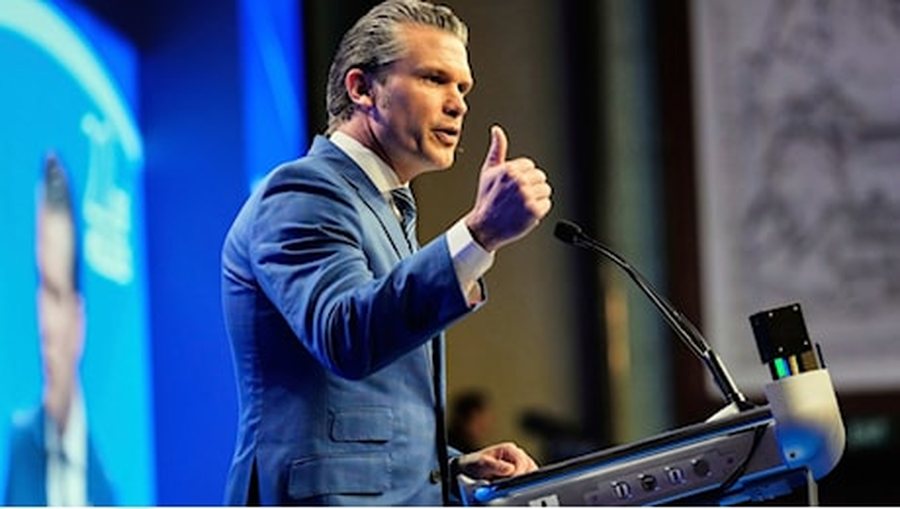
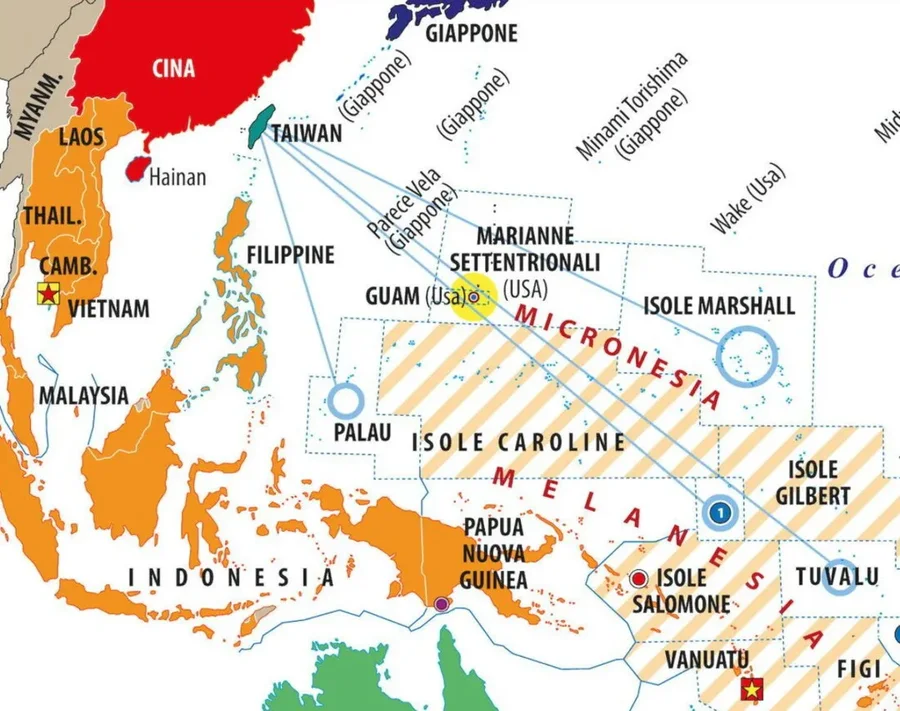
Not surprisingly, it has long been increasing military and political pressure on Taipei, increasing the frequency and scope of military exercises around the island.
In a move likely to further strain relations between Washington and Beijing, US Defense Secretary Pete Hegseth warned that the threat posed by China is real and potentially imminent, calling on Asian allies to invest more in defense.
"It should be clear to everyone that Beijing is seriously preparing to use military force to change the balance of power in the Indo-Pacific," Hegseth said in his first speech at the Shangri-La Dialogue, Asia's premier strategic and diplomatic forum held annually in Singapore.
He called Israel, Poland, the Baltic states and the Gulf states some of the US's best allies, a remark that might seem like an insult to other close allies such as the United Kingdom, France, Germany, South Korea and Japan.
"Devastating consequences" of an attack
"There's no point in sugarcoating reality. The threat posed by China is real and could be imminent," Hegseth said, using some of the harshest words directed at Beijing since taking office in January. The US defence secretary added that any attempt by China to invade Taiwan "would have devastating consequences for the Indo-Pacific and the world".
China considers Taiwan an integral part of its territory and has set itself the goal of reunification, using - if necessary - force.
Not surprisingly, it has long been increasing military and political pressure on Taipei, increasing the frequency and scope of military exercises around the island.
The Taiwanese government has consistently rejected China's claims to sovereignty, arguing that only the Taiwanese people can decide their own future.
The message sent by Hegseth to Beijing, however clear, could not have come directly. Chinese Defense Minister Dong Jun decided not to attend the forum, and Beijing sent only an academic delegation to Singapore for the first time since 2019. A choice that has not been officially explained, but which has been interpreted as a sign of disagreement regarding recent American decisions on duties and visas for Chinese students.
The double message to allies
The US Defense Secretary's statements were clearly messages to America's allies in the region. Taking the example of what is happening in Europe, Hegseth called on friendly governments in the Indo-Pacific to invest more in defense to protect themselves from regional threats. "It makes no sense for European countries to do this while key allies in Asia are spending less on defense, in the face of an even more formidable threat, not to mention North Korea," Hegseth said.
The US Defense Secretary also explained that the United States will not leave its allies alone in the region. A clarification that was not so clear after Trump accused South Korea of paying too little to maintain the US military contingent on its territory and after the movement from Asia to the Middle East of a battalion equipped with a Patriot anti-aircraft defense system.
A logistically demanding operation that required 73 cargo flights and was accompanied by the return to the United States of several US Coast Guard units, which are now engaged in patrolling the maritime borders with Mexico.
According to a study by the International Institute for Strategic Studies, the think tank that organizes the Shangri-La Dialogue, spending on armaments and research is increasing in several Asian countries. A response to the worsening security situation that follows two directions: an expansion of international industrial cooperation and a strengthening of domestic industries in this sector.
Despite this, average defense spending in the region remained around 1.5% of GDP in 2024, a relatively stable figure over the last decade.
The US Secretary of Defense's speech in Singapore was also an opportunity to reiterate the ideology underlying Trump's approach to international relations.
"We are not here to pressure other countries to adopt our policies or ideology. We are not here to preach about climate change or cultural issues. We respect you, your traditions and your militaries. And we want to cooperate with you where our interests align," Hegseth said. / Adapted from Pamphlet by 24hours/




Lini një Përgjigje