


 Shkruar nga Pamfleti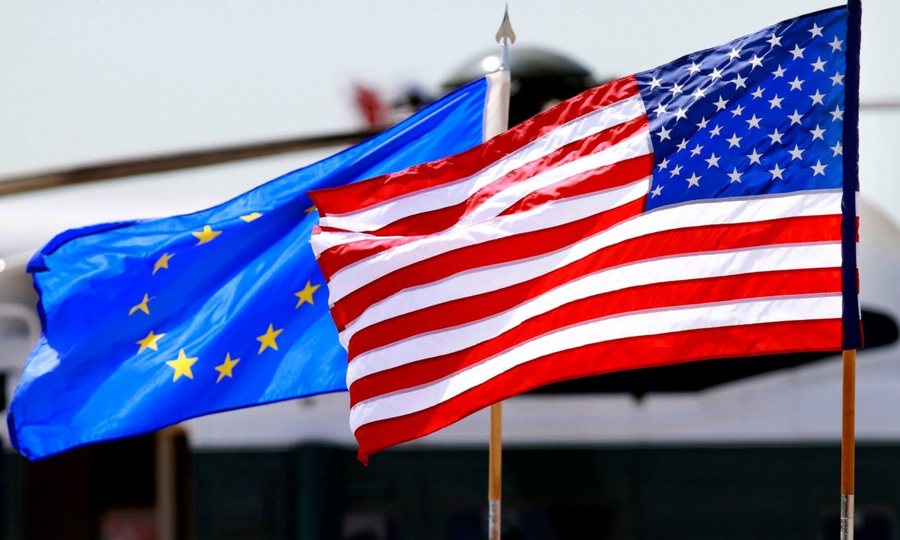
The European Commission is proposing 25% countervailing duties on a range of US imports in response to US steel tariffs, according to a leaked document cited by Reuters.
In addition, the Commission proposes 25% tariffs on EU goods, which will come into effect on May 16, but removes American 'Bourbon' from the list of goods that will face retaliatory measures.
In addition, the Commission proposes counter-tariffs on certain US imports, which will come into effect on December 1.
The European Union earlier played its cards to avoid the fallout from Trump's tariffs, proposing a "zero-to-zero" deal, essentially meaning that the US would impose no tariffs on European products and that European countries would withdraw theirs.
This proposal was made weeks before Donald Trump announced the tariffs, but it "still remains on the table," according to European officials.
As the Guardian reports, Maros Sefcovic, the EU Trade Commissioner, said he had proposed zero tariffs on cars and a range of industrial products, including pharmaceuticals, rubber and machinery, during his first meeting with US Commerce Secretary Howard Lutnick on February 19.
He reiterated that the EU remains open to talks, hinting, however, that nothing will be concluded soon: "We are now in the early stages of discussions, because the US sees tariffs not as a tactical step, but as a corrective measure."
Trump has repeatedly criticized the U.S. trade deficit in goods with the EU, focusing on cars. "They don't take our cars, they don't take our food, they don't take anything," he said again over the weekend.
However, Sefcovic rejected suggestions that EU countries would abandon VAT, one of Trump's complaints about the EU. He said the EU has spent "considerable time and energy" explaining to its US counterparts how the sales tax works, citing its use in more than 161 countries.
"We are willing to discuss, to look at things, but it has to be a mutually beneficial solution."
However, EU member states will vote on Wednesday on a first round of potential retaliation in response to Trump's steel and aluminum tariffs announced last month. The Europeans will target up to 26 billion euros of iconic American products such as Harley-Davidson motorcycles, orange juice and jeans, with the tariffs set to take effect on April 15.
The European countries most affected by the increase in US tariffs will be Ireland, Slovakia, Germany, Hungary, Italy and Austria, according to rating agency Moody's.
This estimate is based on the percentage that exports to the US represent for each country's economy.
"The impact of the new tariffs" announced by US President Donald Trump "varies significantly across sectors," Moody's warns.
In the European Union, the machinery and alcoholic beverage sectors "will be the most affected, because more than a fifth of exports of these products are destined for the United States," the house explains in a note.
"The European Union's response will determine the overall impact on the economy," Moody's said, depending on whether it imposes further tariffs or not.
Specifically, according to an estimate by the Cologne Institute for Economic Research, the total economic damage to the German economy during Trump's four-year term could reach 200 billion euros, leading to a 1.5 percentage point lower GDP level in 2028.
"In the short term, the next government will struggle to cushion the immediate trade shock," Deutsche Bank economists wrote in a note on Monday, adding that Germany could face a third year of GDP contraction in 2025.
If fully implemented, the U.S. tariffs would "massively damage" the German economy and could push it into contraction this year, the Munich-based Ifo Institute for Economic Research said last week. "Some key industries, such as automobiles and engineering, will be hit particularly hard," it said.
"With Germany's economy already stagnating, it is likely that US tariffs will push economic growth in Germany below zero," said Ifo President Clemens Fuest.
Merz, whose conservative CDU/CSU bloc won elections in February, is under increasing pressure to conclude talks with the Social Democrats to form a government. He told Reuters that the impact of the U.S. tariffs "must now be at the center of coalition negotiations." / Adapted from Pamphlet /




Lini një Përgjigje