


 Shkruar nga Pamfleti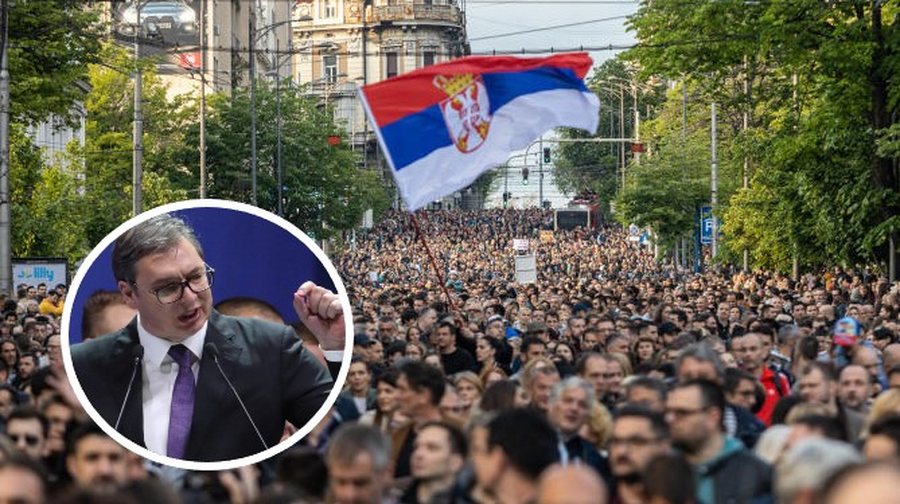
Tens of thousands of people have taken to the streets in Belgrade and other cities to complain and protest, demanding a cultural and perhaps political turn...
Punctual, every Saturday from the beginning of May until today, a large number of people fill the streets of Belgrade to protest against the government and above all against the President Aleksandar Vucic. An absolute novelty for Serbia and a novelty for the real politician, a man with power since the era of Milosevic, when at a very young age he held the position of Minister of Information during the Kosovo war. After an interlude in the opposition, the 53-year-old leader of the Serbian Progressive Party, a formation with national-populist overtones, became deputy prime minister in 2012, prime minister in 2014 and in 2017 was elected president of the republic.
Re-confirmed in April 2022 with 59% of the vote, Vucic quickly found himself in a lot of trouble. As the war in Ukraine continues to shake the complex relationship between traditionally pro-Russian Serbia, the European Union and the United States, in early May the country was rocked by two parallel tragedies. On May 3, a thirteen-year-old boy killed eight students and a guard at an elementary school in Belgrade. While a day after, a 21-year-old killed eight people in Mladenoc and injured fourteen others.
A double bleed. All without meaning, without a why, without a comprehensible rational explanation. Pure insanity stemming from decades of acrimony, widespread violence, misguided or misinterpreted messages, and the poison created by the inter-Yugoslav wars.
But the killing of children in Belgrade and the massacre in Mladenovc created the sound of the classic straw that broke the camel's back. Emotion immediately turned to anger, and since then tens of thousands of people have taken to the streets in the capital and other cities to complain and protest, demanding a cultural and possibly political turnaround.
Vucic tried to defuse the situation by demanding mass disarmament with voluntary surrender, without any criminal consequences. Serbia is actually in first place in Europe for the number of legally owned weapons, let alone undeclared. Not by accident - although, at least according to government records, some 100,000 firearms and explosive devices and 4 million rounds of ammunition were collected.
Then, the icing on the cake, the Kosovo crisis erupted again on May 26, an ever-open wound for the Serbs, and the president immediately resumed his challenge to Pristina. A mandatory move to once again revive the nationalist spirit of his countrymen and calm the protests in the capital. On these coordinates, Vučić gave up the leadership of his party, entrusting it to Miloš Vučević, the current Minister of Defense, and heralding a new movement. From the ashes of the Serbian Progressive Party, a new movement must be born with which they will face the early elections and perhaps defeat the opposition once and for all. Total disarmament can wait…. / Adapted "Pamphlet" from "Insideover"


Lini një Përgjigje