


 Shkruar nga Pamfleti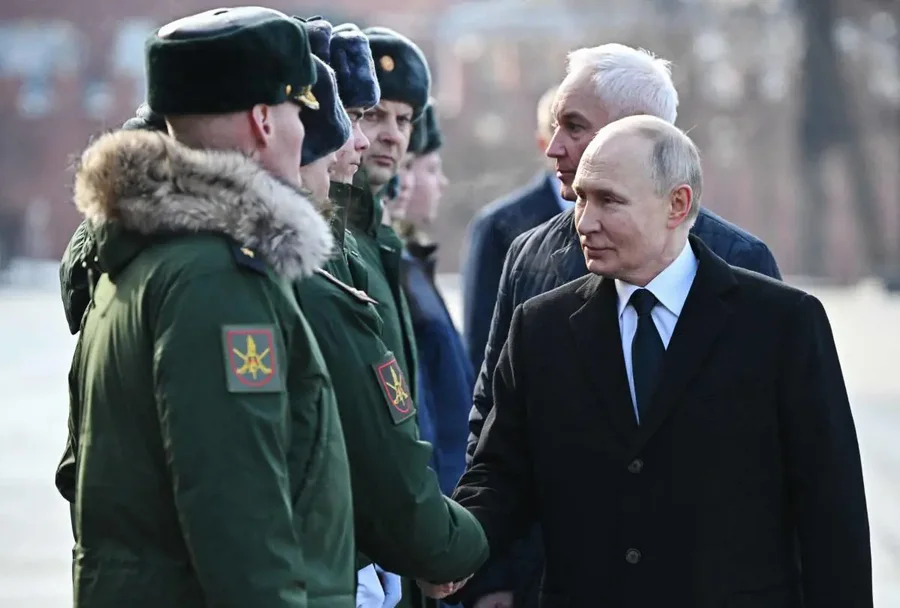
Putin's refusals make the ceasefire unworkable. The plan is old: the return of Great Russia
It was not difficult to predict: Vladimir Putin has reacted to the American proposal - accepted by the Ukrainian side - for a month-long ceasefire in the fighting by imposing conditions that make it practically unworkable. The points agreed by Washington and Kiev in Jeddah do not please the Kremlin, that much is clear.
However, Putin has a vested interest in showing that he is adapting to Donald Trump's project of achieving a lasting peace between Russia and Ukraine, but in reality he does not aim for peace at all, since the only thing he is interested in is complete victory. That is why he is pursuing a waiting strategy and a rigid stance on the content of the negotiations (if there are any negotiations between him and Trump, and not just a pre-arranged agreement).
Putin wants time to retake the small part of the Russian province of Kursk, which is still in the hands of the Ukrainian army, to change the terms of the Jeddah agreement and to use the ceasefire - when it comes - to resume aggression.
It is quite possible that the Russian dictator is now trying to exploit his personal influence over Trump to get what he wants directly from him. It does not seem like an impossible mission, considering that the two leaders have had long and secret conversations on this issue, long before the machinery of official diplomacy was set in motion.
It is reasonable to believe that Trump's very biased stance in favor of Moscow is a consequence of those conversations, in which no one but translators participated. There is even a well-founded suspicion that this diplomatic process, developed in several stages in Saudi Arabia and elsewhere, is nothing more than a theater concocted by Trump and Putin to force Volodymyr Zelensky to make serious concessions, presenting them as a successful outcome of the negotiations.
And this, despite the fact that - according to the Washington Post - the American secret services continue to inform the president that Putin does not aim for peace with Ukraine at all, but intends to completely subjugate it and turn it into a vassal state, like Lukashenko's Belarus: something is wrong here.
Several current and former American officials - writes the Washington Post - have stated that, even if he were to accept a temporary ceasefire, the Russian leader would use it to rest and reorganize his troops, and then he would most likely violate the terms of the agreement by creating a provocation that he would attribute to Kiev.
Other officials have said reports are more cautious about the peace terms Putin might accept. But they have acknowledged that there is no sign he has given up on his demand for Ukraine to be brought into Russia's economic and security orbit. "He has a long-standing desire to bring back 'Great Mother Russia,'" one source explained.
So, if our predictions are correct, Putin will be able to get from Trump almost everything he wants: to buy as much time as possible before a ceasefire, to stop or limit Kiev's rearmament, and to annex all Ukrainian territory occupied so far, plus the parts of the illegally annexed provinces that the Russians have not yet managed to occupy.
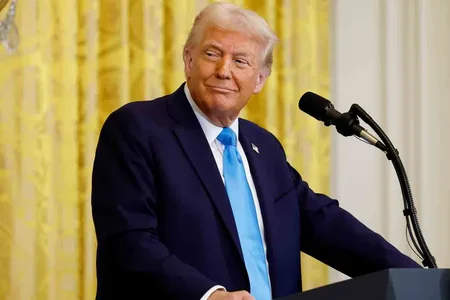
It is predictable that Trump, “in the interest of peace and to stop unnecessary massacres,” will remind Zelensky in his dismissive tone that he has no cards in his hand and that he must be content with Putin’s “letting go” of not grabbing everything he wants – but perhaps 10-20% less, something that Trump will present as a great personal success at a negotiating table that will actually be fake.
Such distrust of this scenario has gripped Europe that not only Germany, but also Poland are now seeking nuclear protection directly on their territory. The consequence is inevitable: Medvedev or Zakharova will repeat the usual hypocritical accusations of a “warmongering Europe”, once again threatening, in vain, with a supposed “Armageddon” against the West./ Bota.al


Lini një Përgjigje