


 Shkruar nga Erik Jones & Matthias Matthijs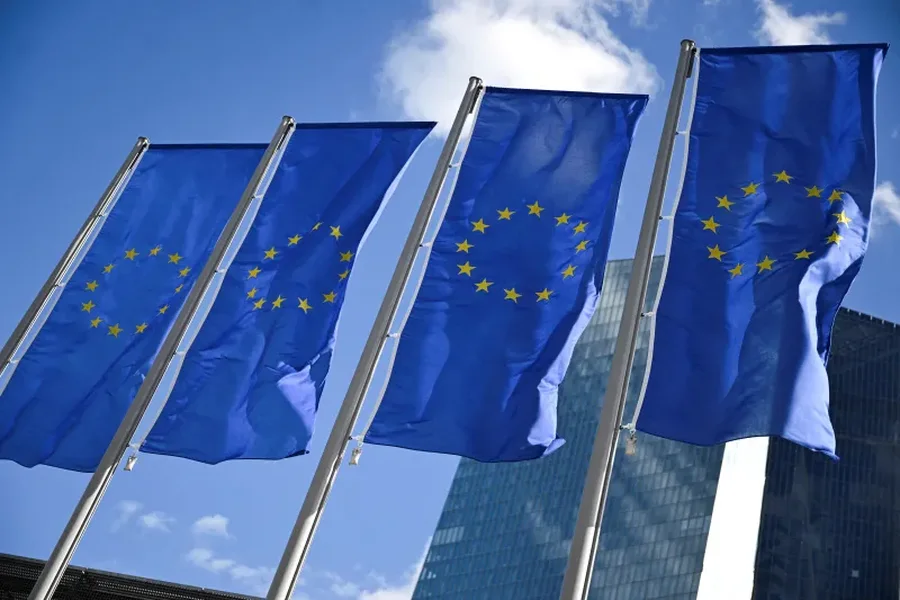
If Europeans fail to act together to fulfill this vision, they will lose jobs, investment, and innovation to the United States and China, at the cost of ever-lower living standards.
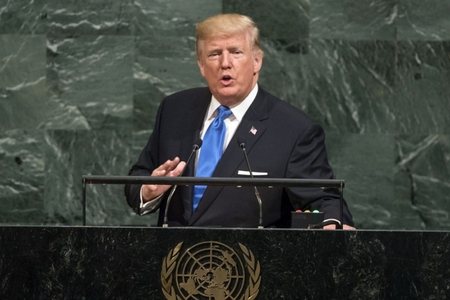
US President-elect Donald Trump has long echoed familiar complaints about the European Union. He has pointed to the large trade deficit between the United States and the EU, estimated at $131 billion in 2022 and $208 billion in 2023, as evidence that the Europeans are not playing by the rules and are taking advantage of Americans' naivety.
To fix the rest of the "unfair" trade practices, he has promised to impose tariffs of at least 10 percent on all imports, including those coming from major European trading partners.
Meanwhile, Trump has questioned whether the United States should continue to guarantee Europe's security through NATO. He has repeatedly complained about the military and financial aid that Congress has given to Ukraine for its defense against Russian aggression.
Along with his vice president-elect, JD Vance, Trump believes that the Europeans should provide the bulk of future aid to Ukraine so that the United States can shift its focus to China and the Pacific.
There is an ongoing debate in Europe about the best approach to the incoming Trump administration. Some even argue that he should be lured with money. Thus, the president of the European Central Bank, Christine Lagarde, has suggested that Europe should use the “checkbook strategy” and “buy certain things from the United States.”
Even European Commission President Ursula von der Leyen has stated that the EU is still buying large amounts of gas - almost 20 percent - from Russia, and that it would be better to buy more gas from the United States.
EU officials are also considering buying more US military equipment to push Trump to drop his new demand that NATO allies spend 3 or even 5 percent of GDP on defense.
However, there are other EU officials who doubt whether Trump will drop tariffs against Europe in exchange for some symbolic “buy American” gestures. They believe Europe should prepare for retaliation and threaten to impose an equivalent 10 percent tariff on all American imports.
But the problem with all these short-term strategies is that they fail to address the EU’s long-term structural problems. The solution is not a change in trade policy. The EU’s trade surplus with the US was $20.5 billion in October 2024, up from just under $17.5 billion in the same month a year earlier.
This trade balance is only part of the EU's current account surplus with the rest of the world, which increased from $64.4 billion in the second quarter of 2023 to $134.4 billion in the second quarter of 2024.
This balance is a consequence of the EU's own imbalance between its domestic savings and domestic investment. Europeans lack neither savings nor investment opportunities. What they lack is the ability to move money efficiently from one part of the EU to another.
National rules regarding income tax, pension funds, risk absorption and bankruptcy procedures make it unattractive for investors to look beyond their own countries' borders to the rest of Europe.
As a result, most of Europe's savings either lie dormant in domestic banks or seek higher returns in the larger and more liquid capital markets in the United States. Buying more weapons and gas from the US will not solve this problem or address the continent's security vulnerabilities.
Europeans need to make long-term investments in industry, including defense. Some of the best responses to Trump’s provocations can be found in two major reports published last year. In April, the Council of the European Union published a report, prepared by former Italian Prime Minister Enrico Letta, on reforming the single market.
Meanwhile, in September, the European Commission published another report, by former Italian Prime Minister Mario Draghi, on increasing EU competitiveness. The two reports argue that Europe’s relative economic decline poses an existential threat to the European Union and stress the importance of strengthening research, innovation and sustainable investment in new technologies.
And both explain that the only way the EU can achieve these goals is by making it easier and more attractive for Europeans to invest their savings within the EU, rather than locking them in savings accounts or investing them abroad.
If European leaders find the political will to implement the reports' recommendations, the EU will be home to a common market that can achieve its true weight on the international stage; it will become stronger and more self-sufficient.
If Europeans fail to act together to fulfill this vision, they will lose jobs, investment, and innovation to the United States and China, at the cost of ever-lower living standards.
Draghi speaks of competitiveness as an “existential challenge for the EU,” and estimates that Europeans will need to invest “an additional €800 billion a year to restore the continent’s industrial strength.” He argues that European governments should use non-trade instruments such as loan guarantees, subsidies, and tax incentives to steer private investors in the right direction.
Financing such schemes would require a significant increase in borrowing. Some of it would have to be taken on collectively by the EU, as happened during the pandemic in 2020. But some member states are likely to aim to reach bilateral agreements with the incoming Trump administration rather than work through the EU.
Hungary and Slovakia have governments closer to Moscow than to Kiev, and have welcomed Trump's promised plans to bring peace. Meanwhile, in both Italy and the Netherlands, the far right is currently in power and shares Trump's anti-immigration stance and broader right-wing agenda.
In Germany, Friedrich Merz, leader of the Christian Democratic Union, looks set to become chancellor when the country goes to the polls in February. He is clearly pro-EU, but he does not support collective borrowing at the European level. In France, new parliamentary elections could be held this summer to break the current political deadlock.
And Marine Le Pen's far-right National Rally party could win an outright majority. If that happens, Macron would be even less effective in his efforts to advance his vision of a strategically autonomous Europe. /Adapted from "Pamphlet" by "ForeignAffairs"
Note: Erik Jones, director of the Robert Schuman Center for Advanced Studies at the European University Institute in Florence. Matthias Matthijs, associate professor at the School of Advanced International Studies at Johns Hopkins University.







Lini një Përgjigje