


 Shkruar nga Pamfleti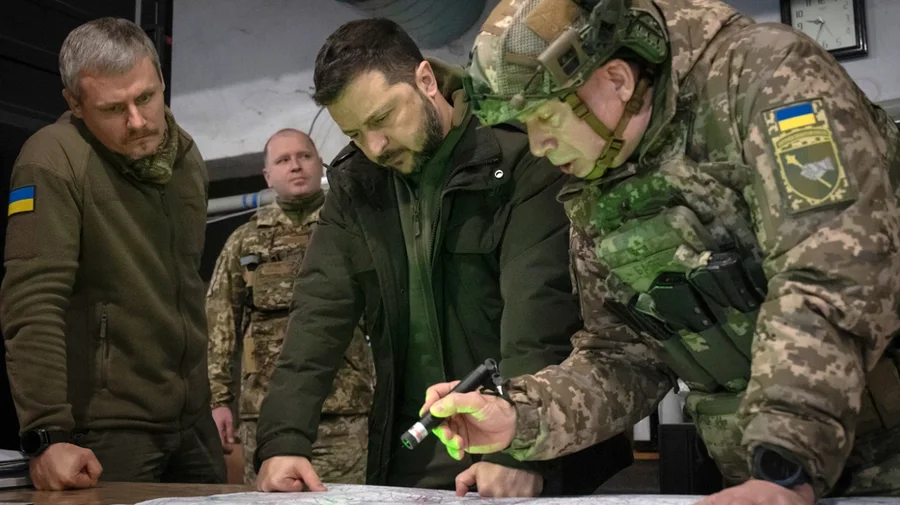
Volodymyr Zelensky’s declaration that he can take Ukraine to elections within 60-90 days is not an institutional initiative. It is a forced and high-risk move, the product of American pressure, internal tensions, and a war that has degenerated into a protracted stalemate. His political “hegemony” is faltering, society has exhausted its reserves, and Kiev is facing a moment when the fronts are not only in the east, but also within the state itself.
The constitutional limit and the acceptance of a crisis
The Ukrainian constitution clearly stipulates a five-year presidential term and that elections be held only in peacetime. Martial law categorically prohibits all electoral processes. Organizing elections now would require legal maneuvering, constitutional interpretations, and a level of political consensus that does not exist, at least at the time of writing.
But that is not the only obstacle. The real obstacle is the recognition that the institutional stability on which Zelensky relied to hold the country together during the war is no longer sufficient. Pressure from Washington and the dual conflict – on the front and in the political system – are pushing him towards action that subverts the very rules of wartime.
Washington is changing the game and Trump is imposing a new framework
The US administration wants elections to be held. Not necessarily to strengthen Ukraine, but to secure a new interlocutor who will enter peace negotiations on terms that enable an agreement with Russia.
Zelensky's statement that he is ready to move forward, but only with international security guarantees, is a cautious way to buy time. He is trying to show readiness, knowing that practical implementation is almost impossible without creating paralysis on the front.
Washington makes no secret of its goal: to accelerate the process. Kiev responds with an action that resembles a forced withdrawal and at the same time a diplomatic trap for its allies: if the US wants elections, let it take charge of their security.
Opponents and the danger of militarization of politics
These elections have nothing in common with previous elections. There are no campaigns, no usual political structures, no institutional normality. But there are strong figures.
Valery Zaluzny, the only one who can really defeat Zelensky. With popularity over 70%, the image of a leader and broad support in both the army and society, his entry into politics would create a duel between political legitimacy and military prestige. A duel that in history has not only damaged governments, but has often overthrown regimes.
Poroshenko, mbetet një pol i qëndrueshëm pro-evropian, por pa potencial real për të përmbysur skenën.
Timoshenko, më shumë simbol sesa sfiduese serioze.
Udhëheqësit lokalë dhe komandantët ushtarakë, mund të shfaqen si “surpriza zgjedhore”, sidomos nëse lodhja sociale kthehet në zemërim.
Problemi për Zelenskyn është i qartë: vendi nuk po përballet vetëm me zgjedhje, por me një riorganizim të mundshëm politik që mund të çojë në transferim de facto të pushtetit te figura të ushtrisë.
Sondazhet, mandati nuk është humbur, por nuk mjafton më
Sondazhet tregojnë se Zelensky ruan ende legjitimitet institucional dhe pranim personal. Por gatishmëria për të dalë në votime ka rënë në rreth 20%, duke reflektuar një shoqëri që e njeh rolin e tij, por nuk sheh më një strategji të qartë.
Gjetja më shqetësuese është tjetër: rreth 60% e qytetarëve nuk duan zgjedhje tani. Ata nuk i shohin si përparësi, i shohin si kërcënim. Kjo e shndërron kutinë e votimit në rrezik për kohezionin shoqëror.
Rreziqet dhe mundësia e një krize të pakontrolluar
Zgjedhjet në një vend në luftë nuk janë vetëm të vështira. Janë të rrezikshme në shumë drejtime.
Rreziqet kryesore janë:
-Destabilizim i frontit, pasi njësitë ushtarake do të angazhohen për sigurinë e procesit
-Sulme të mundshme ruse ndaj qendrave të votimit, për arsye strategjike dhe simbolike
-Përçarje institucionale nëse vihet në dyshim legjitimiteti i procesit
-Rreziku i një zhvillimi të papritur: grusht shteti, atentat apo shpërthim që mund të destabilizojë tërësisht vendin.
Në një mjedis ku shteti funksionon në kufijtë e tij, ku ushtria ka fituar pushtet të madh shoqëror dhe ekonomik, dhe ku presionet ndërkombëtare po shtohen, një tronditje e tillë mund të ndryshojë rrjedhën e luftës brenda 48 orësh.
Skenarët e ditës tjetër
Me balancën aktuale të pushtetit, shfaqen katër skenarë të mundshëm:
Zgjedhje me mbikëqyrje ndërkombëtare.
Rada bën ndryshimet e nevojshme, votimi zhvillohet me garanci perëndimore dhe Zelensky rizgjidhet, por i dobësuar. Rezultati: stabilitet me çarje.
Skenari “Zaluzny”
Ish-gjenerali jep dorëheqjen, mobilizon shoqërinë dhe fiton pushtetin. Ky është skenari më i paparashikueshëm. Një shtet në luftë që ia kalon pushtetin ushtrisë mund të forcohet ose të shembet. Zaluzny, i vetmi që ka sfiduar Zelenskyn gjatë këtyre viteve, mund të ndryshojë rrënjësisht strukturën politike të vendit.
Skenari i përmbysjes
Presioni shoqëror dhe ai parlamentar bllokojnë procesin. Propozimi i Zelensky-t kthehet në mjet negociues, jo në rrugë drejt zgjedhjeve. SHBA-të dhe një pjesë e Evropës rrisin presionin. Rusia vazhdon goditjet dhe shtyn forcat në Donbas. Narrativa e “presidentit pa zgjedhje” rëndon çdo negociatë.
Zelensky's defeat scenario:
If he loses, especially against a military figure, Kiev will enter a fragile transition, as Moscow tries to exploit the power vacuum. Ukraine will face both military escalation and a lack of leadership.
Europe sees growing division
For Europe, the elections in Ukraine are extremely important, even though they are not an internal European matter. They affect the cohesion of the West and Kiev's ability to remain oriented towards the EU.
If the leadership changes under American pressure, Europe loses its main interlocutor. If a military figure wins, Europe will have to cooperate with a government that did not come from the classical democratic process. If Zelensky is re-elected in conditions of crisis, he enters negotiations with much more limited room for maneuver.
Ukraine on the brink of a new era again
The ballot box in war-torn Ukraine is not a historic democratic moment. It is an instrument of geopolitical pressure. The possibility of a political, institutional, or even physical crisis is real. And its impact will not be limited to Kiev.
Europe, which has invested politically, economically, and strategically in Ukraine's stability, is realizing that the main threat to stability no longer lies solely in the Donbas, but within the Ukrainian political system.
The war is transforming into a political crisis. And this crisis will determine not only the Kiev-Moscow balance, but also the shaping of the West over the next decade.


Amerika nga idoli i botes dhe shpresa e gjithe njerezimit per perparim e zhvillim eshte kethyer shteti me i urryer ne bote pa moral e drejtim. Kur Shqiptaret ta bejne mutin do te thote qe e ke fundin te afert. Njeriu ka shume te papritura ne jete e jeta eshte plot halle, por eshte shpresa ajo qe e ben qe te mbijetoje. Te humbesh shpresen do te thote qe je i vdekur e i mbaruar. Spekulimit i erdhi fundi e sot po icirret maska te gjithe spekulatoreve pa moral.