


 Shkruar nga Pamfleti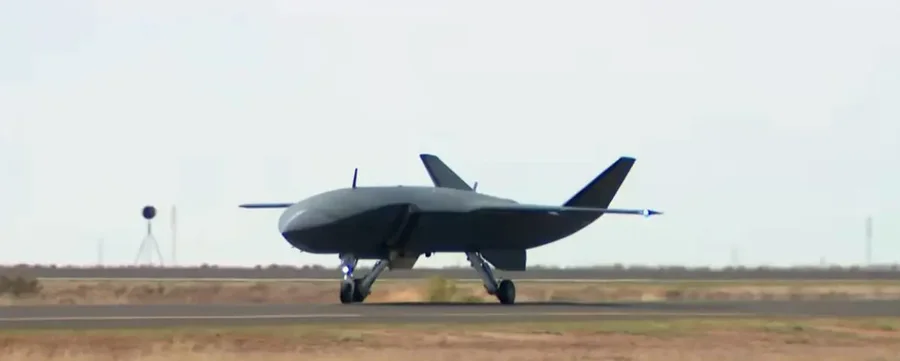
Australia is investing $25 billion in a major military reform to counter China's growing influence in the Pacific...
Australia is showing its power. Canberra has launched a massive defense spending spree worth A$25 billion, equivalent to just under $16 billion, ordering fleets of autonomous aircraft and submarines, Japanese-designed frigates and modernizing a major shipyard.
This is the country's biggest military reorganization since World War II. The reason? To help the United States and its allies in the Asia-Pacific keep at bay China, which, with its ships and military exercises, is expanding its naval reach into strategic areas.
"Australia faces the most complex and in some ways most threatening strategic landscape we have seen since the end of World War II," Australian Defense Minister Richard Marles said last August.
Prime Minister Anthony Albanese will meet Donald Trump on October 20th and the two are expected to discuss defence spending and security in the Indo-Pacific region. Canberra has already started taking the first steps.
The Australian government has named Japan's Mitsubishi Heavy Industries as the preferred bidder for a A$10 billion contract to build up to 11 Mogami frigates, part of a A$55 billion investment to overhaul the country's surface fleet.
The review, the Financial Times reported, also includes a contract with Britain's BAE Systems to build Hunter-class frigates in Adelaide.
A few weeks ago, Canberra committed another $12 billion to begin modernizing the Henderson shipyard, south of Perth, with the aim of renovating a facility that previously produced superyachts and is now expected to produce Japanese-designed frigates and service nuclear-powered submarines.
Australia is testing MQ-28A drones, otherwise known as "ghost bats," developed under a $1 billion contract with Boeing.
These phantom bats, which are designed to accompany manned aircraft, are the first domestically designed military aircraft in more than 50 years (investment: $4.3 billion).
Canberra has also signed a deal with US technology group Anduril to produce a fleet of autonomous underwater vehicles, known as "Ghost Sharks", which will be built in Sydney.
Marles said the ships could be used for intelligence, surveillance, reconnaissance and attack missions. "This is a lethal capability. It is the leading capability in the world in terms of a long-range, unmanned and unmanned autonomous underwater system," he explained.
Meanwhile, a month ago, Leidos won a $46 million Australian contract to supply operational systems for Canberra's counter-drone program.
According to Luke Yeaman of the Commonwealth Bank, Australian defense spending will increase to 2.25% of GDP by 2028 and could reach 3% within a decade, thanks to the trilateral Aukus agreement with the United States and the United Kingdom.
It is worth noting that the Aukus deal, which includes the purchase of nuclear-powered submarines, could cost between 268 billion and 368 billion Australian dollars by 2050.
The country has thus planned an increase in defense spending of 70 billion Australian dollars over the coming years.
But will this be enough to modernize the army of a country unaccustomed to living on the brink of tension? / Adapted from Il Giornale /






Lini një Përgjigje