


 Shkruar nga Nicholas Farrell
Competition between local groups linked to Mexico's Sinaloa cartel, Italy's Ndrangheta, Albania's mafia and a host of others has transformed Latin America's safest country into one of its deadliest...
In Ecuador, football is a deadly sport, with players competing in the shadow of match-fixing mafias and under the threat of an assassin's bullet.
Midfielder Jonathan Gonzalez, 31, was vacationing at his home near the Colombian border this month when a hitman approached him on a motorcycle and shot him in the head.
"Speedy," as he was known by his teammates, had played for Club 22 de Julio, a second-division team from Esmeraldas, and was one of three Ecuadorian professionals to be killed in the last month alone.
He was "a good guy who died because of betting," club employee Oswaldo Batallas told AFP.
Gonzalez's death shocked the club and Ecuador, but it was not a surprise.
Just a few days ago, other second division players, Maicol Valencia and Leandro Yepez, were shot dead in a seaside hotel.
Valenica died at the scene, Yepez managed to get to the hospital but did not survive. Both played for Exapromo Costa.
A few days before his death, Gonzalez had received frightening warnings about what was about to happen.
His car was shot at and his mother received threats.
Then, a mobster connected to online betting allegedly pressured him to lose a match, which ended in a 1–1 draw.
Police are still investigating the deaths of all three players.
Dollarized, beautiful, and welcoming to visitors, Ecuador has long been a popular resort for mobsters.
But since the country has become an important transit center for Colombian cocaine, it has attracted drug traffickers and gangsters en masse.

Competition between local groups linked to Mexico's Sinaloa cartel, Italy's N'Dragger, Albania's mafia and a host of others has transformed Latin America's safest country into one of its deadliest.
Murder, extortion and trafficking have flourished and no industry has been left untouched, including football.
According to a recent UN estimate, worldwide, illegal sports betting is believed to provide gangs with around $1.7 trillion in profits per year.
In India, a tournament with fake teams was invented to extract money from Russian players.
In Ecuador, as in many countries, the connection between sports betting, both legal and illegal, is strong.
About a dozen professional teams are supported by online betting firms. Other links are less visible than a sponsor's logo.
In 2023, US Ambassador Michael Fitzpatrick warned that drug cartels were using football clubs to launder money.
Carlos Tenorio, who played 50 games for Ecuador and appeared at the 2006 World Cup, told AFP that the time had come to break the link between betting and football.
"We cannot accept betting companies as the main sponsors of a football club," he told AFP.
Quito-based security expert Fernando Carrion says the massive appeal of football makes it a prime target for the influence of the narco-confederation.
Illegal betting is "an attractive mechanism for money laundering due to weak oversight," he said.
A league report has found evidence of match-fixing in at least five second division matches this year.
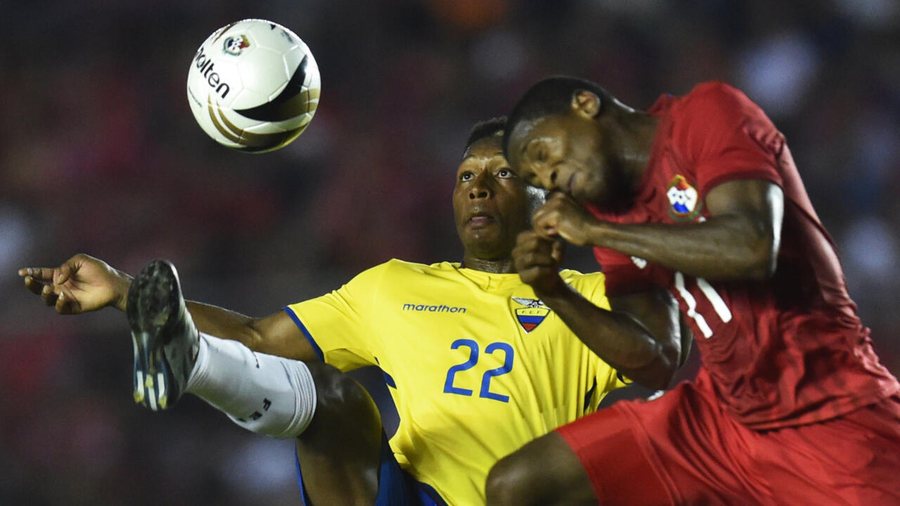
One club, Chacaritas, was offered $20,000 to lose a game. A chilling video from 2024 showed players being threatened with guns to play games.
Experts say second division teams are vulnerable because of low salaries. Once players play by the rules, escape from mafia control is almost impossible.
Due to threats from the mafia, the president of Club 22 de Julio fled Esmeraldas and is working underground.
Former Chilean footballer Nelson Tapia is also among those who have left. "I have never sold tickets or fixed matches," he said from abroad.
Tapia alleged that Exapromo Costa was linked to Adolfo “Fito” Macias, the leader of the Los Choneros drug gang, who was recently extradited to the United States.
Ecuador's all-time top scorer, Enner Valencia, has also expressed fears about returning to his beloved club Emelec in Guayaquil.
"I would really like to return to Emelec, but I wouldn't take my family to Ecuador and I wouldn't go myself right now," he said.
In 2022, his sister, Elsy Valencia, was rescued after being kidnapped for a week. /Adapted from AFP /




Lini një Përgjigje