


 Shkruar nga Pamfleti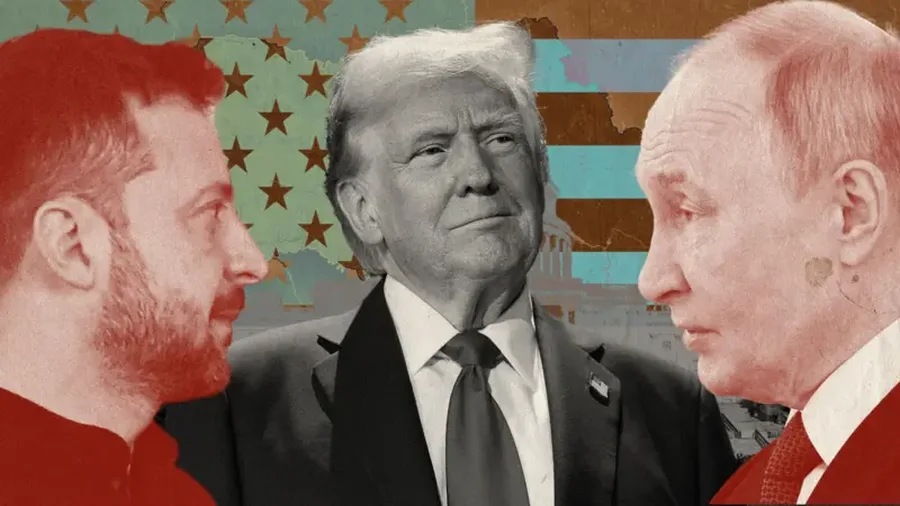
The US President announced an imminent development regarding Russia and US arms shipments to Ukraine. Meanwhile, from Rome, the EU and Italy launch new reconstruction plans…
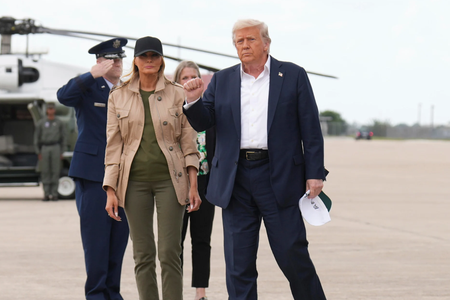
At the two-day meeting dedicated to Ukraine's reconstruction, the most significant news comes from Washington: US President Donald Trump has announced a major statement on Russia next Monday, hinting at a possible turning point in his administration's approach to the conflict.
In a phone interview with NBC News' Kristen Welker, Trump made his position clear: "We are sending weapons to NATO, and NATO is paying 100 percent of the cost. Then the Alliance will decide how to use them, including possibly supplying them to Ukraine."
The president insisted that officially the United States is not directly arming Kiev, but is transferring military equipment to the Alliance, which can "decide what to do with it."
According to Axios, the Trump administration’s plan would involve selling weapons to NATO allies, who would then transfer them to Kiev. Two administration officials clarified that this is not a direct shipment, but the de facto dynamic is similar. Inside sources speculate that the supplies would include not only defensive systems, but also offensive weapons, such as medium-range missiles.
According to Reuters, the president has already instructed his team to prepare an initial package of military supplies for Ukraine, using the Presidential Withdrawal Authority, the same mechanism approved by the Biden administration. The initial tranche is worth about $300 million and could include Patriot batteries and medium-range missiles.
The Ukraine Recovery Conference in Rome was "the largest and most productive event" organized so far, "this is a fact," said Oleksiy Sobolev, Ukraine's First Deputy Economy Minister, speaking at the closing ceremony.
He said that "over 200 agreements were signed with a total value of over 10 billion euros."
From Rome, Prime Minister Giorgia Meloni reiterated Europe's commitment in clear words: "the Russian plan has failed. Today we have made commitments for 10 billion euros, I hope this will be the beginning of an economic miracle for Ukraine."
Italy has officially taken over the patronage of the city of Odessa, committing itself to the protection and restoration of its cultural heritage. The intervention plan includes the restoration of some of the most significant symbols of the historical and artistic identity of the Black Sea city, including the Transfiguration Cathedral, the Philharmonic Hall and the Museum of Fine Arts. In parallel, the Odessa region will be at the center of a project for the sustainable use of water resources, promoted in collaboration with Italian experts, with the aim of environmental sustainability and strengthening civil infrastructure.
Kiev also announced the signing of a tripartite declaration of intent between the Ukrainian government, Italy and the Council of Europe Development Bank (CEB). The agreement provides additional funding for the "House" project, which aims to support the mechanism created by the Ukrainian authorities to compensate citizens whose homes were destroyed or severely damaged by the war.
The development of passenger and freight connections between Italy and Ukraine to promote international mobility, trade and logistics, as well as the transfer of technical know-how in the transport sector and consultancy for the development of a modern and resilient railway infrastructure. These are the main points of the Memorandum of Cooperation (MoC) signed by the CEO and General Manager of FS Group, Stefano Antonio Donnarumma, and the CEO of UZ, Oleksandr Pertsovskyi. The non-binding agreement will explore possibilities for cooperation over the next two years.
Strengthening the Ukrainian healthcare system in all its components, with a focus on the regions most affected by the war: this is the aim of the Memorandum of Understanding signed today in Rome between the Italian Minister of Health, Orazio Schillaci, and the Ukrainian Deputy Minister, Edem Adamanov, as part of the International Conference on the Recovery of Ukraine. The agreement sets out the main lines of bilateral cooperation in the healthcare sector: from the development of medical infrastructure, to the restoration of essential healthcare services, to the modernization of regional facilities and the stabilization of healthcare provision across the country.
Other files and situations on the ground
During the same conference, Ukrainian President Volodymyr Zelensky announced via social media the signing of a Memorandum of Understanding with the IAEA: "I met with Rafael Grossi, the agency's director general, and thanked him for his support. The document formalizes cooperation on the restoration of the national energy system. The agreement marks a further step in the strategic reconstruction of the country's civil infrastructure, with the direct support of the UN atomic agency."
While diplomacy is moving on multiple fronts, the war on the ground continues. A Russian strike in recent hours hit a residential neighborhood in central Kharkiv, causing a fire and injuring at least three civilians. According to mayor Ihor Terekhov, a functioning medical facility was also damaged. Later updates provided by the head of the regional military administration, Oleh Syniehubov, spoke of a Shahed drone strike at 5:35 a.m. in the Saltivka neighborhood, causing structural damage to a three-story building and a fire that spread to an area of approximately 20 square meters.
Meanwhile, on the sidelines of the ASEAN summit in Kuala Lumpur, Russian Foreign Minister Sergei Lavrov confirmed that the Kremlin's position on the war in Ukraine has been conveyed to the US administration. "We discussed the Ukrainian issue and confirmed the line set out by Vladimir Putin during the July 3 meeting with President Trump," he said.
Lavrov, speaking to Russian media, said he held a diplomatic meeting with the new US Secretary of State, Marco Rubio, hinting at deep strategic differences. / Adapted from Il Giornale Pamphlet/



Lini një Përgjigje