


 Shkruar nga Pamfleti
Trump's volatile comments midweek certainly sparked a flood of speculation on the issue.
Has it finally dawned on US President Donald Trump that he has no serious interest in peace talks and is in no hurry to stop his war against Ukraine? Has Trump's fraternity with the Russian leader, whom he described just last month as "very kind," finally come to an end?
Trump's volatile comments midweek certainly fueled a flood of speculation on the matter. " If you want to know the truth, the Russians throw a lot of crap at us ," he said, suggesting that he has finally realized he was being duped by the good guy Russians and now intends to get tough.
“Trump now understands that Putin is the problem. So what President Trump needs to do is put pressure on Putin, which he can do. And he’s not wrong,” former U.S. envoy to Ukraine Bill Taylor declared confidently. Trump not only expressed his irritation with Putin this week, but he also promised to resume deliveries of essential defensive munitions to Ukraine, just days after the Pentagon announced it would take an inventory.
But will Trump really exert the kind of pressure that could make Putin stop? That remains unclear; with Trump, you never know. And that’s part of the problem. With his sudden shifts in policy and tone, his overturned decisions, his extended deadlines and ultimatums, and his threats to tear down the house, his strong diplomacy may have worked in the New York real estate deals. But these are the big leagues, and Putin could easily conclude that Trump’s bark is worse than his bite, and that he can just wait things out. Of course, Trump’s whining and insults this week seem to have had little effect in the Kremlin.
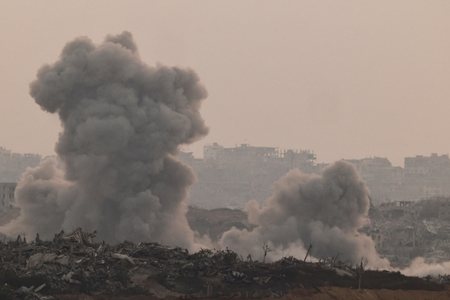
The Russian response was belligerent, setting another record by targeting Ukraine with 728 drones overnight Tuesday. Residents of Kiev and other major cities in 10 provinces were forced to spend the night in airstrike shelters, including metro stations. Of particular note was that Russia carried out the largest airstrike of the war in Volyn Oblast, near Poland, on Tuesday evening. The following night, there was another massive airstrike involving 18 missiles and about 400 drones, mainly targeting Kiev.
But Kremlin spokesman Dmitry Peskov simply underscored Moscow’s indifference to Trump’s threats: “We’re taking it easy. Trump, in general, tends to use a rather harsh style of expression,” he told reporters midweek. The escalating drone and ballistic missile attacks demonstrate the necessity for “tough” sanctions on all major sources of revenue that help finance the war, including penalties for those who buy Russian oil, Ukrainian President Volodymyr Zelenskyy said on Telegram this week. And Trump’s announcement that he was considering supporting legislation that would impose tougher sanctions on Russia, including 500 percent tariffs on countries that buy Russian oil, gas, uranium and other key exports, was no doubt music to his ears.
Trump only needs to say the word, and that legislation will pass easily. The bill already has more than 80 co-sponsors in the 100-seat chamber. And according to a Republican foreign policy expert who asked to remain anonymous in order to speak freely, he estimates that 95 senators would vote in favor, although passage of the bill is unlikely to happen before the August recess, he said. Kiev never had confidence that Trump, or anyone else, could secure a favorable peace deal. Instead, Ukrainian officials have long pinned their hopes on the increasingly fractious U.S. president with a stubborn Russian president, prompting Trump to back them more directly and substantively.
They do not believe that Putin will agree to anything other than the miserable surrender of Ukraine unless forced by military means. Trump, on the other hand, seems to think he can persuade Putin to reach a fair solution by threatening to launch an all-out economic war. The US president has also said he is ready to impose tariffs and even more sanctions on Russia if the Russian president fails to negotiate an end to the war. That was five months ago. But there is no evidence that such threats will help. The Trump team’s assumption that the Russian revanchist can be persuaded to negotiate for economic reasons seems dubious in the extreme.
Earlier this year, analysts Andrea Kendall-Taylor and Michael Kofman argued that Putin has little incentive to stop the war, as he has reached the point of no return. To be sure, Russia’s economy shows signs of high inflation, labor shortages, and an overreliance on state spending. But thanks to Chinese and Asian markets, the breaking of widespread sanctions, and import substitution, the country has weathered the war better than expected economically. Meanwhile, since the war began, Western leaders have thought that sanctions and economic pain would deter Russia, only to be disappointed time and again.
There is nothing in the history books about collective international sanctions to inspire confidence. Sanctions have been used repeatedly, increasingly since the 1920s, with rather mixed results.
So while Trump may be eager for a peace deal, one that would allow him to reap the greater reward of restoring relations with Russia, threatening or imposing sanctions is unlikely to work. Will his impatience lead him to do more? So far, there is little sign of that./ Adapted from “Pamphlet” by “Politico”


Lini një Përgjigje