


 Shkruar nga Mathieu Pollet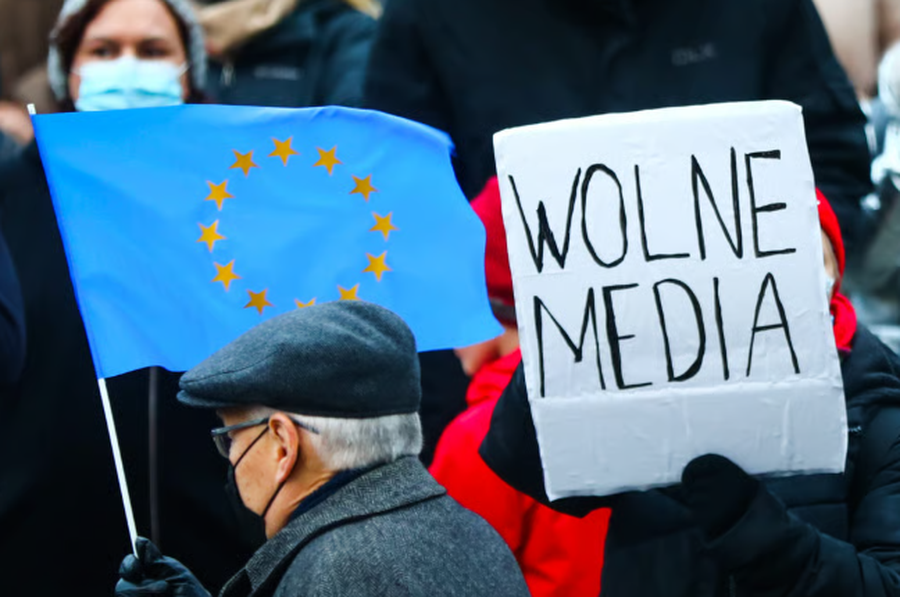
Media experts fear the law could be ignored, as illiberal and populist parties erode media independence.
New media freedom rules in Europe will be fully implemented from today, but undoing state control over newsrooms and undermining media independence is a difficult task.
The European Media Freedom Act aims to protect newsrooms from government interference, protect journalists from spyware, address media concentration and empower online media. But without real political will from the European Commission and national governments, the law risks remaining little more than a promise on paper, at a time when media independence is being eroded in some corners of Europe.
Pressure on journalists has “increased” over the past year in Hungary, where the country’s national regulator and public media are still largely under government control, according to the European Commission in its latest report on the rule of law.
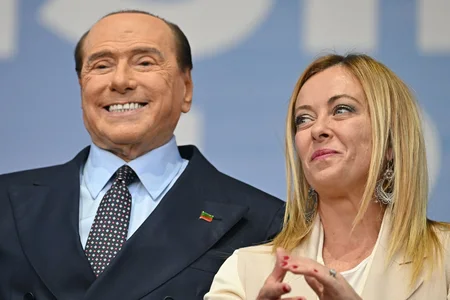
In Italy, since Giorgia Meloni's right-wing coalition took power, the country has seen what watchdogs call an "unprecedented" attack on press freedoms, marked by increasing political control over public broadcaster Rai.
Slovakia's Prime Minister, Robert Fico, who has called journalists "bloodthirsty bastards," has also "deliberately created a hostile environment for independent journalism," according to Reporters Without Borders (RSF).
In Malta, RSF has accused the government of exerting strong influence over public media and using state advertising to pressure private portals and channels, while the 2017 murder of investigative journalist Daphne Caruana Galizia continues to capture public attention.
More than half of EU countries scored worse in 2025 than in 2024 in RSF's World Press Freedom Index.
The new regulation could offer a way to reverse years of increasing state control, but its fate will depend on the EU’s willingness to challenge its more authoritarian, illiberal or populist members. As well as those who lag behind.
"I'm a little nervous," Věra Jourová, the former vice-president of the Commission for Values and Transparency, who passed the difficult law last term, told POLITICO.
She said she was receiving many practical questions ahead of the application deadline and stressed that she "can only hope" that the EU executive has the political will to enforce the rules.
Although the law is directly applicable, EU capitals have had some homework to prepare, and some have been stuck. Budapest has even openly challenged the rules in court.
"Now the real work begins: ensuring that every member state fully and faithfully implements EMFA ," warned Sabine Verheyen, vice-president of the European Parliament and former chief negotiator for the law.
RSF Director General Thibaut Bruttin complained that its implementation “remains largely incomplete,” which “reveals a lack of critical scrutiny of national legislative frameworks.”
France, which has been pushing hard to expand the exemption that allows governments to use spyware, has seen its new audiovisual reform, which transposes parts of the new EU rules, face a long and bumpy road. Meanwhile, Germany, whose Länder, or states, opposed the EU law from the start because it encroached on regional powers, is now undergoing a long and complex legislative update.
Bruttin called on the Commission to keep up the pressure on reluctant countries and to open infringement procedures against the most “recalcitrant” countries. McGrath stressed that “the deadline gave member states the necessary time to put national legislation in place and ensure compliance with these important provisions.
The new battlefield
Part of the reason EU countries are not trying to enforce the new law is that some politicians believe they don't need the media because they can "communicate through social networks where there is almost no control against lies and propaganda," said Pavol Szalai, head of the EU-Balkans bureau at RSF.
He added that this, combined with a crisis of public trust, means politicians think they can let the media "die or give them a mercy killing without worrying citizens."
To empower media in the digital sphere, at a time when big tech firms are moving away from fact-checkers, the regulation introduced a new obligation for social media giants like Facebook, Instagram or X to wait 24 hours to remove or limit a post or account from self-proclaimed media providers that may violate their rules of maintenance, giving them time to appeal the decisions.
But the Commission itself has lagged behind, with key guidelines still missing on how the much-discussed mechanism should work in practice. The EU executive plans to publish the guidelines only in the fall, said a Commission official, who was granted anonymity to reveal the approximate timeline. /Adapted by "Pamphlet" from "Politico"





Lini një Përgjigje