


 Shkruar nga Pamfleti
The EU is considering a strong financial hit to Serbia over its decline in democracy and rapprochement with Russia. The direct target is Aleksandar Vučić, who is accused of undermining democracy, pressuring the media and violence against protesters.
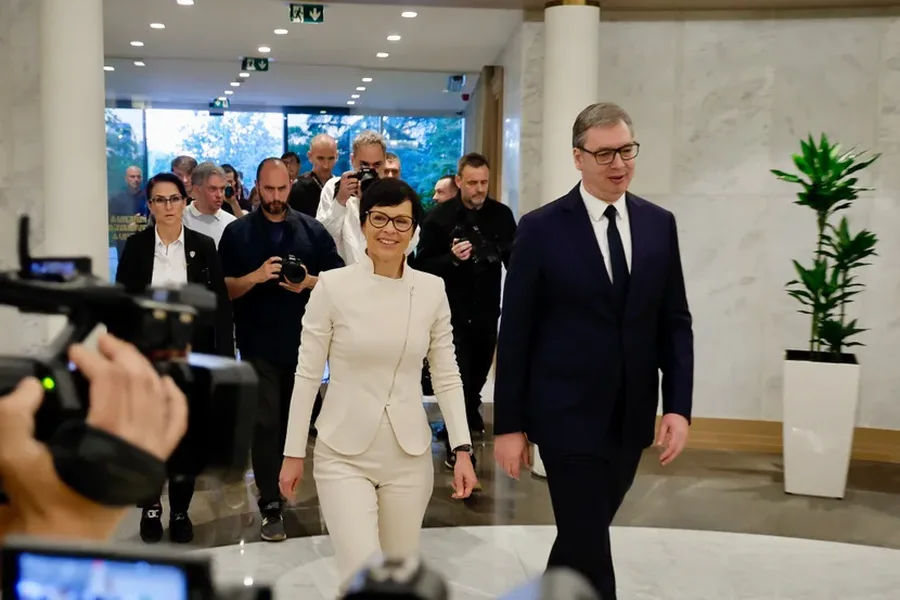
Serbia risks losing up to 1.5 billion euros in funding from the European Union, as the European Commission is considering suspending funds due to the country's democratic backsliding and close ties with Russia, POLITICO reports .
Although not a member of the EU, Serbia, which began accession negotiations in 2014, benefits from funds and grants to support legal reforms. A decision to suspend payments would further complicate the EU enlargement process, at a time when countries such as Ukraine and Montenegro are accelerating their membership efforts, while major states such as France are urging caution.
"We are increasingly concerned about what is happening in Serbia. From laws undermining the independence of the judiciary, to crackdowns on protesters and repeated interference in independent media," said European Commissioner for Enlargement, Marta Kos.
Kos said the Commission is assessing whether Serbia still meets the conditions for "payments under EU financial instruments".
According to four EU officials working with enlargement countries who spoke to POLITICO on condition of anonymity, pressure has been mounting within the Commission to block the funds in recent weeks. The EU has publicly criticized judicial reforms undertaken by Serbian President Aleksandar Vučić, while his government has faced widespread protests.
Serbia's ambassador to the EU and chief negotiator with the bloc, Danijel Apostolovic, told POLITICO that he is "convinced that we will not reach that point" of suspending funds and that "we are not giving up on full EU membership."
He added that Belgrade remains engaged in intensive discussions with the Commission.
A package of laws restructuring courts and changing the way judges and prosecutors are appointed constitutes a “serious step backwards” for Serbia, Kos warned when they were introduced.
The Venice Commission, the Council of Europe's legal advisory body, is expected to provide an expert opinion on these legal changes at the end of the month.
According to two EU officials quoted by POLITICO, this opinion could serve as an impetus for freezing funds for Serbia. Kos stated that he will demand that Serbia “harmonize its judicial laws with the recommendations of the Venice Commission.”
Apostolovic said that Belgrade has "clearly communicated" that it will implement these recommendations "as soon as they are received."
Balancing with Russia
The EU remains Serbia's largest funder, allocating more than €586 million in non-repayable grants for the period 2021–2024. Up to another €1.5 billion has also been made available, conditional on reforms. According to the Serbian government, the country has benefited from over €7 billion in EU funds and investments since 2000.
However, Serbia has long pursued a complicated balancing act, fostering closer relations with Moscow while benefiting from funding from Brussels.
Sofija Todorovic, director of the human rights organization YIHR, told POLITICO that media freedom and the rule of law in Serbia are in “vital jeopardy” due to government pressure on journalists, and called on the Commission to intervene “before almost complete darkness prevails in Serbia.”
The EU's patience with Belgrade has been waning in recent months. A critical report on enlargement progress in November warned of backsliding and an "anti-EU narrative" at the "highest levels" of Serbian politics.
Tensions rose further in December when President Vučić refused to attend an EU-Western Balkans summit. He, who has maintained close ties with Moscow during the war in Ukraine, has criticized the slow pace of membership negotiations.
In a joint article with his Albanian counterpart (Edi Rama) in February, he stated that he prefers an economic rapprochement with the EU, such as joining the common market and free movement area, rather than full political membership. Kos rejected these proposals, stressing that fundamental reforms remain necessary.
Last month, Serbia faced criticism for reports of violence and irregularities during local elections, as well as a police raid on a university, where hundreds of students clashed with law enforcement.
An EU official told POLITICO that these developments, along with Serbia's continued cooperation with Moscow, constitute a turning point in relations with Brussels and have led to a tougher stance from the Commission.
“As a candidate country, we also expect Serbia to stand with us in foreign policy and align more closely with our positions,” Kos told POLITICO, without directly mentioning Russia./ Pamphlet


Ose me Trump