


 Shkruar nga Pamfleti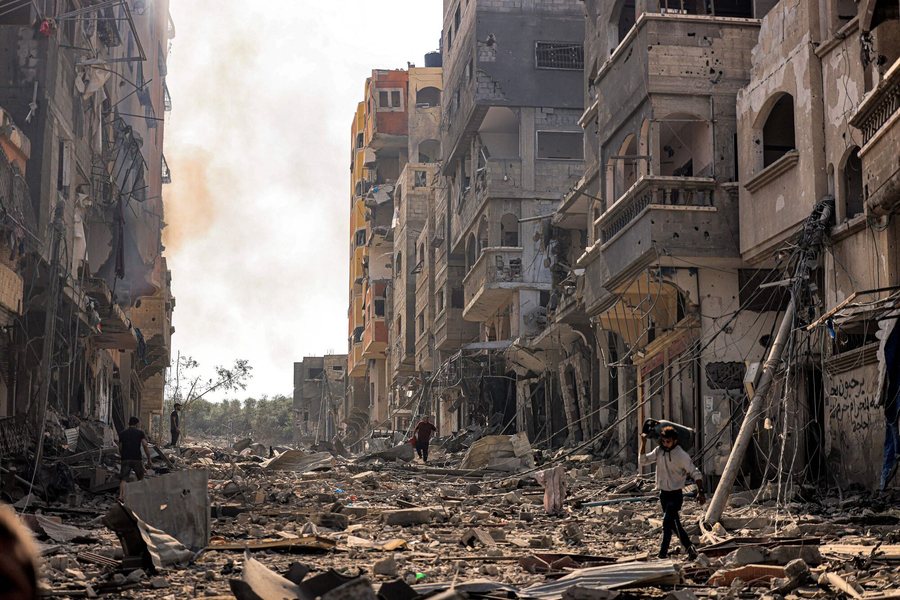
The war between Israel and Hamas, like previous conflicts in the Middle East, could cause major upheaval in the global economy, even pushing it into recession if other countries are drawn into the conflict.
The global economy today looks vulnerable as it struggles to recover from a burst of inflation exacerbated by Russia's war in Ukraine. And a new war in another energy-rich region could reignite inflation. The wider implications could range from a new wave of unrest in the Arab world to the 2024 US presidential election, where fuel prices influence voter judgment.
The three scenarios
In the first scenario, the conflict is mostly confined to Gaza and Israel. In the second, the conflict spreads to neighboring countries, such as Lebanon and Syria, from where powerful terrorist organizations supported by Iran operate, turning it into a proxy war between Israel and Iran. In the third scenario, the war escalates into a direct military conflict between two regional enemies.
In all these scenarios the result is the same: more expensive oil. However, what varies is the size of the impact. As the conflict spreads, its impact goes beyond the periphery and expands into the global economy.
Of course, the real range of risks is wider and more complex than these scenarios can capture. Even the narrowest causal economic effects have proved difficult to predict amid the fluidity of the situation in recent years, and it is even more difficult to predict the evolution of wars. However, the scenarios listed below at least help to get an idea of possible future developments.
First scenario: The war is limited to Gaza
The kidnapping and killing of three Israelis in 2014 by Hamas triggered an Israeli ground invasion of Gaza that left more than 2,000 dead. The fighting did not extend beyond the Palestinian territories, and its impact on oil prices and the global economy was limited.
The death toll is now higher. However, it is possible that this war will repeat the tragic history of 2014 in combination with a stricter application of US sanctions on Iranian oil.
Iran increased its oil output by 700,000 barrels a day this year as prisoner swaps and asset freezes signaled a warming of Tehran's ties with Washington. If, under the pressure of the USA, these oil barrels come off the market, then Bloomberg Economics estimates that black gold prices will increase by three to four dollars per barrel.
In this scenario the effects on the global economy will be minimal, especially if Saudi Arabia and the United Arab Emirates increase their production to compensate for the loss of Iranian oil barrels.
In an interview given on the sidelines of the IMF's annual meeting in Morocco, US Interior Secretary Janet Yellen said she sees no signs of "major effects on the economy" at this stage. "It is vital that the conflict does not escalate", he stressed.
Second Scenario: Proxy War
But what if the conflict spreads? The Iranian-backed Lebanese Shiite group Hezbollah has already exchanged fire with Israeli forces on the border between the two countries and says it hit an Israeli outpost with guided missiles.
If the conflict spreads to Lebanon and Syria, where Iran also supports armed groups, then it will essentially develop into a proxy war between Iran and Israel, and the implications for the global economy will be greater.
"Iran and Hezbollah are monitoring and assessing the situation," said Yair Golan, a former deputy chief of the Israeli army. "If Hezbollah gets involved in the conflict, it could happen after the ground operation in Gaza begins."
An escalation in these areas would raise the possibility of an imminent conflict between Israel and Iran, possibly driving oil prices higher. In the short but bloody war between Israel and Hezbollah in 2006, crude oil prices rose by five dollars a barrel, while something similar today would raise the price of oil by 10% to close to $94 a barrel .
In addition, tensions in the wider region may increase. Egypt, Lebanon and Tunisia are in an economic and political quagmire. Israel's retaliation to Hamas attacks has already sparked protests in several countries in the region, and anti-Israel marches could turn into anti-government demonstrations. And the scenario of a repeat of the Arab Spring, which led to the overthrow of governments in the early 2010s, is not inconceivable.
The impact on the global economy under this scenario would come from two shocks: a 10% increase in oil prices and risk in financial markets, as happened during the Arab Spring. Bloomberg Economics is already documenting such a move with the 8% rise in the VIX index.
Third scenario: Israel-Iran war
The scenario of a direct conflict between Israel and Iran is unlikely, but very dangerous, as it could spark a global recession. The skyrocketing prices of black gold would deal a significant blow and increase inflation.
"No one in the region, not even Iran, wants the Hamas-Israel conflict to escalate into an all-out regional war," says Hassan Alhassan, a fellow at the International Institute for Strategic Studies. That, of course, doesn't mean it won't happen, as the cauldron of anger is boiling. "The possibility of a wrong calculation is high," he adds.
Israel has long viewed Iran's nuclear ambitions as an existential threat. And those concerns have been heightened by Tehran's moves to build a military alliance with Russia, restore diplomatic ties with Saudi Arabia and improve the climate in its relations with the US.
Israel and the US have sent mixed messages about possible Iranian involvement in Hamas attacks. "There are some indications that they may have known," Israel's Strategic Relations Minister Ron Dermer said on Oct. 9. U.S. officials say they have clues about how Iran's leaders were caught off guard, as the New York Times reported on Oct. 11, but they describe Iran as an accomplice in a broader sense because it finances and arms Hamas.
In an Israel-Iran war, "Tehran would likely seek to activate its entire network of proxies and partners in Syria, Iraq, Yemen and Bahrain," notes Alhassan. "And he will have a long list of Western 'hard' and 'soft' targets in the region to choose from," he adds.
In this scenario, rising tensions between the superpowers will add to the mix. The US is a close ally of Israel, while China and Russia are deepening their ties with Iran. Western officials worry that China and Russia will use the war to divert international attention and military resources from other fronts around the world.
Since about a fifth of the world's oil supply comes from the Gulf region, black gold prices will rise. And the scenario of a repeat attack on Aramco facilities, like the one in 2019 by Iran-backed rebels, which knocked out almost half of the Saudi oil supply, cannot be ruled out./ Taken with clippings from Bloomberg





Lini një Përgjigje