


 Shkruar nga Pamfleti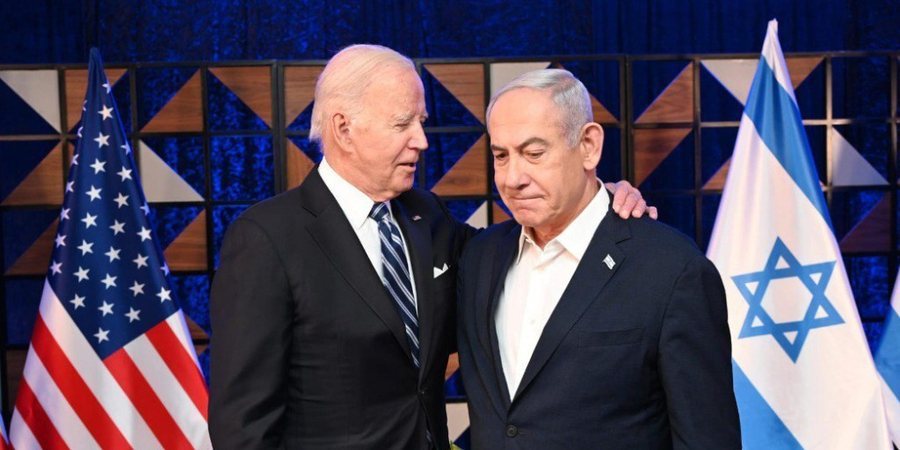
In political Washington, Republicans and Democrats often disagree with each other. But he has always been of one mind on one issue: The relationship between the US and Israel is inviolable. In all the decades, in which Republicans and Democrats have been in power, nothing has changed in friendship with Israel. Leaders of both parties have emphasized that Israel has no other closer ally than the US, and that Israel's security is non-negotiable.
The United States has paid nearly 300 billion euros in aid to Israel since 1948, when the state of Israel was established. Most, according to the Council on Foreign Relations, have been military aid. "The relationship really is unique ," says Chuck Freilich, a former security adviser to the Israeli government, adjunct professor at Columbia University in New York and Tel Aviv. He adds that "you don't find many other examples like this".
According to Freilich, shared values, strategic interests and a strong lobby are the main pillars of this relationship. The American Israel Public Affairs Committee (AIPAC) is one of the most effective lobbying associations in the American capital. He is committed to close relations between the two countries, regardless of the political party that comes to power.
For Washington, Israel is a strategic advantage
After World War II, the US was accused of not doing enough to protect Jews in Europe from the Holocaust. But when the leaders of the Zionist movement in May 1948 declared the independence of Israel, the US quickly recognized the new state. Since then Israel presents itself as a liberal democracy, representing US interests in a region that is often unfriendly to the US.
"There was a time when Israel was just seen as a burden ," says Freilich. A conflict between Israel and its Arab neighbors, who during the Cold War were more oriented towards the Soviet Union, always contained the risk of an escalation of the situation between the atomic superpowers.
"Since the 1990s, the Pentagon has seen Israel as a strategic advantage. After the collapse of the Soviet Union, Israel for the US turned into a country that did not allow small adversaries like Iran or other adversary countries to run away. This led in "the closest strategic cooperation in the history of relations between the US and Israel" , according to Freilich.
After the October 7, 2023 terrorist attack, the US rushed in and offered weapons to Israel, sent aircraft carriers to the region and vetoed the ceasefire in Security Council resolutions.
Increase in the number of civilian victims
In the nearly six months of the massive Israeli military mission in the Gaza Strip, following the Hamas terrorist attack, more than 33,000 people were killed, according to Palestinian data. All over the world this has led to discontent, and it has also caused the tone in the American government to change. In a conversation with American television, CBS, the vice president, Kamala Harris, emphasized that the Israeli government should not be confused with the Israeli people. Freilich is concerned.
"If Netanyahu doesn't change his attitude quickly, if we don't have a new government soon, this will have long-term effects," she said.
For connoisseurs of American-Israeli relations, the time of change has come.
"We are dealing with a very slow process in which the US moves away from the position of always giving Israel the green light, even the yellow light, and recently the orange light," criticizes Ian Lustick, an Israel expert and professor of in political science at the University of Pennsylvania, in conversation with Deutsche Wellen.
By the orange light, Lusick is referring to the US abstention at the Security Council in March this year, when a resolution calling for a temporary ceasefire was passed. Previous efforts failed, but this resolution passed due to abstention. In protest, Israeli Prime Minister Netanyahu canceled a trip by the Israeli delegation to the US.
At the same time, the Biden administration since October 7 has approved more than 100 sales of military materials to Israel, according to the Washington Post. This also includes 900-kilogram bombs that can extinguish entire neighborhoods.
"I'm surprised how slowly the government is giving the red signal ," says Lustick. He sees this as a danger for American interests in other parts of the world, but also for Biden himself in this election year in the USA. In Michigan, for example, many voters of Arab origin live, in the primary election on February 13, 13% of Democratic voters preferred to leave the ballot blank rather than vote for Biden.
Strained relationship
For years, Israel has been pursuing an increasingly right-wing policy. Religious extremists have gained political influence, especially in the governments led by Netanyahu. Continued Israeli efforts to normalize the occupation and tighten control over the Palestinians are increasingly pitting Israel against democratic states.
The US government is increasingly criticizing the high number of civilian casualties in the Gaza Strip. It demands that "the same measure of freedom, opportunity and democracy" apply to both Israelis and Palestinians. But the expansion of the Israeli occupation undermines this vision.
Even the change in public opinion in the US regarding Israel could lead to a course correction in Israel-US relations. According to polls, there is a growing gap between older and younger voters. Older people remember the days of an Israel that signed the Oslo Accords, when the way to a two-state solution seemed clear. But young people recognize an Israel that uses its unilateral military advantage to prevent a political settlement with the Palestinians.
Likewise, a large number of American Jews see themselves as open and liberal, and feel alienated by an Israel that they believe is moving in a different direction. This rift in Jewish relations in the US is not only cultural, it also has national security implications.
"In the long run, the values that the young American generation represents in the US will come out more and more. Israel will come up against this more and more, and American politicians will understand that what worked 25 years ago, today causes problems, if they try to listen to AIPAC", Lustick emphasizes./ DW






Lini një Përgjigje