


 Shkruar nga Philippe Ricard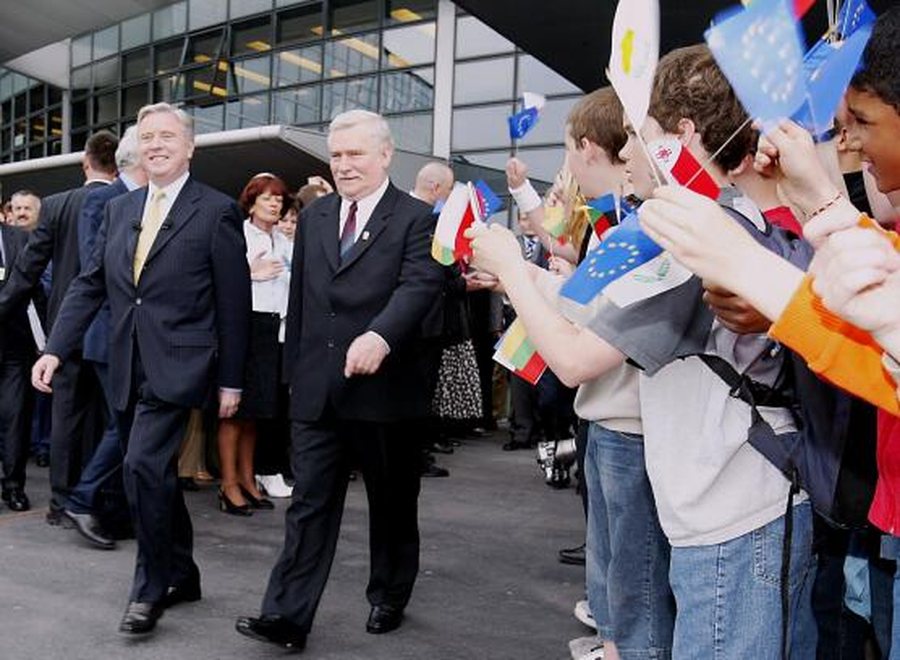
The 2004 enlargement marked the beginning of the reunification of Europe, it is time for this process to end
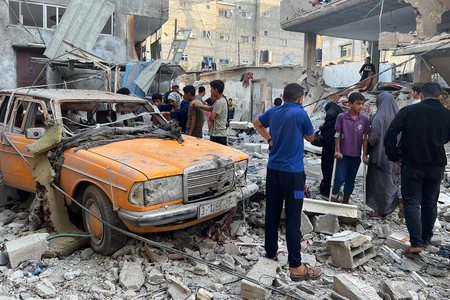
His anniversary passed almost unnoticed, so shocked is the continent by the return of war to its territory. Russia's large-scale occupation of Ukraine has overshadowed one of the European Union's most unexpected and developmental successes: the great enlargement of 2004, which has just celebrated its 20th anniversary.
And the war that is still going on underlines the importance of that event even more. On 1 May 2004, 10 countries, including 3 former Soviet republics and most of the former Eastern Bloc states, joined the EU club: Poland, Hungary, the Czech Republic, Slovakia, Slovenia, Estonia, Latvia and Lithuania, as well as Cyprus and Malta.
Their accession ended a long accession process that began after the Cold War. Romania and Bulgaria followed in 2007. Enthusiasm in these two countries is genuine, while others have mixed feelings.
Backed by the United States, this major expansion cemented Western Europe's victory over defunct communist regimes once under the tutelage of the now-dissolved Soviet Union. However, it also marked the beginning of a long and sometimes painful process of reunification for the old continent.
It was in the wake of German reunification, as the "old" and "new" Europe initially found it difficult to rediscover each other. It is enough to remember the divisions caused by the war in Iraq. In 2003, countries applying for EU membership - and also candidates for NATO - lined up with the US to topple Saddam Hussein, against the advice of France and Germany.
"They lost a golden opportunity to shut up," said former French president Jacques Chirac, during a European summit in Brussels. "These countries have not behaved very well, and are very reckless in relation to the risk of aligning too quickly with the US position."
That statement not only surprised his companion, but also had a lasting effect on the relationship between the "new members" of the EU and France, which had long been very reserved about this acceleration of history.
In 2005, the controversy over "Polish hydraulics" fueled the victory for the "No" vote in the French referendum on the European Constitution. And it highlighted how the risks of competition between two European countries with often different living standards.
Twenty years later, the great enlargement has not yet been fully absorbed, even if exchanges between the 27 member countries have deepened considerably. Cultural and political differences remain marked between "old" and "new" members - terms that have thankfully become less frequently used - as debates over migration issues over the past 15 years have shown.
Few Central European countries have joined the euro and monetary union, which is considered the final stage of European integration. On the contrary, some of them, starting with Viktor Orban's Hungary, are accused of illiberal movements and violations of the rule of law.
But Poland is showing that this is not an irreversible trend. Since Donald Tusk's return to power in December last year, after losing its previous ultra-conservative and Europhobic majority, Warsaw has deepened its European reforms.
Its foreign minister, the Atlanticist Radek Sikorski, has just called for Europe to become a "geopolitical power?" It was a speech that echoed Emmanuel Macron's calls for a "strong Europe". And it gives us an idea of the weight that Central European countries are likely to gain, especially since the outbreak of war in Ukraine.
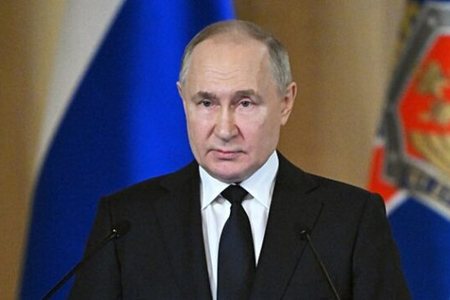
The invasion of Russia proved their firm stance against the Russian threat, while seriously undermining the authority of Berlin and Paris, accused of pandering to the demands of Vladimir Putin's Kremlin. It's a gap that Macron is aiming to bridge.
"Even we have lost the opportunity to listen to you" - he said in Bratislava almost a year ago, contradicting Chirac's former words: "Those days are over!". The war in Ukraine has changed the nature of the expansion, emphasizing its geopolitical dimension.
This is not a new issue, as in the years after the Cold War the integration of post-communist countries went hand in hand with the expansion of NATO. Containment of the Russian imperialist threat is now a publicly stated objective.
Ukraine, Moldova and the Western Balkans are candidates, as is Georgia, which is divided over its European aspirations, with the government playing the anti-Western and pro-Russian card and the opposition pro-Western.
"The restart of the integration process is clearly dictated by the situation in Ukraine, something that highlights an important question: to what extent can enlargement bring security to neighboring states, while strengthening the security of EU member states?" - asks Piotr Buras, head of the Polish office of the European Council for Foreign Affairs. In Kiev, as in Warsaw, Brussels, Berlin and Paris, the answer is already self-evident./ Pamphlet adapted from "Le Monde"



Lini një Përgjigje